


US Engages in New Military Strikes Against Iran Amid Ceasefire Tensions
The United States and Iran exchanged military strikes over the weekend, each accusing the other of breaching a ceasefire agreement that had followed months of escalating conflict. This latest escalation was triggered by a drone attack on a commercial tanker in the Strait of Hormuz, with the U.S. attributing the attack to Iranian forces.
U.S. Central Command reported that it retaliated by targeting ten Iranian military assets, which included air defense systems, drone storage facilities, communication infrastructure, and military equipment near critical waterways. The Pentagon asserted that Iranian forces violated the ceasefire by attacking the Panamanian-flagged tanker MT Kiku.
In response, Iran’s Islamic Revolutionary Guards Corps dismissed these claims, asserting that the U.S. was the first to launch attacks on Iranian coastal positions. Iran retaliated by firing ballistic missiles and drones at U.S. military installations in Kuwait and Bahrain, specifically targeting Ali Al Salem Air Base and the 5th Fleet Headquarters. This escalation raises significant concerns regarding the viability of the ceasefire and the safety of one of the globe’s busiest energy shipping lanes.
Venezuela Earthquake Leaves Over 1,450 Dead; Rescuers Save Two Boys
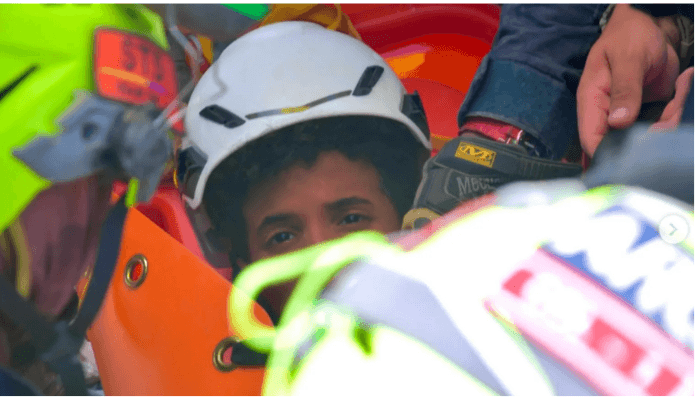
Rescue teams successfully saved two 11-year-old boys from the rubble of a collapsed building in Venezuela days after the nation experienced its most powerful earthquake in over a century, which devastated significant portions of the country.
The first boy, Moises, was pulled from the debris amid applause from emergency crews, with the second boy rescued shortly afterward and transported to safety on a stretcher. Officials hailed both rescues as remarkable feats, especially as search efforts faced increasingly daunting conditions.
As of now, the death toll has surpassed 1,450, with hundreds of buildings reported as collapsed and tens of thousands unaccounted for following twin earthquakes measuring 7.2 and 7.5 that struck almost simultaneously. Rescue teams continue to scour the affected areas, hopeful of finding more survivors, particularly in locations where access to food and water remains available, and where people are still trapped under the rubble.
Skydiving Plane Crash in France Claims 11 Lives
A commercial aircraft carrying skydivers tragically crashed shortly after takeoff in the eastern French town of Tomblane, resulting in the deaths of 11 individuals.
The plane, which was operated by the Parachute School, went down minutes after departing from Nancy Essie Field. All those on board, including the pilot and ten passengers—five of whom were experienced instructors and five first-time tandem skydivers—lost their lives.
French authorities have initiated an investigation into the cause of the crash. Interior Minister Laurent Nuñez revealed that several relatives of the victims witnessed the incident from the airfield, leaving many traumatized. Local officials have categorized this event as one of the deadliest civil aviation disasters in the region in recent years, and emotional support resources are being extended to the affected families.
European Heatwave Results in Over 1,300 Deaths, Warns WHO
The World Health Organization (WHO) has reported that Europe’s unprecedented early summer heatwave has been associated with over 1,300 excess fatalities as soaring temperatures continue across the continent.
Germany recorded a record high of 41.7 degrees Celsius, while France has seen approximately 1,000 additional deaths attributed to the heatwave. Health authorities noted that many victims were elderly, and there has been a surge in in-home fatalities as pressure mounts on power grids, hospitals, and emergency services.
WHO Director-General Tedros Adhanom Ghebreyesus expressed alarming concerns that Europe is warming at double the global average rate, describing the ongoing heatwave as a “silent killer.” Governments have urged residents to avoid outdoor activities during peak temperatures, leading schools to close and straining the power system due to increased demand.
Tragic Helicopter Crash Claims 14 Lives in Saudi Arabia
A helicopter operated by Saudi Arabia’s state oil company, Aramco, crashed near the eastern city of Ras Tanura, resulting in the deaths of all 14 individuals aboard.
The crash occurred shortly after 6 a.m. local time, killing everyone involved. According to Saudi state media, all victims were Saudi nationals, and authorities have initiated an investigation to uncover the cause of the tragic incident.
This accident happened close to Aramco’s largest oil refining and export facility, where operations had recently resumed after significant disruption linked to broader regional conflicts. The Saudi government has expressed condolences to the families of the victims.
Burkina Faso Breaks Diplomatic Relations with France
Burkina Faso has officially severed its diplomatic ties with France, accusing the former colonial power of enacting policies that undermine the country’s sovereignty and national interests.
The military government, led by Ibrahim Traore, claimed that France has been pursuing “neo-colonial ambitions” and supporting actions hostile to Burkina Faso. France has rejected these allegations, describing the decision as unjust and urging its citizens in the country to exercise diligence.
Relations have increasingly soured since Traore’s government came to power following a coup in 2022, resulting in the expulsion of French troops while strengthening ties with Russia and China. Despite this diplomatic rift, the junta maintains that cultural and interpersonal connections will remain intact.
Democratic Republic of Congo Files Lawsuit Against Rwanda at International Court
The Democratic Republic of Congo has filed a legal complaint against Rwanda at the International Court of Justice, alleging that Kigali has violated international law through military operations and support of armed factions in eastern Congo.
Congolese authorities contend that Rwanda has breached several international treaties related to genocide prevention, torture, racial discrimination, and the safeguarding of women. The Kinshasa administration seeks a court ruling to halt these alleged violations and to mandate compensation for victims.
Rwanda has consistently denied accusations of support for the M23 rebel movement, despite numerous statements from UN experts and Western governments. This case signifies a renewed legal endeavor by the Congolese government to hold Rwanda accountable for the ongoing conflict in its eastern provinces.
Ugandan Military Closes Major Independent Media Outlets
Uganda’s largest independent media organization has been forced to shut down its operations after General Muhoozi Kainerugaba, the army chief, ordered the suspension of several television, radio, and newspaper outlets.
Soldiers reportedly surrounded the headquarters of Nation Media Group in Kampala, effectively closing Nippon Uganda Television, Spark TV, and the Daily Monitor newspaper. The military has yet to provide an official explanation for this shutdown.
Kainerugaba, who is also the son of President Yoweri Museveni, defended the actions on social media, indicating a lack of belief in press freedom. Opposition parties and human rights organizations have condemned this shutdown as a severe infringement on press freedom, raising concerns about escalating political repression ahead of the upcoming elections.
Ebola Outbreak in Congo Grows More Serious
The Democratic Republic of Congo is reporting a total of 1,203 confirmed cases of Ebola, with 321 deaths as the country endures its deadliest outbreak of the Bundibugyo strain.
Government data reveals that infections continue to spread across various affected states, despite heightened surveillance and response initiatives. Health officials express alarm over the virus’s rapid transmission, particularly in densely populated urban regions.
Global health organizations are expanding treatment centers, intensifying contact tracing efforts, and advancing vaccine research as neighboring countries enhance border controls to prevent cross-border transmission.
IMF Approves Financial Aid for the Democratic Republic of Congo
The International Monetary Fund (IMF) has greenlit approximately $350 million in new financial assistance for the Democratic Republic of Congo following a successful review of its economic reform program.
This funding comprises about $258 million from the Enhanced Credit Facility, alongside an additional $90 million from the Resilience and Sustainability Facility. Congolese officials indicated that most of these funds will support climate adaptation, infrastructure projects, and social programs.
Finance Minister Dudu Roussel Hwamba Rikunde Lee Botai mentioned that the remaining resources would bolster the country’s foreign exchange reserves and stabilize the balance of payments as the government pursues economic reforms amid pressing security and health challenges.
