


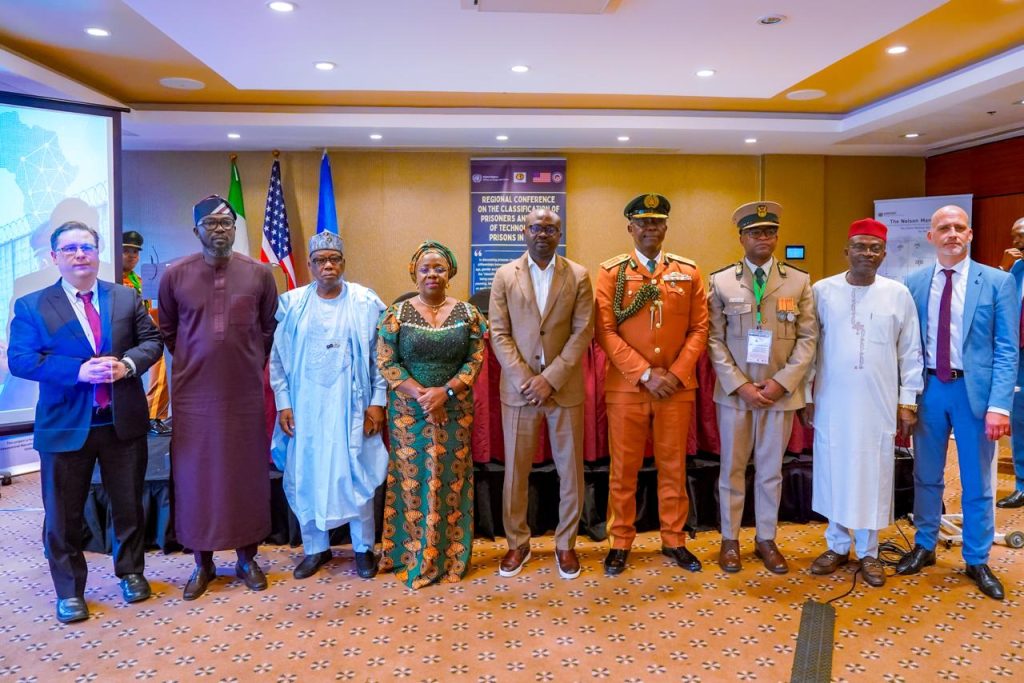
Nigeria’s Vision for Modernizing Correctional Services Across Africa
The Nigerian government has reaffirmed its commitment to transforming correctional services throughout Africa by leveraging technology, employing data-driven decision-making, and fostering institutional reform alongside regional collaboration.
Call for Modernization in Correctional Systems
During a speech at the United Nations Office on Drugs and Crime (UNODC) regional conference focusing on prisoner classification and technological advancements in African correctional facilities, Home Affairs Minister Dr. Olubunmi Tunji Ojo highlighted the urgent need for modernization. He emphasized that contemporary correctional systems must adapt to the realities of the 21st century.
Recognizing Key Partnerships
The Minister expressed gratitude to the UNODC, the African Correctional Association (ACSA), the US International Narcotics and Law Enforcement Agency (INL), and other conference partners for creating a platform to establish common standards across the continent.
Integrating Technology into Correctional Management
Dr. Ojo pointed out that a 19th-century model for correctional management is inadequate in today’s world, asserting that technology is now a necessity for developing a safe, efficient, and humane correctional system. He noted, “Effective leadership starts with a thorough understanding of the problem before attempting to solve it.” This reflects a broader philosophy of thoughtful introspection prior to action.
Focus on Reform Priorities
He urged correctional leaders to address three core areas to drive meaningful reform: identifying systemic issues, determining suitable solutions, and setting clear timelines for implementation. This strategic approach is essential for effective governance in correctional services.
Success Through Digital Transformation
Highlighting Nigeria’s recent progress, Dr. Ojo reported that the country has not experienced successful prison breaks or attacks since the current administration took office. He attributed this achievement to investments in digital transformation, enhanced data management, and increased cooperation among security agencies.
Enhancing National Security Through Collaboration
The Minister articulated that digitizing inmate records—including biometric data—has significantly improved Nigeria’s capacity to respond to security threats and monitor criminals effectively. He emphasized that while technology enhances efficiency, it is not a substitute for human involvement. “Investments in technology must parallel improvements in human capabilities,” he added.
Integrating Correctional Services into National Security Frameworks
Dr. Ojo called for a comprehensive approach in which correctional services are integrated into broader national security initiatives, rather than operating as isolated entities. He advocated for enhanced intelligence sharing among law enforcement agencies, aiming to eliminate safe havens for criminals across the continent.
Transforming Philosophy in Correctional Facilities
Expounding on his vision, Dr. Ojo advocated for a paradigm shift that views correctional centers as rehabilitation facilities rather than mere incarceration spaces. He believes these centers should serve as environments for transformation, recovery, and hope.
Supporting Young Offenders
The Minister urged African governments to strengthen legal frameworks related to health institutions and juvenile justice to ensure that young offenders are not housed with serious criminals. “Our youth deserve the opportunity for rehabilitation, rather than pathways leading to deeper criminal activity,” he asserted.
Expanding Opportunities for Inmates
He revealed that Nigeria has significantly broadened educational and vocational training opportunities for prisoners, allowing thousands to engage in formal education and skill development programs. These initiatives have substantially contributed to reducing recidivism rates, transforming correctional facilities into productive environments.
Encouraging Self-Reliance in Africa
Dr. Ojo concluded with a strong message about the capacity of Africans to enact change. “There is no problem in Africa that cannot be resolved by Africans. We must become agents of change, establishing a corrections system that fortifies justice, enhances public safety, and rekindles hope,” he declared.
Emphasizing Technology in Reforming Correctional Administration
Opening the conference, the Minister urged African nations to adopt technology as a crucial instrument for reforming correctional administration and fortifying internal security across the continent.
Mary Ali, Anipur
Head of News and Public Relations Department
July 15, 2026
