


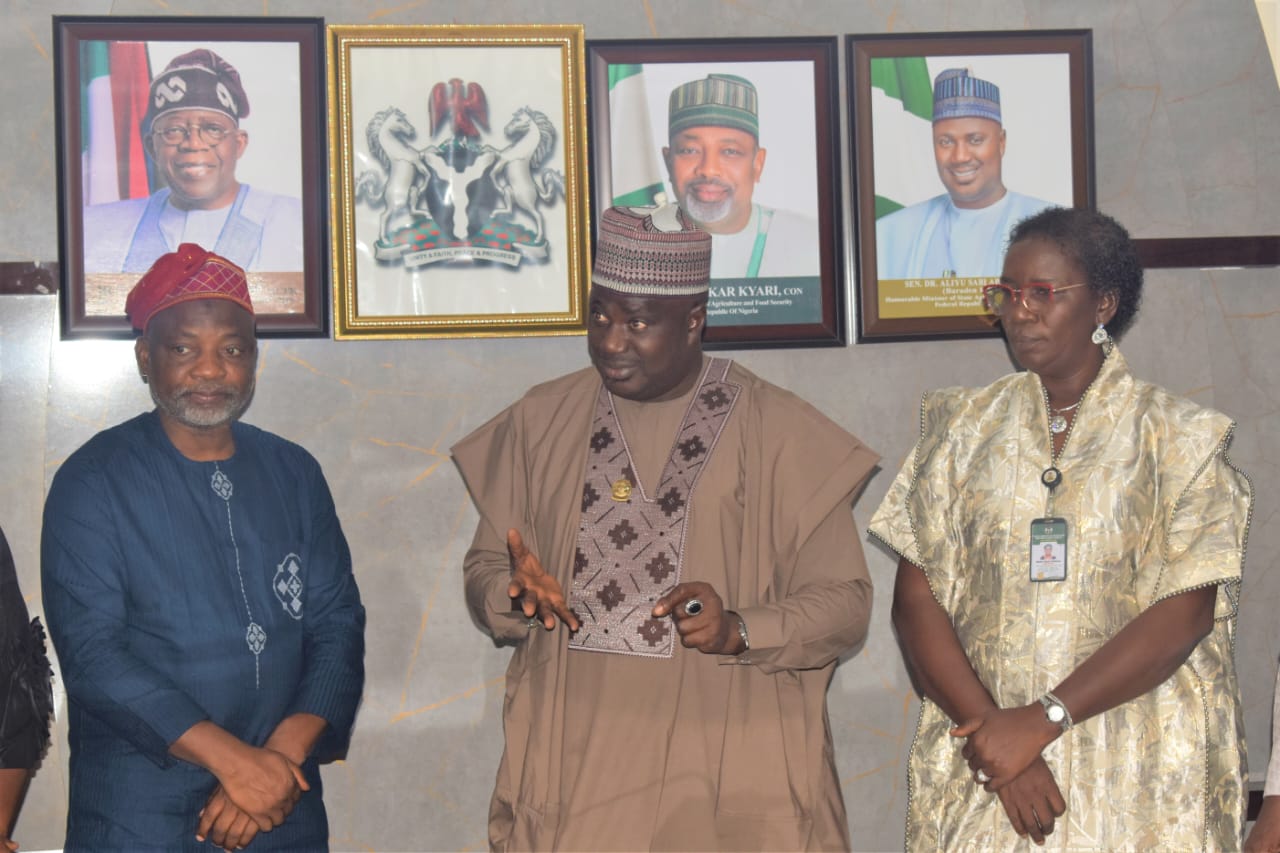
Federal Government Launches Technical Working Group for Agricultural Residue Standards
The Federal Government, through the Ministry of Agriculture and Food Security, has established a Technical Working Group (TWG) on Residue Standards for Agricultural Products. This initiative aims to tackle the recurring export rejections of Nigerian agricultural goods due to non-compliance with Maximum Residue Limits (MRLs) and other sanitary and phytosanitary regulations.
Significance of the Initiative
At the inauguration ceremony held in Abuja on Monday, Minister of State for Agriculture and Food Security, Aliyu Abdullahi, emphasized that this initiative marks a significant step toward enhancing food safety and bolstering Nigeria’s competitiveness in both regional and international agricultural markets.
Alignment with Presidential Mandates
Abdullahi noted that the formation of the TWG aligns with President Tinubu’s directive, which mandates that Nigerian agricultural products must not only meet production targets but also comply with globally recognized food safety and quality standards.
Economic Impact of Export Rejections
Throughout the years, Nigeria has faced numerous instances of export refusals due to MRL non-compliance. The minister highlighted the economic ramifications of these refusals, including diminished market confidence and lost opportunities for farmers, exporters, and agribusinesses.
Collaborative Approach to Food Safety
In his remarks, Abdullahi stressed the need for a coordinated, science-based response to growing concerns regarding pesticide residues and food safety. He described the TWG as a vital platform for uniting experts from various sectors—including government, academia, industry, and development partners—to collaboratively address challenges associated with agricultural residue standards in Nigeria.
Focus on Practical and Sustainable Solutions
Addressing the newly appointed members, the Minister acknowledged their expertise and dedication to the growth of Nigeria’s agricultural sector. He urged the group to formulate practical and viable solutions aimed at enhancing the country’s food control systems, improving adherence to safe pesticide application practices, and facilitating access to premium markets for Nigerian agricultural products. He emphasized that recommendations should be evidence-based and consistent with global best practices, while also considering local contexts.
Benefits of the TWG’s Initiatives
Abdullahi highlighted that the TWG’s efforts will not only safeguard public health but also improve the quality and safety of agricultural products from Nigeria. Consequently, this initiative is expected to boost export revenues and minimize post-harvest losses linked to market restrictions.
Commitment to Agricultural Quality Assurance
In his welcome address, Permanent Secretary Marcus Ogunbiyi, represented by Bukal Musa, the Director-General of the Federal Ministry of Agriculture, acknowledged the essential role of agriculture in Nigeria’s economy. He warned that the ongoing rejections of Nigerian agricultural exports due to non-compliance with international residue standards could undermine the livelihoods of farmers and agribusiness owners.
Goals of the Technical Working Group
Ogunbiyi expressed optimism about the diverse expertise within the TWG and its potential to establish a robust agricultural residue management framework. He commended the Minister of State for spearheading this initiative, reaffirming the Federal Government’s commitment to enhancing agricultural quality assurance systems and promoting the global competitiveness of Nigerian agricultural products.
Strategic Actions and Research Initiatives
Responding on behalf of the TWG, Lateef Oladimeji San underscored the importance of this launch in fortifying Nigeria’s agricultural quality assurance system. He outlined the TWG’s mandate, which includes reviewing current standards, harmonizing national guidelines with international benchmarks, and strengthening laboratory capacities for monitoring and enforcement. The group will also identify relevant agencies to contribute to an in-depth review of existing national policies on residue management, focusing on priority crops and developing research instruments to assess the present conditions of pesticide residues and contaminants.
