


U.S. Defense Secretary Critiques NATO Allies Over Security Responsibilities
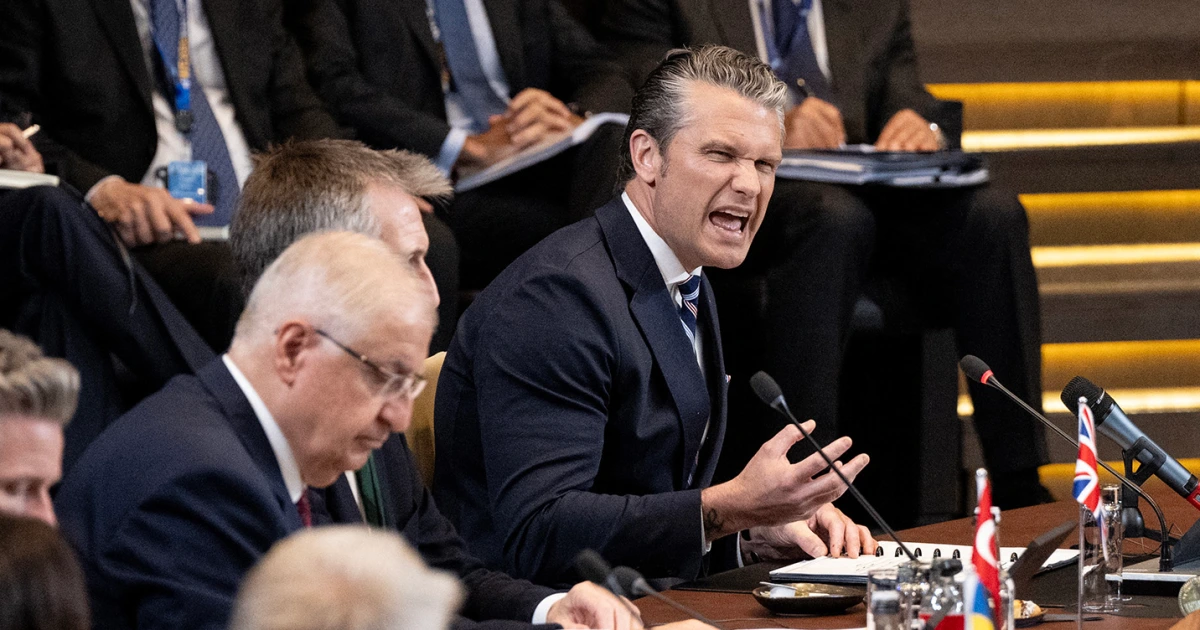
BRUSSELS – Defense Secretary Pete Hegseth criticized NATO allies on Thursday, announcing a six-month review by the Pentagon of U.S. forces stationed in Europe. This evaluation will focus on how quickly these allies can assume responsibility for their own security.
Push for European Leadership in Defense
During his address to NATO officials in Brussels, Hegseth emphasized the need for European leaders to take charge of their own defense efforts. He referred to the review as a significant measure aimed at strengthening NATO and facilitating a swift transition to European military leadership.
Allegations of Inadequate Support from European Allies
Hegseth did not hold back as he labeled European allies “shameful” for their refusal to grant U.S. forces access to bases from which they could potentially launch operations against threats like Iran. He expressed concern that these actions endanger the lives of American service members and their families.
Calls for a Reinvented NATO
Addressing NATO defense ministers, he urged for a comprehensive reboot of the 32-nation organization, envisioning a “NATO 3.0” that can effectively counter a range of threats. This calls for an enhancement of military capabilities and deterrent strategies within Europe.
Context of Recent U.S. Military Policy Changes
His remarks follow the recent announcement from the United States indicating a shift in its military support strategy. U.S. officials conveyed that they would no longer provide certain warships or aircraft in the event of an attack, prompting European allies and Canada to seek alternative security solutions.
Investment in Defense Capabilities
In line with these changes, Hegseth revealed that the U.S. plans to invest $1.5 trillion in its defense sector by 2027, reinforcing the assertion that the country is committed to building an “arsenal of freedom.” This investment aims not only to protect U.S. interests but also to augment NATO’s strength.
Stressing Collective Action Among Allies
Hegseth insisted that allies must take decisive actions to safeguard their continent. As NATO’s leading commander formulates a preliminary defensive plan for Europe, the U.S. is prioritizing military resources amid concerns of simultaneous conflicts, particularly with potential threats in the Indo-Pacific region.
As NATO allies collectively pledge defense under Article 5 of the founding treaty, the current climate suggests a reassessment of U.S. military commitments. While the U.S. remains a dominant military force within NATO, there are no intentions to withdraw nuclear weapons from Europe, which play a crucial role in the alliance’s deterrent strategy.
