


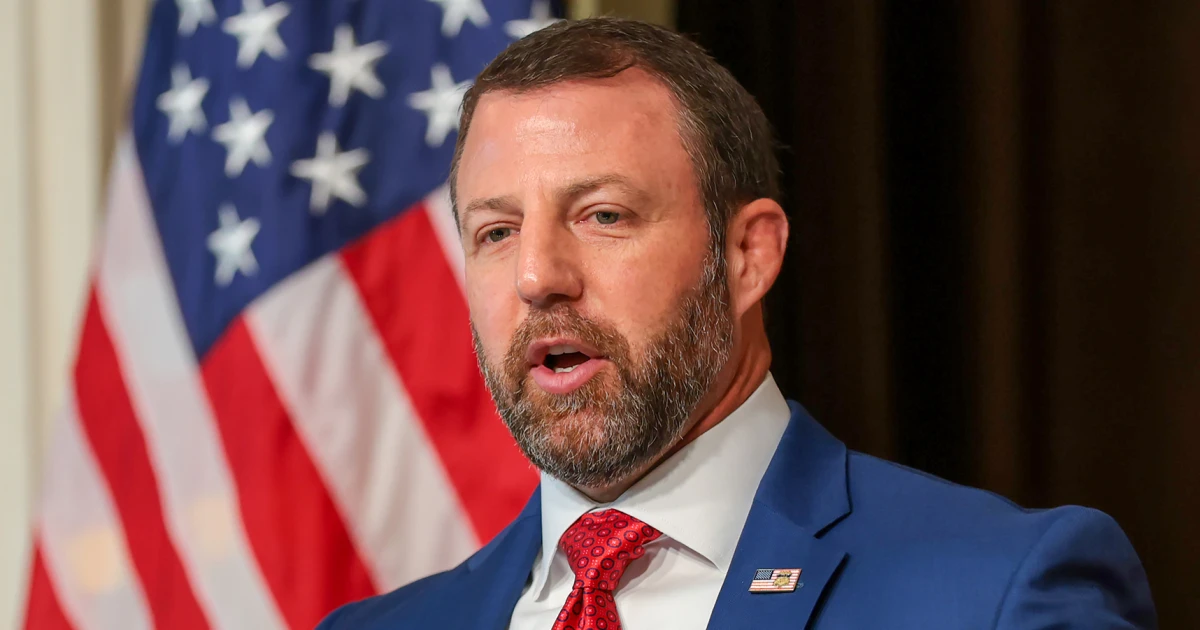
Homeland Security Secretary Issues Warnings to State Election Officials
In a substantial announcement on Friday, Homeland Security Secretary Markwayne Mullin cautioned state election officials that they could face prison time if they fail to adopt the Trump administration’s approach to identifying noncitizens on voter rolls. This directive has sparked significant concern among legal and voting rights experts about the implications for electoral integrity.
Allegations of Noncitizens on Voter Rolls
Building on President Donald Trump’s comments during a campaign speech the previous night, Mullin claimed that previous assessments by the Department of Homeland Security (DHS) indicated over 250,000 noncitizens on voter lists in at least four states: California, New Jersey, Nevada, and Pennsylvania. This assertion raises questions about the methodology behind such estimates and their impact on legitimate voters.
Federal Database Access Controversy
Mullin urged states to utilize a federal database maintained by DHS to investigate their voter rolls for noncitizen entries. However, this database, intended for immigration benefit assessments, was previously blocked by a federal judge. The ruling cited rules against disclosing Social Security records and highlighted the database’s tendency to misidentify newly naturalized citizens as non-citizen voters, potentially leading to unwarranted purges from voter rolls.
Election Security Concerns Amid Rising Tensions
The comments made by Mullin come amid the Trump administration’s increasing scrutiny of the electoral process as the midterm elections approach. Mullin stated, “We need to ensure that individuals who are legally able to vote are casting their ballots,” while reinforcing the administration’s commitment to prosecuting those attempting to vote illegally.
Expert Commentary on Fraud Claims
Election law expert Rick Hasen highlighted the absence of credible evidence to support allegations of widespread voter fraud, suggesting that if the government had indeed discovered substantial noncitizen voting, it would have taken legal action. The ongoing assertions from Trump regarding a “dirty” election in 2020 contradict statements made by his own Cabinet members, who have found no evidence of large-scale fraud.
Future Plans for Election Oversight
Mullin also indicated that President Trump has tasked DHS’s cybersecurity team with developing an updated election infrastructure plan, with an announcement expected within 30 days. This initiative is being marketed as a proactive effort to bolster trust in the voting system rather than as a reinterpretation of the events surrounding the 2020 election. Meanwhile, DHS has been actively analyzing voter records to identify ineligible votes from noncitizens and deceased individuals.
Database Limitations and Rights Group Concerns
Voting rights advocates caution that the current systems used to verify citizenship status may be outdated, leading to the erroneous removal of voters identified incorrectly as non-citizens. The DHS has revamped the Systematic Alien Verification for Entitlements (SAVE) database to facilitate this verification process. The upgraded system allows state and local officials easier access to confirm voters’ citizenship, but its reliability remains a significant concern among advocates for voting rights.
