


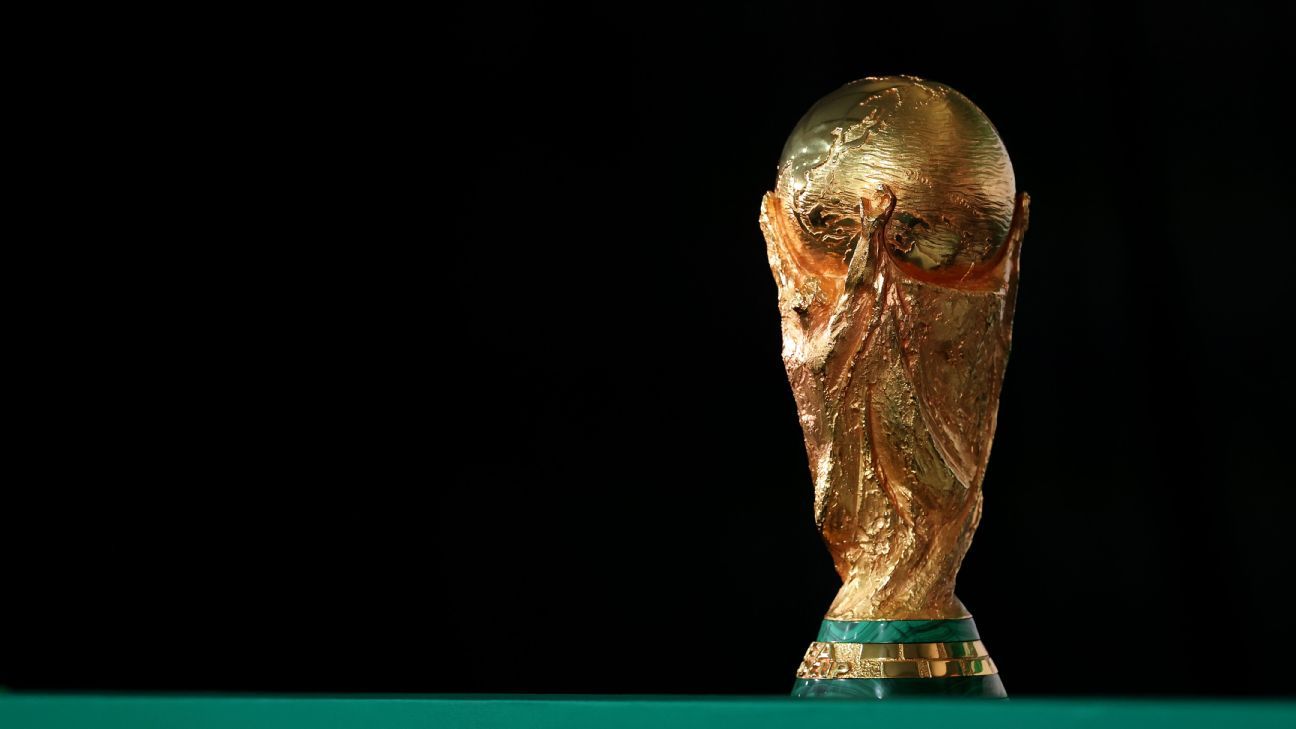
Concerns Raised Over World Cup Integrity
GENEVA — The Council of Europe, a leading human rights organization, has raised significant concerns regarding the integrity of the World Cup, urging FIFA to establish a more robust framework in preparation for the upcoming 2030 tournament, which will primarily take place in Spain and Portugal.
In an open letter addressed to FIFA, the Council’s president spotlighted emerging crises linked to money and power in sports. Following the conclusion of the final match between Spain and Argentina in East Rutherford, New Jersey, he expressed alarm at how these issues might impact the future of global football.
Alain Berset, a prominent Swiss politician, criticized FIFA’s decision to lift the suspension of U.S. national team forward Folarin Balogun, prompted by pressure from U.S. President Donald Trump. He emphasized the risks of fraud associated with the involvement of betting markets in World Cup sponsorships.
Berset pointed to the arbitrary nature of FIFA’s disciplinary actions, referencing Balogun’s original one-match suspension, which occurred prior to a crucial quarter-final match against Belgium—a game that Belgium ultimately won 4-1.
“When external pressures lead to bending the rules, any result can be called into question,” Berset asserted, highlighting the disturbing intersection of politics and sports. His commentary also noted that the suspension was controversially lifted after a direct call from a head of state to FIFA’s leadership.
Concerns Over Betting Influence
FIFA’s recent sponsorship agreement with ADI Predictstreet, which is worth approximately $150 million, has further complicated matters. This deal comes shortly after the establishment of the Abu Dhabi-backed company, and is part of a broader trend involving FIFA’s financial ties to the gambling industry as the World Cup approaches.
Berset cautioned that predictive betting practices may foster insider trading and further compromise the sport’s integrity. He noted that in soccer, bets are often placed on specific player actions that do not directly affect the game’s score, thereby creating vulnerabilities for potential fraudulent activity.
Continued Oversight from the Council of Europe
The Council of Europe’s concerns persist despite FIFA’s commitment to a working agreement in 2018, aimed at promoting transparency and accountability within the organization. This intergovernmental agency, which developed the European Convention on Human Rights, remains dedicated to advancing democracy, human rights, and the rule of law on a global scale.
During the signing of the FIFA-CoE Memorandum of Understanding eight years ago, FIFA President Gianni Infantino emphasized the alignment of their missions regarding issues such as safety in sports and respect for human rights.
In 2024, Berset and Infantino engaged in dialogue at the United Nations General Assembly in New York, underscoring their ongoing discussions about effective governance in football.
Widespread Criticism of FIFA’s Actions
The disciplinary measures taken against Balogun have also come under fire from UEFA, Europe’s governing soccer body. UEFA criticized the swift decision by FIFA, asserting that it undermines rule of law and transparency in the sport. FIFA has yet to provide a detailed explanation for the disciplinary judge’s decision, which raised further questions about the integrity of the organization.
Berset has pointed to the troubling speed at which sanctions were lifted under apparent pressure, calling for greater accountability in light of the tournament’s operational challenges. He highlighted specific incidents, such as questioning referees’ authority, incidents of racism directed at players—and the omnipresent influence of betting on the match.
The Road Ahead for the 2030 World Cup
The next Men’s World Cup will take place largely in Europe, with Morocco as a co-host. This tournament will also see Argentina, Paraguay, and Uruguay host a match apiece, honoring Uruguay’s legacy as the first World Cup host in 1930.
Berset concluded with a call to action for FIFA, proposing that discussions commence immediately to forge a comprehensive and ethical framework for the 2030 World Cup before it unfolds.
