


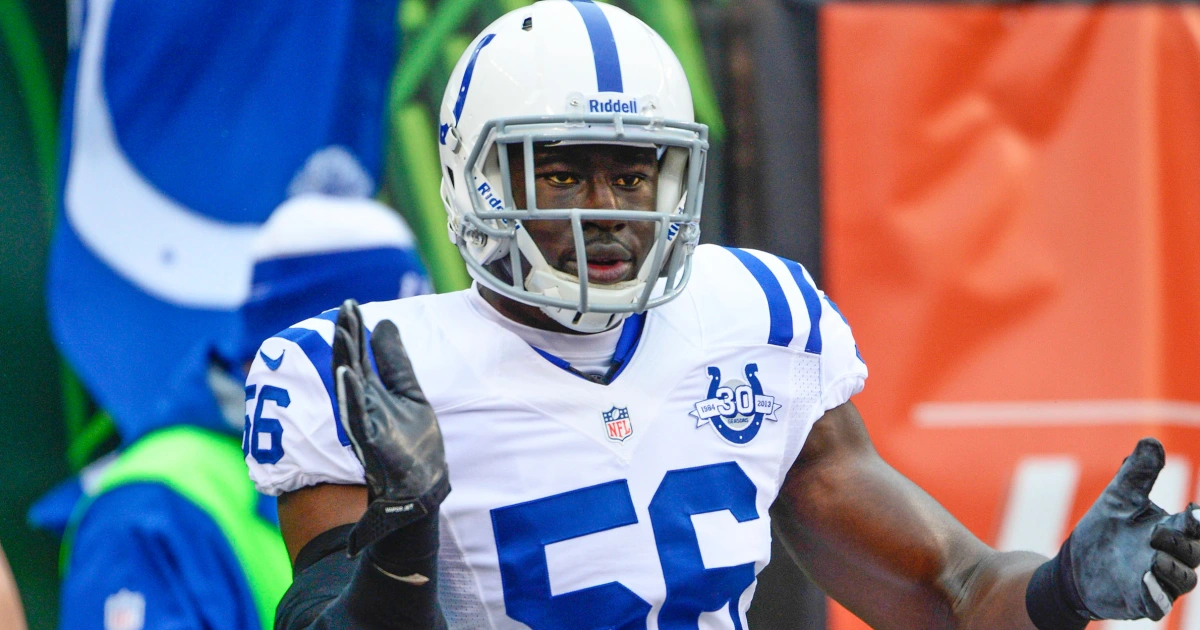
Deportation of Former NFL Player Linked to Immigration Violations
Daniel Ogama Adongo, a former linebacker for the Indianapolis Colts and a pioneering sports figure from Kenya, was deported by Immigration and Customs Enforcement (ICE) last month. The agency reported that Adongo faced deportation due to overstaying his visa and a criminal record.
Background on Immigration Status
Adongo, 37, was removed from the United States on June 20 after ICE confirmed he had overstayed his visa since 2016, a year after he concluded his NFL career. An immigration judge had ordered his deportation in late March, underlining the serious implications of visa violations.
Legal Representation and Responses
Attempts to reach attorneys who formerly represented Adongo yielded no responses. NBC News also struggled to connect with Adongo or identify his current legal counsel for comment, leaving certain aspects of his case unexplored.
A Trailblazer in American Football
Adongo made history in 2013 by becoming the first Kenyan to play in the NFL when he signed with the Colts, symbolizing a significant achievement for athletes from his home country and bringing attention to the globalization of American sports.
Criminal Record and Mental Health Concerns
According to reports by the Indianapolis Star, Adongo’s past includes multiple legal troubles during and after his tenure with the Colts, with some instances leading to rulings of incompetency to stand trial. Those close to him have suggested that he may have sustained traumatic brain injuries during both his football and rugby careers.
Legal Charges and the Laken-Riley Act Implications
ICE has publicly stated that Adongo was convicted in 2020 of misdemeanor charges relating to criminal damage to property, resulting in a 364-day jail sentence, with six months to be served in county detention. Other charges, including felony menacing and assault, were ultimately dismissed. ICE noted that Adongo’s recent issues fell under the Laken-Riley Act, which mandates the detention of undocumented immigrants with certain criminal charges, although critics argue it undermines due process for those not yet convicted.
Community Safety Statements and Mental Health Defense
In a statement, Douglas Thompson, deputy director of ICE’s Chicago field office, framed Adongo as a potential threat to public safety, asserting that his removal bolsters community security. However, Adongo’s defense team previously contended that his arrests were rooted in mental health challenges. A 2020 psychiatric evaluation suggested that Adongo was experiencing acute psychosis, possibly linked to a traumatic brain injury he sustained during his athletic career.
Concerns Over Chronic Traumatic Encephalopathy
Reports indicate that Adongo has shown signs consistent with chronic traumatic encephalopathy (CTE), a degenerative brain condition connected to repeated concussive injuries. This condition can only be diagnosed posthumously, but studies indicate that around one-third of former NFL players suspect they may be afflicted. The NFL acknowledged the association between CTE and football-related injuries in 2016, spotlighting the imperative need for better mental health support for athletes.
Despite inquiries regarding Adongo’s mental health and potential brain damage, the Department of Homeland Security has yet to respond, leaving critical questions about his case unanswered.
