


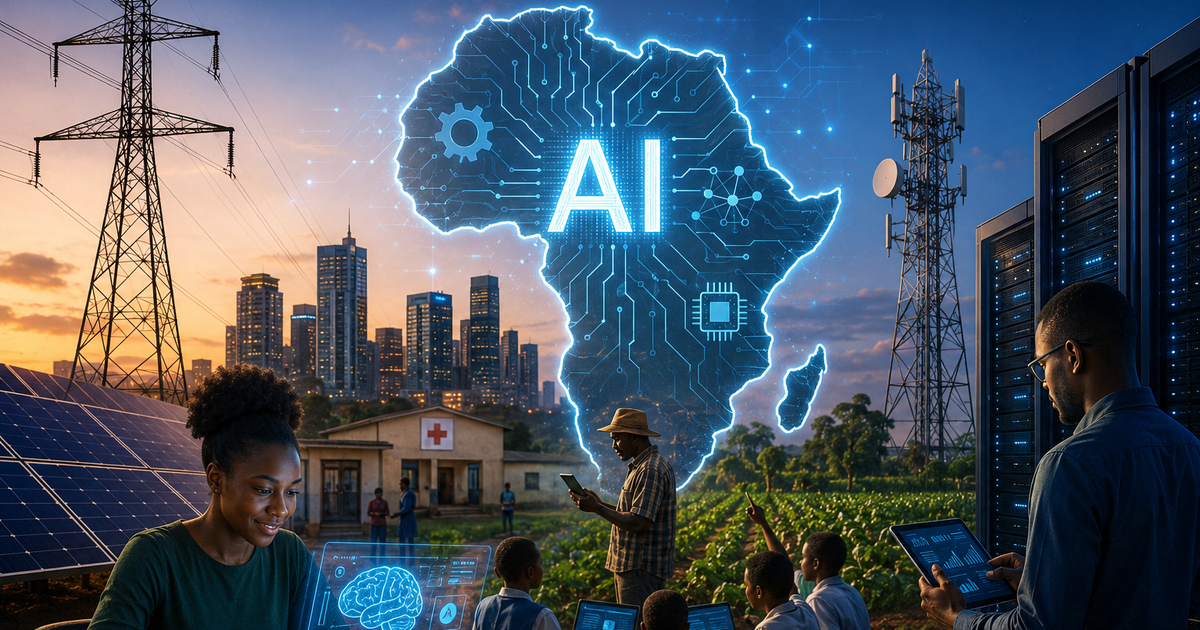
IMF Highlights AI’s Economic Potential in Africa with Necessary Reforms
The International Monetary Fund (IMF) projects that increased adoption of artificial intelligence (AI) could enhance economic output in Africa by approximately 4% over the next decade, provided that governments invest in the requisite infrastructure to support this technology.
However, without significant reforms, the potential economic benefits may dwindle to a mere 0.2%, a negligible improvement, according to the IMF. This stark contrast underscores the urgent need for strategic planning and investment in the region.
The IMF’s findings emerge amid a global race among governments and tech firms to claim a stake in the burgeoning AI economy. Investments are pouring into data centers, cloud computing, electrical power infrastructure, and sophisticated digital networks.
Africa Faces Urgent Infrastructure Challenges
The urgency of this challenge is particularly pronounced for Africa. Although enthusiasm for AI is gaining momentum across the continent, the foundational infrastructure necessary to harness its potential remains inconsistent. The IMF’s AI Readiness Index identifies sub-Saharan Africa as the region least prepared for AI adoption, citing deficiencies in digital infrastructure, human capital, innovation capacity, and regulatory frameworks.
According to Martin Schindler, deputy director of the IMF’s Africa department and a lead author of the report, policy changes will be essential for unlocking additional economic growth through AI.
Infrastructure, Not Innovation, Hinders AI Adoption
In stark contrast to the discussions often observed in developed countries, which focus on job displacement and regulatory issues linked to AI, Africa’s primary challenge lies in making the technology accessible to businesses and households. A pressing concern highlighted by the International Energy Agency indicates that approximately 600 million people in Africa still lack access to electricity, representing a substantial barrier to digital transformation.
The IMF suggests that targeted investments in electricity infrastructure—spanning national grids, mini-grids, educational institutions, hospitals, and public facilities—could cultivate digital hubs capable of supporting AI-driven services. Additionally, reliable internet access remains a significant obstacle; only 38% of Africans are expected to use the internet in 2024, well below the global average of 68%. This limited access restricts opportunities for cloud-based AI tools, online education, and digital business initiatives.
Investment Gains Momentum Amid Challenges
Despite these challenges, investment in Africa’s AI ecosystem is accelerating. Earlier this year, Microsoft, in collaboration with UAE-based G42, announced plans for a $1 billion geothermal-powered data center campus in Kenya, marking one of the continent’s largest digital infrastructure projects to date.
Furthermore, Cassava Technologies has partnered with NVIDIA to deploy advanced graphics processing units (GPUs) in several African countries, including South Africa, Nigeria, Kenya, Egypt, and Morocco, thereby laying the groundwork for enhanced AI computing infrastructure accessible to local businesses and researchers.
Technological Landscape and Investment Distribution
These initiatives reflect a broader trend as global technology firms position themselves for the increasing demand for AI services in emerging markets. However, the IMF cautions that investments are currently concentrated in a limited number of countries, with Africa consisting of only about 160 data centers or approximately 5.5% of the world total. Nearly half of these facilities are situated in South Africa, Nigeria, and Kenya.
The report also warns that without equitable investment, the impending AI boom risks exacerbating the digital divide between various countries. On a positive note, policies aimed at addressing these discrepancies are progressing across the continent. The African Union adopted its Continental Artificial Intelligence Strategy in 2025, establishing a framework for member states to formulate responsible AI policies, bolster digital infrastructure, and foster national innovation.
AI’s Transformative Potential and Required Investments
Countries like Nigeria, Kenya, Rwanda, Morocco, and South Africa are also formulating or advancing national AI strategies designed to attract investment and cultivate local expertise. The IMF believes AI holds the potential to significantly boost productivity across essential sectors of African economies, particularly in agriculture, financial services, health care, education, and government.
Applications such as smarter logistics, precision agriculture, automated customer support, fraud detection, and enhanced medical diagnostics could enable companies to lower costs while improving service accessibility. However, achieving these benefits relies more on governmental commitment to investing in supporting infrastructure than on AI technology itself.
The IMF stresses that this entails the expansion of reliable electricity, improvements in broadband coverage, rigorous digital education initiatives, and the establishment of a regulatory environment conducive to innovation while ensuring consumer protection. Absent these reforms, Africa risks falling further behind as other regions rapidly adopt AI technology.
Ultimately, the IMF’s message highlights a critical nexus: Africa’s future in AI will be shaped not just by technological advancements but also by investments in power infrastructure, digital connectivity, and skill development. The race for AI leadership in Africa may hinge on addressing longstanding infrastructure challenges.
