


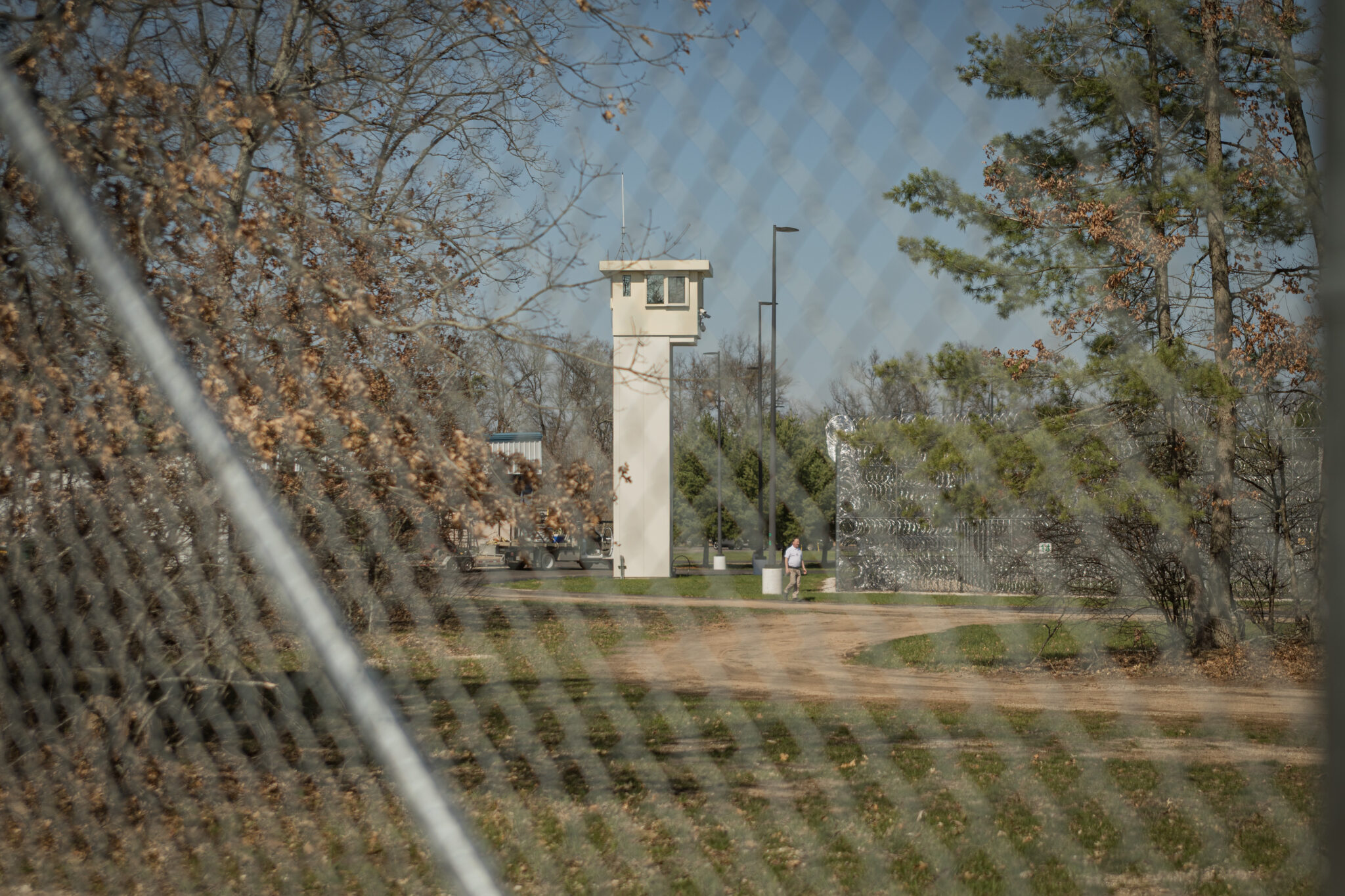
Concerns Rise Over Detainee Health at Michigan ICE Facility
The mother of a detainee at the Northlake Processing Center in Baldwin, Michigan, expressed deep concern on Thursday, revealing that she has not heard from her son since late November. The anxiety over his well-being compelled her to use a detainee search tool to confirm he is alive. Alarmingly, she reported that his mental and physical health had declined severely, rendering him mute and unable to communicate.
Speaking at a press conference organized by the ACLU and the Michigan Immigrant Rights Center, she described her ordeal as “torture beyond words,” translating her sentiments from Spanish for reporters.
Identified only as Heidi C. during the press conference due to fears of retaliation from ICE and the facility’s operator, the GEO Group, her concerns echo broader issues within the detention center. The Michigan Immigrant Rights Center has verified her son’s detention status at Northlake, supplying documentation to substantiate these claims.
Deteriorating Conditions and Lack of Care
Ruby Robinson, a senior attorney at the Michigan Immigrant Rights Center representing several detainees, highlighted that her client has become mute. Earlier this year, she learned that he had been transferred between facilities in Florida, Texas, and Louisiana, with plans for his deportation. However, he has not yet been deported and remains in Louisiana after a brief return to Baldwin.
Robinson recounted a particularly harrowing phone call, during which she had to listen to her son being transported while sedated. “The most painful part was hearing him like that,” she shared. As of Thursday, the Michigan Immigrant Rights Center was informed by ICE that Heidi’s son had been moved to a medical facility for additional treatment, raising questions about Northlake’s ability to provide adequate care.
Christine Sauve, spokesperson for the Michigan Immigrant Rights Center, acknowledged ICE’s current commitment to his medical needs but criticized Northlake for its long-standing failure to meet these requirements over the past eight months. She called attention to the constitutional rights of detainees, emphasizing that they deserve access to medical care, legal counsel, and judicial processes.
Systemic Issues Highlighted by Legal Advocates
The ACLU of Michigan and the Michigan Immigrant Rights Center recently sent a letter to ICE Detroit Field Office Director Kevin Raycraft outlining a range of grievances related to the treatment of Baldwin detainees. They argued that the facility has consistently failed to uphold detainees’ rights, including access to adequate medical care and legal representation.
While acknowledging the complexities of managing large detention facilities, the letter asserted that such challenges should not excuse ICE from fulfilling its obligations to ensure health care and access to legal counsel as mandated by both the Constitution and federal detention standards. ICE has not yet responded to requests for comment regarding these serious accusations.
Alarming Health Risks and Community Impact
Robinson noted that the number of individuals in ICE custody in Michigan has surged sixfold since Northlake reopened as a detention facility in June 2025. “In our communities, arrests are occurring at unprecedented levels,” he remarked, stressing the need for appropriate care for those held longer periods.
Eulama Appiaji Danka, a West Michigan legal fellow with the ACLU of Michigan, recounted a tragic incident involving a mother in her 40s who, lacking access to her blood pressure medication, suffered from severe health complications. Ignored by staff until it was too late, she experienced a hypertensive emergency. While she has been released, the impact of her detention lingers in the form of both psychological and physical scars.
Access Issues and Repercussions for Detainees
Pastor Ricardo Granado, affiliated with the Michigan District Lutheran Church Hispanic Ministries, voiced frustration over being denied access to detainees, despite identifying himself as clergy. This had not been an issue during the months following the facility’s opening. Moreover, family members and legal representatives also report facing barriers to visiting their loved ones within the center.
Granado articulated the challenges faced by detainees, many of whom lack the financial resources to contact family or afford legal representation. “Pro bono attorneys strive to assist as many families as possible, but they cannot reach everyone,” he noted. These barriers contribute to an already precarious situation for those detained, raising additional concerns about mental health.
Allegations of Retaliation and Fear within the Facility
Fears of retaliation loom large at the Baldwin facility, as various reports indicated that inmates suffered from bullying or isolation as a form of punishment. Robinson underscored that these fears inhibit detainees from sharing their concerns about living conditions with families and lawyers.
Both U.S. Representatives Hilary Scholten and Haley Stevens voiced apprehension following reports of severe mistreatment, including one detainee’s description of being placed in solitary confinement under dire conditions. The community is increasingly worried about the potentially hazardous implications of current detention practices and the human rights concerns that permeate these facilities.
