


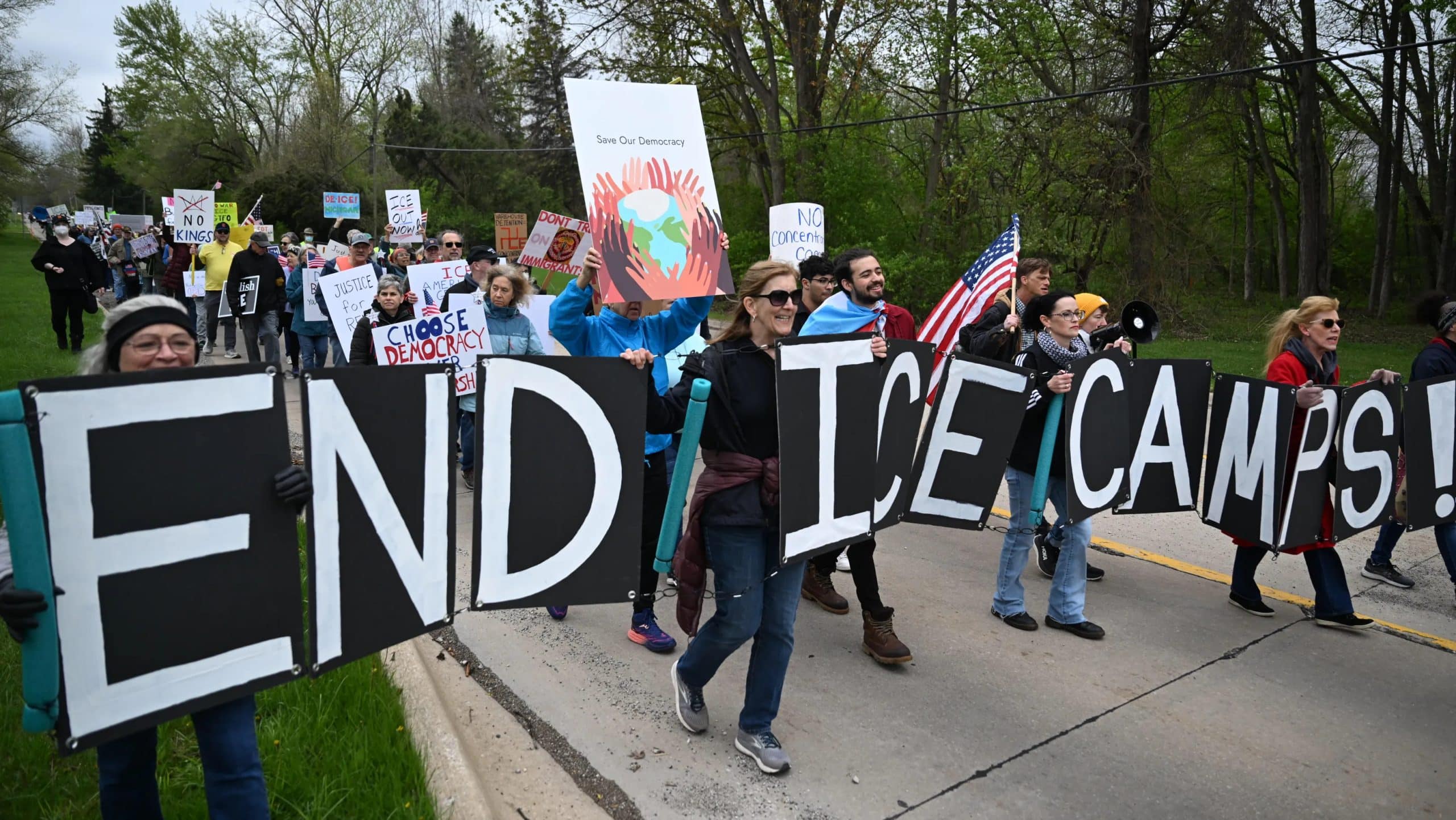
Metro Detroit’s efforts to combat ICE and the policies of the Trump administration have garnered a significant victory with the announcement that authorities will not proceed with the construction of a new detention center in Romulus. Instead, ICE plans to sell the facility, one of 11 acquired earlier this year by the Department of Homeland Security (DHS) to enhance deportation efforts. In addition to Romulus, ICE has also opted to “offload” seven other properties, intending to either sell or transfer them to other federal agencies.
This decision marks a notable reversal of the national agenda to expand infrastructure associated with deportation initiatives. Currently, ICE and the Trump administration find themselves in a weakened state amid rising public opposition to their harsh immigration policies.
The choice not to advance the construction of additional detention centers reflects the momentum generated by grassroots mobilizations, particularly the protests in Minneapolis that signified a tactical setback for President Trump’s anti-immigration agenda. While Trump has not relinquished his aggressive stance against immigrants, the unrest in Minneapolis has catalyzed widespread discontent with the far-right’s extreme measures, further galvanizing the immigrant rights movement. This is evident in recent Republican proposals to allocate $70 billion in funding for DHS, prompting the agency to adopt a more discreet approach regarding its immigration enforcement tactics to avoid igniting further resistance and solidarity among immigrant communities.
These developments have invigorated efforts by numerous communities nationwide to scrutinize local ICE detention centers. In Michigan, activists have been staging weekly protests at the proposed Romulus detention facility, part of a broader campaign against ICE’s operations in the Detroit metropolitan area. These demonstrations, intensified by heightened scrutiny of ICE following events in Minneapolis, significantly contributed to DHS’s assessment that maintaining ICE detention in Romulus was no longer feasible due to the associated risks.
Resurgence of Opposition in New Jersey
In Newark, New Jersey, the fight against ICE has also intensified, fueled by a mobilization at Delaney Hall that responded to a hunger strike and labor strike involving approximately 300 detainees. Hundreds gathered outside the facility, challenging federal agents and state police who attempted to suppress their protest. Rather than quell the movement, this confrontation drew significant national attention, inciting outrage towards Democratic Governor Mikie Sherrill, who aligned with ICE against the demonstrators and garnered support from activists in neighboring states, including New York and Pennsylvania.
New Jersey is on track to establish a large ICE detention center, having already acquired one site in Roxbury, known for its rural and conservative demographic. However, public reaction to the facility was swift and robust, with both progressive and conservative voices decrying the development. The protest, organized by the Northern New Jersey chapter of the Democratic Socialists of America alongside other local groups, attracted substantial counter-protests, evidencing significant public mobilization in a state where demonstrations rarely exceed 100 participants, even in urban centers like Newark and Jersey City. The Roxbury site is one of seven properties ICE plans to divest.
New Jersey’s long-standing struggle against ICE detention centers exemplifies the potential of the immigrant rights movement to achieve victories against oppressive policies. The state was compelled to shutter three detention centers in 2021 due to organized resistance. Nevertheless, this situation also highlights the challenges faced when the movement becomes overly reliant on the Democratic Party and judicial systems for protection. This reliance was evident in 2023 when President Biden’s partnership with private prison companies weakened state regulations prohibiting private facilities, ultimately paving the way for the opening of Delaney Hall.
Emphasizing Independent Organizational Strength
The assault on immigrant communities transcends party lines, necessitating politically independent, grassroots organizations for effective resistance. ICE’s decision to halt plans for new detention centers in places like Romulus and Roxbury serves as a testament to this approach. It underscores the notion that significant victories do not require the election of more Democrats.
To further illuminate ongoing organizational initiatives aimed at confronting ICE—such as mutual aid programs for families impacted by ICE actions, campaigns advocating for the release of detainees, and efforts to expose ICE’s operations—a coalition of organizations intends to host an open court session in metropolitan Detroit. Activists are also planning a protest at the Romulus facility, demanding transparency regarding the sale of the detention center.
While the announcement of ICE’s reversal is a noteworthy achievement, the movement must continue to expand. The focus needs to be on abolishing ICE and closing all detention centers while advocating for the full rights of immigrants to live, work, and participate in civil and political life free from fear, including the right to vote. Strengthening and amplifying grassroots organizations and rallies within workplaces, educational institutions, and communities is essential to advance this critical fight and counter any attempts by the Trump administration to undermine the movement.
