


The Growing Concern for Jewish Safety in Britain
LONDON — By 2026, Britain may pose a stark reality for Jack Herr, who feels uneasy wearing a Star of David pendant in public. In some areas, Jewish mothers are advising their teenage sons to remove their kippot while using the subway. Discussions around leaving the country have shifted from the fringe to the forefront of conversation.
Personal Safety in a Changing Environment
Behind the counter of a modest kosher store, 32-year-old Herr discreetly displays a Star of David necklace, pulling it from beneath his sweatshirt. He reveals a black skullcap from his pocket, emphasizing its limited use. “I only wear this once in a while,” he notes, stating, “It depends on where I am.” This sentiment reflects a broader sense of insecurity among many Jews in Britain, who harbor concerns that the nation no longer feels safe.
Escalation of Anti-Semitism in the UK
Golders Green, home to a small Jewish community, increasingly resembles a fortress under siege. Incidents of anti-Semitism have surged since the Hamas-led attack on Israel on October 7, 2023, followed by retaliatory Israeli actions in Gaza. In fact, the Community Security Trust reported that the UK saw over 3,700 anti-Semitic incidents last year—more than double that of 2022—and recent months have witnessed an uptick in attacks targeting synagogues and Jewish institutions.
Recent Violence Intensifies Fears
This week, two individuals were stabbed in Golders Green. Authorities arrested Essa Suleiman, a 45-year-old man with a history of ties to extremist programs. Classified as a terrorist attack, this incident has prompted the Metropolitan Police to heighten the national threat level, suggesting that an attack is “very likely” in the coming months.
The Broader Implications of Rising Threats
Lawrence Taylor, assistant superintendent at the Metropolitan Police, pointed out a worrying pattern: “The UK has been experiencing a gradual increase in the threat of terrorism due to a rise in both Islamist and far-right extremism.” His statement highlights that threats against British Jewish and Israeli individuals are growing, as investigations into hate-driven incidents intensify.
Community Reactions and Political Accountability
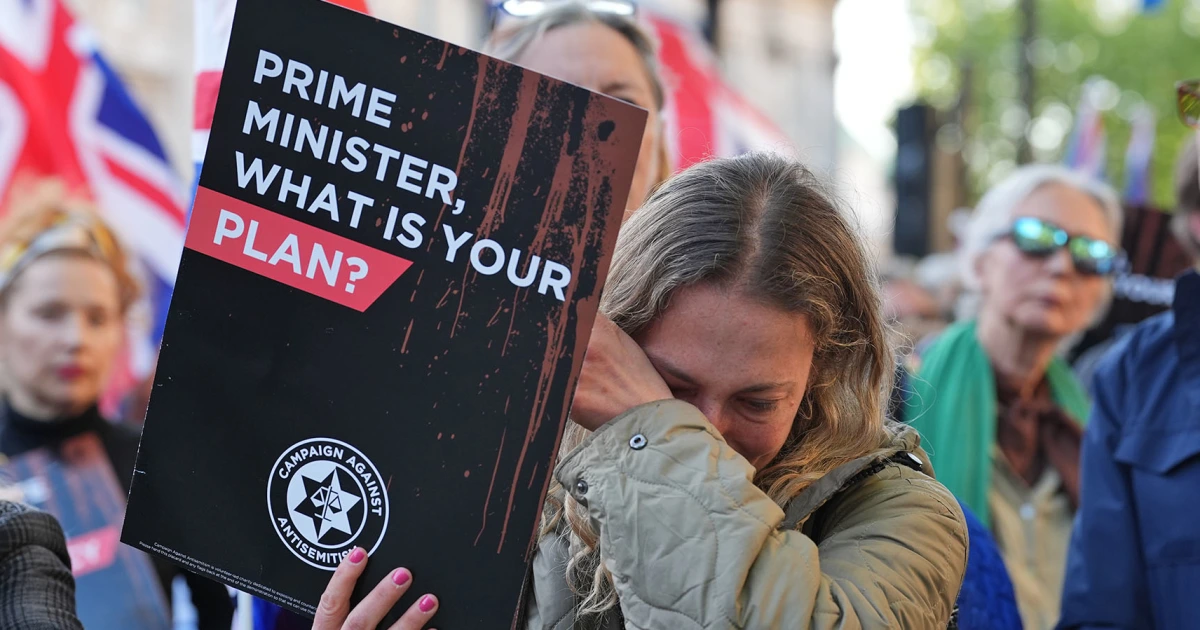
Beneath the surface anger, prominent voices like Britain’s Chief Rabbi, Ephraim Mirvis, resonate with Herr, stressing the precariousness of being visibly Jewish in today’s Britain. This sentiment has been echoed by local leaders who criticize Prime Minister Keir Starmer’s response to a string of anti-Jewish protests, which they argue have contributed to an atmosphere of fear. A recent visit by Starmer to Golders Green was interrupted by demonstrators chanting accusations against him, reflecting the community’s growing frustration.
Social Divisions and Rising Tensions
The conversation in Golders Green has increasingly turned towards a broader hostility, with fears directed not just at anti-Semitism but also at Muslims, amid anxieties over new waves of immigrants. Local residents express concerns that these groups could disrupt the fabric of British society. Yet, many Jewish leaders counter that historical community partnerships must lead the conversation towards interfaith dialogue and understanding.
The Deteriorating Atmosphere for Jews in Britain
The streets around Golders Green are eerily quiet as the Jewish Sabbath approaches. For many, the recent incidents, including vandalism of synagogues and violent attacks, signify a troubling emergence of anti-Semitic language that was once concealed behind a veneer of civility. A poll indicated that 61% of the Jewish community is contemplating leaving the UK, a crisis of confidence that underscores the profound challenges faced by Britain’s Jewish citizens today.
