


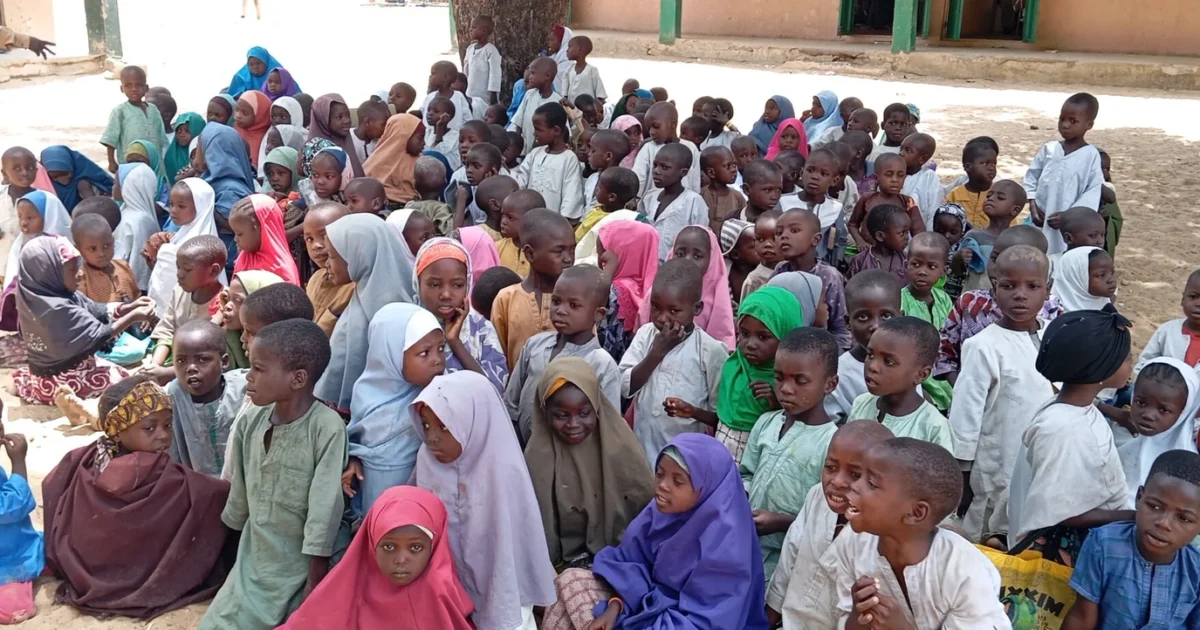
UNICEF Highlights Need for Investment in Early Childhood Education in Nigeria
UNICEF has emphasized the urgent need for investment in early childhood education as a critical pathway to addressing Nigeria’s education crisis. Jigawa, Kano, and Katsina have been identified as the states with the highest number of out-of-school children, contributing significantly to Nigeria’s alarming statistics.
Currently, Nigeria is home to approximately 18.3 million children who are not attending school, the highest figure globally. This staggering number underscores the gravity of the situation and the necessity for immediate action.
Aisha Abdullahi, an education consultant at UNICEF’s Kano field office, delivered this alarming update during a recent two-day dialogue with journalists held in Jigawa, Kano, and Katsina. In her presentation on basic learning and skills development, she identified several factors contributing to the education crisis, including poverty, insecurity, cultural obstacles, and insufficient school readiness, which collectively account for nearly 30% of the children out of school in these three states.
Abdullahi underscored that early childhood care, development, and education (ECCDE) represent strategic and sustainable solutions that can prevent children from dropping out of the education system before they even begin. She noted that a proactive approach must replace reactive strategies, as early childhood education lays the groundwork for lifelong learning.
“Early childhood education is not merely a preparatory step, but a crucial intervention to help reduce the out-of-school rate,” Abdullahi stated. She explained that ECCDE is targeted at children from birth to age five, fostering the cognitive, emotional, and social skills essential for success in formal schooling.
Research indicates that children who engage in early learning are significantly more likely to enroll in school and persist through their education, while those who miss such opportunities are twice as likely to drop out. Abdullahi pointed out that by age five, nearly 90% of brain development occurs, making this an essential period for educational intervention.
Despite existing policies that include one year of pre-primary education within Nigeria’s universal basic education framework, access to ECCDE remains limited, particularly in rural regions. Abdullahi noted that where ECCDE centers are operational, Primary One enrollments have increased by as much as 40%, with retention rates improving correspondingly.
UNICEF experts also stressed the importance of early childhood education in promoting girls’ education. By mitigating social pressures such as early marriage and increasing parental engagement, particularly from mothers, ECCDE plays a vital role. However, concerns were raised about the lack of father involvement in early learning, with less than 15% participating actively in the region.
Participants in the dialogue highlighted that enhancing male engagement could potentially cut dropout rates by half due to fathers’ influence in family decisions. They recommended initiatives such as community advocacy, mosque involvement, and structured father-son programs to bridge this gap.
Despite these discussions, there is a pressing need for immediate policy action. Stakeholders are calling for the expansion of ECCDE provisions to all primary schools, advocating for at least 5% of education budgets to be allocated to early learning, increasing teacher training, and integrating traditional and religious education systems. These strategies are viewed as vital for strengthening early childhood education through adequate investment and delivering quality education, which remains the most effective solution to Nigeria’s out-of-school child crisis.
