


Justice Department Challenges Virginia’s Immigration Laws
The Justice Department under the Trump administration has initiated a legal challenge against several recently enacted laws by Virginia Democrats that impede federal immigration enforcement operations. Filed in the Eastern District of Richmond, the complaint specifically targets a law that prohibits federal law enforcement officers from wearing masks and seeks to restrict 287(g) agreements between federal immigration authorities and state or local law enforcement agencies.
Legal Implications of the Mask Ban
The Justice Department argues that the mask ban represents an unlawful attempt to regulate federal authorities, specifically threatening to prosecute federal employees for hiding their identities while on duty. “Law enforcement officers risk their lives every day to keep Americans safe, and they should not be subjected to investigation or harassment for doing their jobs,” stated Acting Attorney General Todd Blanche.
Defendants Named in the Lawsuit
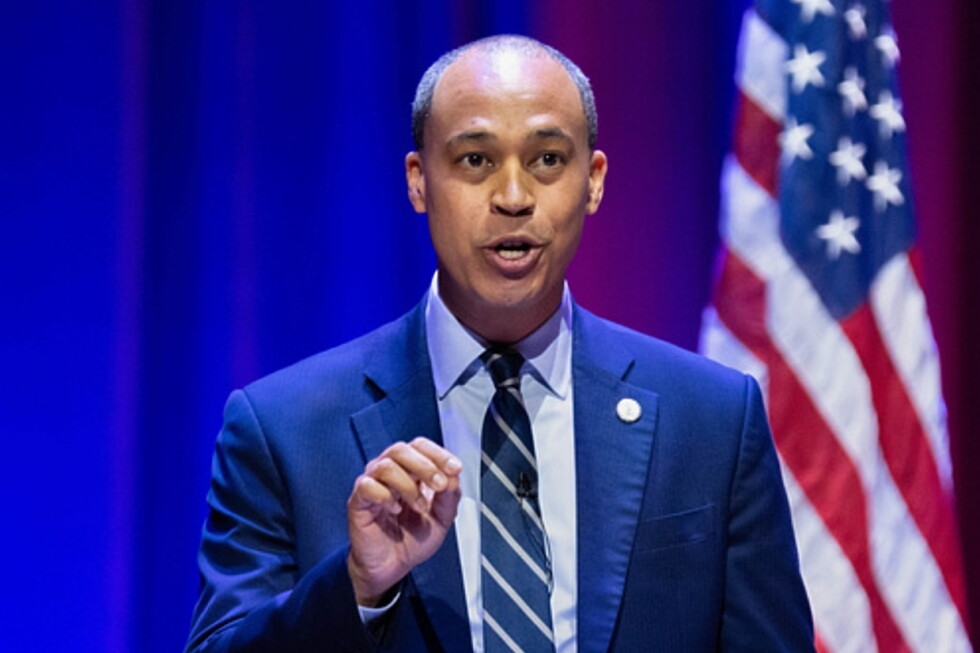
Virginia State Attorney General Jay Jones and Fairfax County Commonwealth’s Attorney Steve Descano have been named as defendants in the lawsuit. Responding to the allegations, Jones revealed that his office is contemplating a counter-lawsuit to defend the state’s new regulations.
Details of New Legislation on 287(g) Agreements
As specified in legislation SB783 and its companion bill HB1441, set to take effect on July 1, state and local law enforcement agencies will be barred from entering into 287(g) agreements that support federal civil immigration enforcement. This decision follows directives from Democratic Governor Abigail Spanberger, who, earlier in February, instructed Virginia officials to terminate existing arrangements with U.S. Immigration and Customs Enforcement (ICE).
Constitutional Concerns Raised
In its court submission, the federal government has labeled the law limiting federal immigration agreements as “unconstitutional.” The Justice Department underscores that Virginia’s attempt to nullify a federal law, which permits ICE to form agreements with state and local governments for immigration training, is beyond its jurisdiction.
Prohibition on Mask Use During Law Enforcement
Another significant piece of legislation, SB352, alongside its companion HB1482, is scheduled to come into effect on the same date, prohibiting law enforcement officers from wearing masks while on duty. Exceptions are noted for necessary health-related face coverings, as well as for tactical missions. Violations of this law could lead to a Class 1 misdemeanor charge for officers.
Support for Transparency and Trust in Law Enforcement
Governor Spanberger, a former federal law enforcement officer, has expressed strong support for this legislative initiative. According to a spokesperson, “Transparency, accountability, and earning public trust are essential for upholding the rule of law.” This view reflects concerns that masked officers may erode the foundational trust built between police and communities over the years.
Community Trust and Law Enforcement Discretion
The legislation restricting 287(g) agreements has garnered support from its sponsors, including Delegate Alfonso Lopez, who advocates for maintaining trust between law enforcement and community members. Lopez emphasizes that HB1441 allows local agencies the discretion to choose when to engage in federal operations.
Governor’s Mixed Response on Immigration Regulation
Governor Spanberger’s approach to immigration regulation has been somewhat mixed; she vetoed another bill, SB351 and HB650, that would prevent federal immigration officials from making civil arrests in sensitive public areas like schools and hospitals. A presidential order was also issued, directing state agencies to limit federal access to public land for immigration enforcement unless officers possess a valid warrant. This overarching order aims to provide clear guidance to local entities on handling interactions with federal immigration authorities.
