


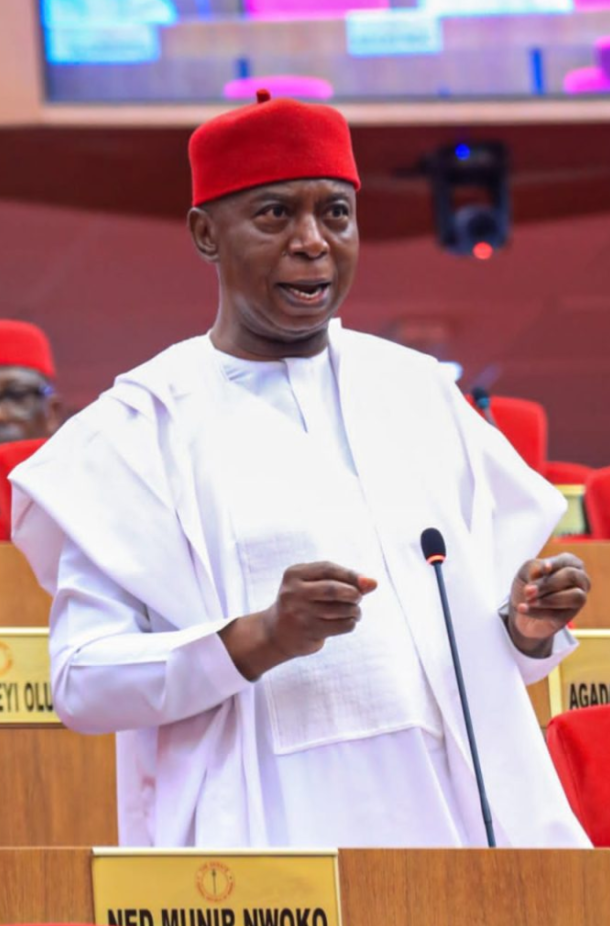
Senator Ned Munir Nwoko’s arrival in the Nigerian Senate in 2023 marked a significant moment for the Delta North Senatorial District. His emergence was celebrated throughout Anioma, with many viewing him as a formidable figure possessing the influence and intellect necessary to transform legislative representation.
Two years into his tenure, expectations have matured into a clear legislative presence defined by ambitious initiatives, vigorous advocacy, and a development-centric agenda for his constituency. In an era when public confidence in political leadership is often tested, Senator Nwoko has established himself as a vocal representative, unafraid to address pressing national issues.
His engagement spans a wide array of topics—from constitutional reform and institutional development to pressing issues of security, economic nationalism, healthcare, and diaspora engagement. Nwoko’s contributions demonstrate an ability to link local concerns with broader national priorities, revealing a nuanced understanding of governance.
For the people of Delta North, his tenure is marked by increased visibility, accessibility, and ongoing engagement. Beyond local politics, Nwoko stands out as a passionate advocate, frequently championing controversial legislative proposals that command national attention.
Legislative Achievements Reflecting National Concerns
Senator Nwoko’s activity in the Senate is evident in his impressive legislative track record. In under two years, he has sponsored and co-sponsored over 30 bills and 25 motions addressing key areas of national interest. Among his most significant proposals is the motion to create an Anioma state, a long-standing aspiration for many within Delta North. The bill has successfully passed its first and second readings, alongside regional public hearings, signaling growing institutional support for a cause that has long fueled political discourse in the region.
Supporters of the Anioma state proposal argue that it transcends mere administrative restructuring, advocating for enhanced identity, equity, and inclusion within Nigeria’s federal framework. Another critical initiative includes his bill to establish a National Malaria Elimination Agency, aimed at bolstering Nigeria’s response to one of the continent’s most pressing public health challenges. This bill has advanced through the Senate’s Tertiary Health Committee, highlighting its potential impact.
Nwoko has also drawn attention for proposing that global social media companies establish physical offices in Nigeria. Proponents believe this could improve tax collection, create jobs, and enhance digital accountability in Africa’s largest online market. His legislative efforts further extend to a framework for diaspora voting, local government autonomy, and regulations on foreign currency salary payments in Nigeria, among others.
While some of his proposals have ignited controversy—such as facilitating broader access to firearms and advocating mandatory military service for young Nigerians—his approach has undeniably catalyzed national debates that challenge conventional political narratives.
Raising National Issues through Senate Motions
In addition to his legislative initiatives, Senator Nwoko has adeptly utilized Senate motions to spotlight urgent national issues. His motion regarding oil theft in the Niger Delta was among the early, impactful actions of his Senate career, leading to the formation of a special committee chaired by Nwoko himself—marking a notable increase in his influence within the chamber.
For many in oil-producing areas, oil theft remains a persistent issue, costing Nigeria billions annually while threatening both economic stability and the wellbeing of local communities. Nwoko has also addressed environmental injustices, notably through his motion related to gas flaring in Ndokwa, drawing attention to the long-term health risks faced by residents.
An advocate for reparative justice, Nwoko has raised motions addressing historical injustices such as slavery and neo-colonialism, seeking to engage Nigeria in a global conversation on justice and equity. Domestically, he has taken action on pressing matters including insecurity in Abuja and the impact of flooding in Delta North, displaying a commitment to addressing a broad spectrum of challenges.
Strengthening Representation for Anioma
While his national profile continues to rise, Senator Nwoko’s foundational strength remains deeply embedded in Anioma. A notable achievement includes his successful advocacy for the restoration of the Aniocha North II state constituency, a complex issue that had been mired in political and legal ambiguity for years. His sponsorship of a motion referencing a Supreme Court ruling ultimately garnered unanimous support in the Senate and approval from the House of Representatives, setting the stage for action from the Independent National Electoral Commission.
This development not only signifies a legal victory but also the revival of political representation for communities long excluded from the legislative process. Nwoko’s supporters view these results as a testament to his ability to merge legal acumen with political strategy in advocating for the interests of his constituents.
Direct Interventions Beyond Legislative Duties
Senator Nwoko is distinguished by his proactive approach to security and humanitarian issues. His intervention during the crisis involving His Majesty King Clement Ikoro of Ewu Kingdom following a tragic incident showcased his adept handling of sensitive matters. He engaged military authorities to urge a careful and humane resolution, asserting that prolonged detention could exacerbate tensions and undermine collaborative investigative efforts. His offer to personally guarantee the monarch was widely regarded as both courageous and conciliatory.
Following King Ikoro’s release, officials credited Nwoko’s advocacy with helping to defuse tensions. A similar approach characterized his involvement in the Onitsha Olona illegal arms factory case, where he shifted the narrative, viewing it as a reflection of untapped technological potential among Nigeria’s youth. His collaboration with military officials led to the release of several detainees, echoing his commitment to rehabilitation and innovation rather than mere punitive measures.
In line with this vision, Nwoko has proposed a National Human Resources Rehabilitation and Integration Framework aimed at redirecting skilled individuals engaged in illegal activities toward productive sectors with organizational support and training, revealing a commitment to transformative governance.
Empowering Delta North Through Constituency Projects
Outside the Senate chambers, Senator Nwoko has implemented various constituency projects that emphasize infrastructure, healthcare, education, and economic empowerment. Across Delta North’s nine local government areas, efforts associated with his office include classroom construction, upgrading healthcare facilities, deploying solar-powered lighting, and initiating agricultural support programs.
His initiatives extend into the education sector, with the establishment of the Federal University of Agriculture in Idomje Ugboko and an ongoing upgrade of the Federal College of Education (Technology) in Asaba. Additionally, he champions infrastructure projects such as the Ogwasi-Ukwu Regional Water Supply Plan and various rural road constructions, addressing the community’s essential needs often overlooked during development planning.
One of his most ambitious proposals involves establishing a coastal road across several delta regions, earmarked for budget consideration by the Niger Delta Development Commission. For voters, these initiatives reinforce the notion that their representatives are committed to balancing national political engagement with grassroots development.
Visibility as a Political Strategy
In Nigeria’s complex political landscape, visibility plays a crucial role in shaping public perception. Senator Ned Nwoko appears acutely aware of this dynamic. His consistent engagement in political discourse—whether through Senate debates, interactions with traditional institutions, or commissioning community projects—has solidified his presence within the political arena.
Though some may scrutinize his positions, few dispute his willingness to confront contentious subjects directly. His name recognition and influence are further underscored by his committee appointments, including his role as chairman of the Senate Reparations and Repatriation Committee, reflecting the confidence vested in him by his colleagues.
As his first two years in office draw to a close, Senator Nwoko stands as a determined lawmaker, intent on making a significant impact on both Anioma politics and national governance. His supporters recognize his courage and intellectual prowess, while critics may label him as ambitious and provocative. Yet, his legislative energy and policy initiatives reveal a presence that is increasingly hard to overlook in Nigeria’s vibrant political scene.
At this juncture, the pertinent question is no longer whether Senator Ned Nwoko has established a presence in the Senate, but rather whether the momentum he has created can translate into lasting institutional influence for both Anioma and Nigeria as a whole.
