


For nearly two decades, football has harbored a fundamental truth: never underestimate Lionel Messi. As Argentina faced adversity, with time slipping away, hope seemed elusive. Yet, this extraordinary talent always discovered a final trick hidden within his boots. He salvaged Argentina against Egypt, inspired his team against Switzerland, and orchestrated a remarkable comeback against England. Each chapter of Argentina’s title defense concluded the same way, with Messi at the heart of yet another miracle. However, on Sunday night at MetLife Stadium, the magic finally waned.
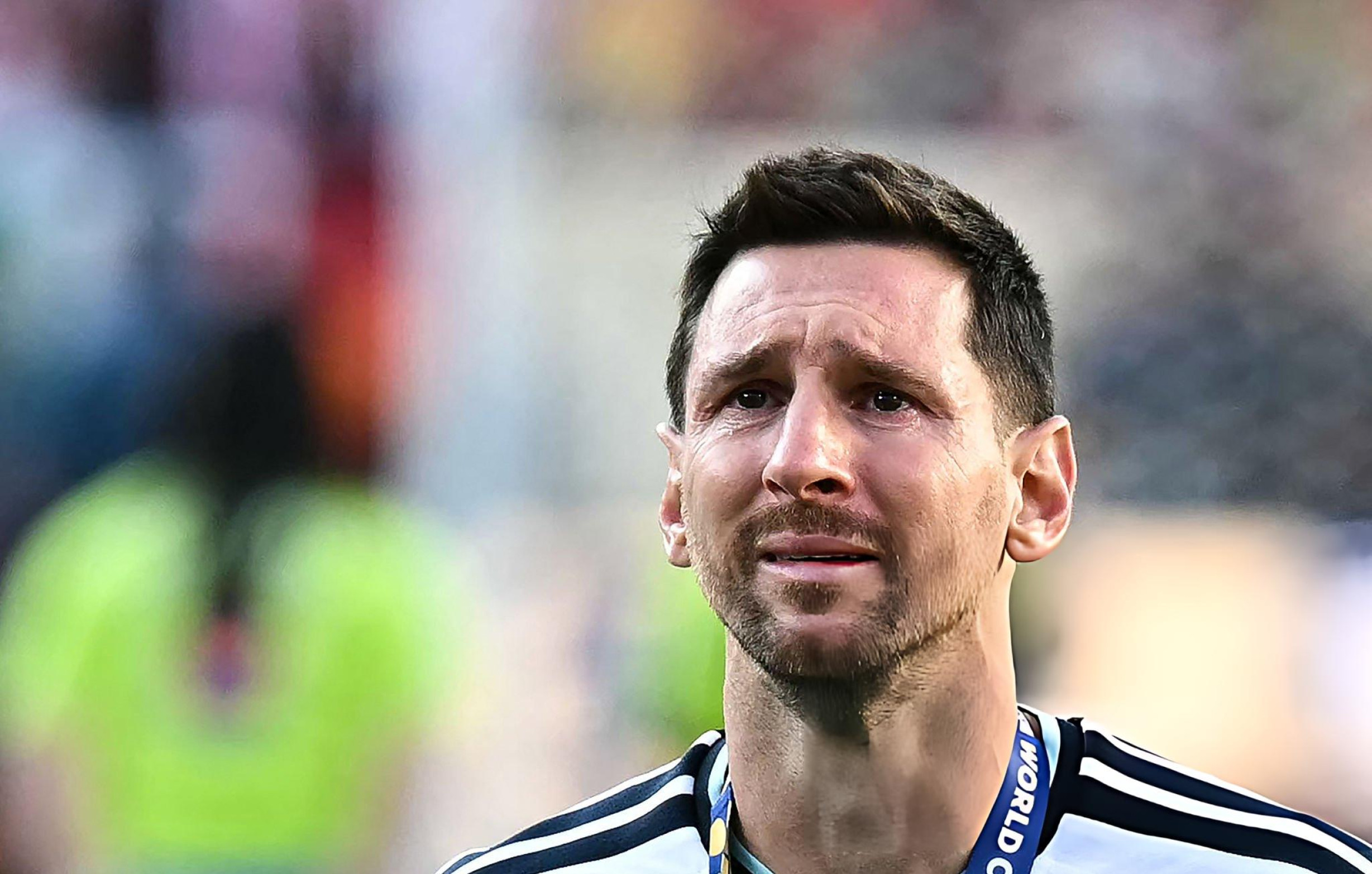
Spain refused to become just another victim. Instead, it was Messi—the player who has convinced millions that the impossible can always happen—who exited the pitch with tears streaming down his face. Argentina’s dream of winning consecutive FIFA World Cups came to a heart-wrenching conclusion.
Early Extra Time Goal Shatters Argentina’s Hopes
The reigning world champions were poised for a penalty shootout when disaster struck. Just 37 seconds into the second extra period, substitute Ferran Torres found the back of the net, securing a 1-0 victory for Spain and marking La Roja’s second FIFA World Cup triumph. This goal dashed Argentina’s aspirations to become the first men’s team since Brazil in 1962 to defend their World Cup title successfully. As Spain’s players sprinted towards the corners in celebration, Argentina’s stars crumbled on the grass in disbelief, with Messi at the center, motionless, broken, and silent.
An Emotional Farewell from a Footballing Icon
As golden confetti cascaded over Spain’s jubilant squad, the footballing world witnessed a scene almost unimaginable: Lionel Messi in tears. The eight-time Ballon d’Or winner, whose career has been defined by improbable moments and unforgettable victories, lowered his head, shoulders slumping, visibly overwhelmed with emotion. Some Spanish players paused their celebrations to console Argentina’s captain before the trophy presentation. Messi then slowly approached the Argentine supporters, who stood and applauded the man who had kept their dream alive for nearly two decades, but laughter eluded him.
A Tribute to Greatness from Scaloni
Argentina’s coach, Lionel Scaloni, acknowledged the lingering pain of the defeat while urging the world to celebrate what Messi has contributed to football. He remarked, “He is the greatest footballer to have ever stepped onto the pitch, so I hope everyone is proud of him and his achievements.” Scaloni also mentioned he had yet to discuss Messi’s future with the national team, leaving uncertainty about whether this World Cup final would be the legendary forward’s last appearance in Argentina’s iconic sky blue and white kit. Messi had previously suggested that the 2022 Qatar World Cup might be his final bow, only to return for a record-breaking sixth appearance.
Spain’s Strategy Stifles Messi
For perhaps the first time in this tournament, Messi struggled to find the rhythm that had propelled Argentina’s remarkable journey to the final. Spain made it their priority to neutralize him, and their game plan paid off. Messi recorded just 15 touches in the first half and finished the match with a mere 54. His signature shot down the middle failed to materialize, and his left foot, typically a source of threat, was effectively contained. Spain’s strategy clearly focused on denying Messi any space to operate, as coach Luis de la Fuente confirmed, stating, “The initial idea was to keep Messi at bay.” Ferran Torres, who eventually scored the winning goal, admitted that merely facing Messi made him nervous.
A Night of Milestones Yet Heartbreaking Loss
Despite the crushing defeat, Messi reached yet another significant milestone in his illustrious career. At 39 years old, he made history as the first player to start in three FIFA World Cup finals and became the second, after Brazil’s Cafu, to appear in three such finals. At 39 years and 25 days, he also became the oldest outfield player to feature in a World Cup final. Contributing significantly once more, Messi netted eight goals and provided four assists throughout the tournament, solidifying his legacy across six World Cups.
Ten-Man Argentina’s Valient Effort
In the final moments of the match, Enzo Fernandes was sent off, complicating Argentina’s efforts and forcing a 10-man squad into extra time. Despite their numerical disadvantage, the team continued to fight, believing in the possibility of another miraculous turnaround. However, unlike in earlier rounds against Egypt, Switzerland, and England, Messi could not conjure another display of brilliance. This time, the magic simply ran out.
An Uncertain Future Filled with Memories
As the final whistle blew, Messi collapsed onto the pitch, gazing up at the night sky while Spanish players celebrated their championship. Minutes later, Spain formed a guard of honor as Argentina collected their runner-up medals. Messi circled the field, expressionless, accepting gentle pats on the back from opponents recognizing his extraordinary career before silently disappearing down the tunnel, leaving his international future shrouded in uncertainty.
Spain deserved their title, having dominated possession and controlling the game’s tempo with a remarkable 20-2 shot advantage. However, long after Ferran Torres’ decisive goal fades into memory, the enduring image from MetLife Stadium may not be the champions celebrating, but instead, Lionel Messi—the boy from Rosario transformed into one of football’s greatest artists. He led Argentina to their third World Cup triumph, becoming a symbol of hope who inspired an entire generation to believe in miracles, even as he stood alone, holding back tears, because for the first time in what felt like an eternity, even Messi could not save Argentina.
