


Shadi Bushra, Minpost.
Challenges at Fort Snelling Immigration Court Spark Legal Action
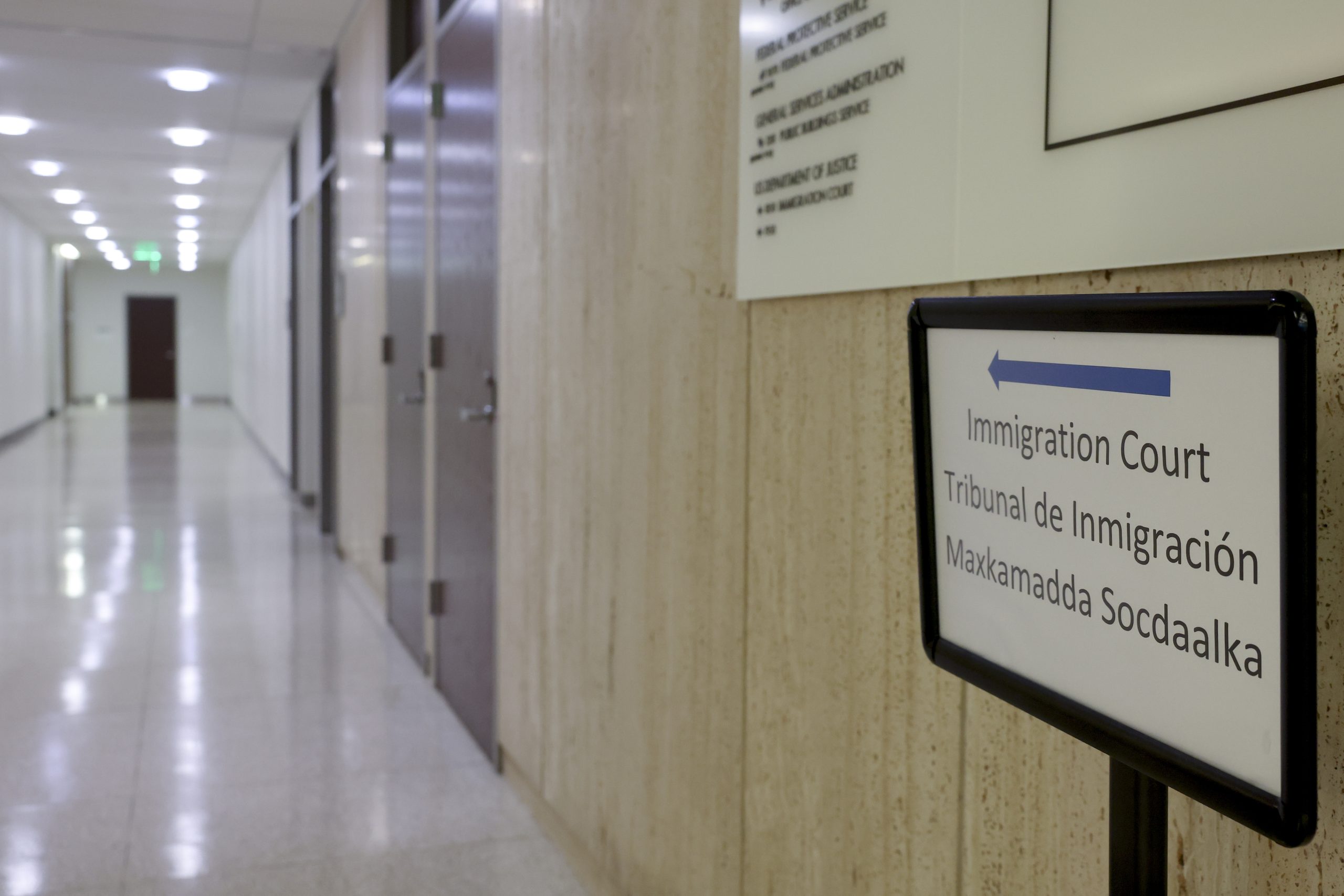
A federal judge in Washington, D.C., recently considered arguments from a Minnesota-based advocacy group that alleges the Fort Snelling Immigration Court is infringing upon federal regulations and the First Amendment by limiting public access to its court proceedings.
Impact of Operation Metrosurge on Immigration Detentions
Since the initiation of Operation Metrosurge, over 4,000 individuals from Minnesota have been detained, as noted by the Deportation Data Project. Many of these cases are processed at the Fort Snelling court, either through virtual hearings or in-person appearances from various facilities across the state and beyond.
Restricting Public Oversight through Legal Means
A lawsuit brought forth by human rights organizations contends that federal immigration courts have barred volunteer observers from witnessing these proceedings. This restriction effectively shrouds significant legal actions, such as deportation and asylum decisions, in secrecy.
Statutory Implications of Potential Injunction
The outcome of this legal dispute could have nationwide repercussions. Advocates believe that if the injunction is enacted, it may standardize access to immigration courts across the country, fostering greater transparency and accountability. This move would mark a significant departure from the erratic policies observed during the latter part of the Trump administration.
Calls for Clarity on Court Access Rules
“The implications of the injunction will depend on its scope,” remarked Madeline Roman, the group’s advocacy and outreach director. “It’s essential for us to receive some form of notification regarding court closures so we can understand the rationale behind them, even if our attendance remains restricted.”
The Structure of Immigration Courts
It is crucial to note that immigration courts do not fall under the traditional judicial system. Instead, they belong to the executive branch, operating under the Department of Justice’s Office of Immigration Review. The lawsuit identifies leaders from this office and the Department of Justice, along with the assistant chief immigration judge at Fort Snelling, as defendants.
Evolution of Court Monitoring Initiatives
In response to the travel ban enacted by President Trump in early 2017, advocates established the Immigration Court Observer Program at Fort Snelling. This initiative aimed to ensure oversight in the wake of an administration known for its anti-immigrant stance. Prior to 2025, access to these hearings was generally straightforward, with observers allowed inside the courtroom without cumbersome check-in processes. However, this dynamic shifted dramatically once restrictions began to tighten, creating uncertainty around courtroom access.
Legal Framework Regarding Access to Immigration Court Proceedings
Federal law stipulates that immigration court hearings should generally be open to the public. The Department of Justice’s regulations from 1987 affirm this presumption, outlining limited exceptions where public access can be restricted. Critically, any alterations to these rules necessitate a formal public comment and notice process. Human rights advocates assert that the restrictions imposed at Fort Snelling do not conform to those exceptions, and the government has not claimed otherwise.
Implications of Restricted Access for Defendants
Without a constitutional right to an attorney in immigration proceedings, individuals face immense challenges, particularly if they navigate the system without legal representation. Research shows that when defendants have legal counsel present, about 40 to 50 percent consent to having an observer in the courtroom. However, compliance rises to approximately 80 percent when individuals do not have attorneys. This oversight is crucial in a system where the ramifications of legal decisions can profoundly affect family unity and personal safety.
The Role of Observers in Ensuring Fairness
Observers serve a vital function in this context, enabling a level of transparency and accountability within the proceedings. Michelle Garnett McKenzie, executive director of AHR, emphasized the importance of this presence, stating that it can provide emotional support to defendants navigating a complex and intimidating legal landscape. Observers do not advocate but simply serve as witnesses to ensure that constitutional and due process rights are upheld throughout the process.
