


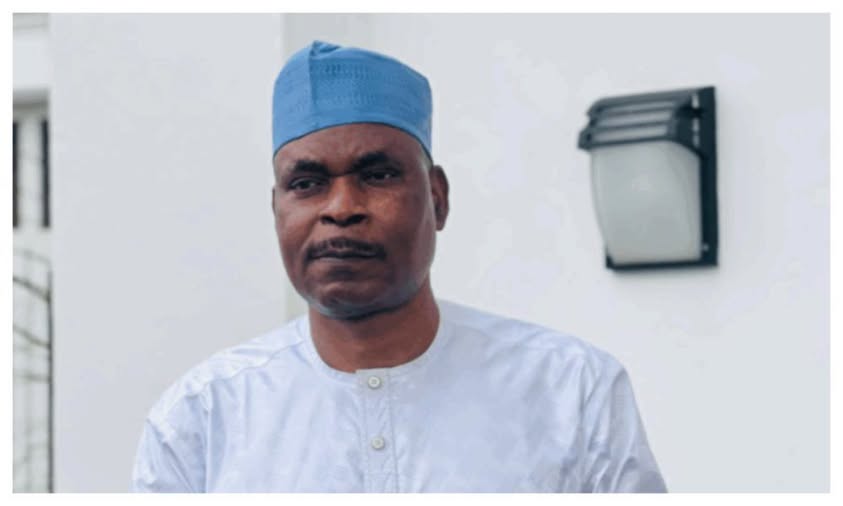
Former Police Chief Resigns from APC Over Primary Election Discontent
Mohammed Adamu, the former Inspector General of Police, has officially resigned from the All Progressives Congress (APC) following his dissatisfaction with the conduct of the Nasarawa State gubernatorial primary election.
In a resignation letter submitted to APC officials at Makama Ward in Lafia City on Monday, Adamu articulated his disappointment with both the outcome and the process of the gubernatorial primary election.
Adamu, who contested for the APC governorship nomination in the 2027 election, lost to Senator Ahmed Wadada. In the state-wide primary, Wadada secured 195,285 votes, while Adamu garnered only 39,675 votes.
Following the announcement of the results, Adamu criticized the primary process, asserting that it failed to meet the democratic standards and transparency expected from the ruling party. He highlighted that the circumstances surrounding the primaries had rendered it untenable for him to continue his political involvement within the APC.
Prior to his resignation, he vocally rejected the primary results, alleging that the election was tainted by fraud and did not satisfy acceptable standards in several local government areas. His claims raised serious concerns regarding the impartiality and internal democracy of the party.
After consulting extensively with his supporters, political stakeholders, and family members, Adamu decided to withdraw his membership and pursue his political ambitions through a different platform.
Concerns Mount Over APC Primaries Nationwide
The fallout from various APC primaries across the country has sparked a flurry of reactions, with numerous reports emerging about discrepancies in vote counting and irregularities in various states. Political analysts have noted a troubling trend among the primaries held in states like Edo, Delta, Ebonyi, Lagos, and Oyo. They caution that these disputes could signal rising tensions as Nigeria approaches the 2027 general elections.
In Oyo State, former Minister of Power Adebayo Adelabu, also a gubernatorial candidate, raised alarms over the primary results, asserting that the announced figures exceeded the total number of registered APC members in the region.
This controversy ignited a wave of commentary on social media, with one user remarking on Adelabu’s history as Minister of Power and drawing parallels to the discrepancies in the Oyo primary results. This comment underscored the sentiment that the electoral outcomes may serve as a form of poetic justice.
Growing Discontent and Uncertain Future for the APC
As complaints continue to surface following the APC primaries in multiple states, discontent among party members is growing. Some stakeholders are backing their allegations with what they describe as “verifiable evidence.” Political observers now question whether the ruling party can manage the burgeoning dissent and dissatisfaction from candidates and party delegates.
Analysts are left wondering whether affected members will find resolution through the party’s internal mechanisms or follow Adamu’s lead by defecting. There exists the possibility that some disgruntled members may choose to remain within the party while covertly forming a pressure group ahead of the 2027 elections, potentially functioning as internal adversaries.
Despite the mounting grievances, party leaders have yet to provide satisfactory responses, leading to uncertainty regarding cohesion, loyalty, and future alignment within the APC. As tensions continue to rise, the crucial question remains: Can the party quell the unrest and maintain unity as the 2027 elections draw near, or are deeper internal divisions inevitable?
