


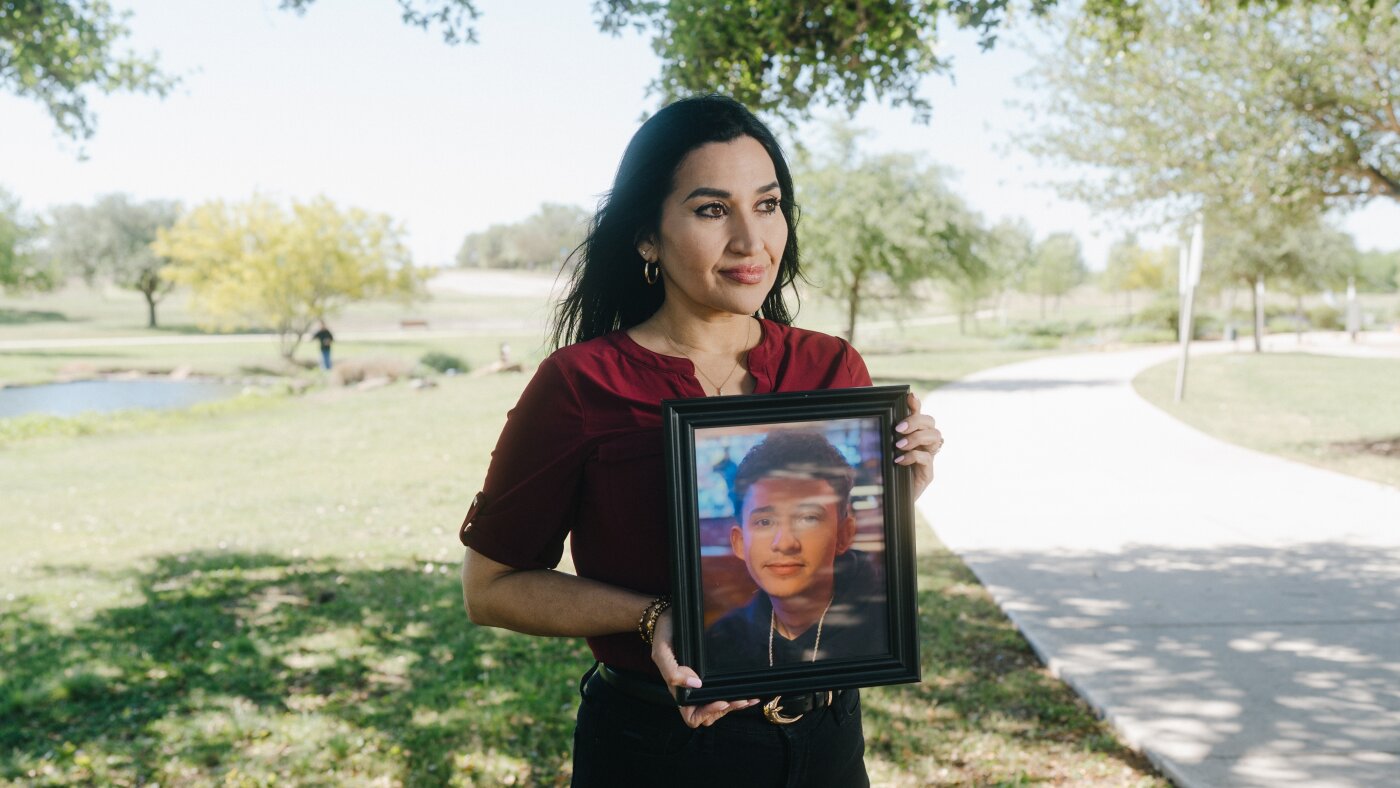
Rachel Reyes Reflects on Grief and Accountability Following Recent ICE Shootings
Rachel Reyes found herself revisiting the painful memories of her son, Ruben Ray Martinez, as she learned about the recent deaths of Lorenzo Salgado Araujo and João Sebastian Duran Guerrero at the hands of federal immigration agents. The emotional toll of these events struck a chord, evoking memories of her own family’s tragedy from 16 months ago.
“My heart truly breaks for the family because I know what they’re experiencing—it’s a nightmare,” Reyes expressed, connecting her grief to the ongoing saga involving ICE actions.
Martinez was shot and killed during a traffic stop by an Immigration and Customs Enforcement officer in March 2025, echoing the circumstances surrounding Salgado Araujo and Duran Guerrero’s deaths.
Rising Incidents of ICE Shootings
The fatal shooting of Martinez, which took place shortly after President Trump resumed office and launched an aggressive immigration crackdown, marks one of many alarming incidents. Reports from The Trace indicate that there have been 29 documented cases of ICE officers shooting civilians since that time, with at least seven of those resulting in fatalities. The Associated Press has confirmed a minimum of 10 deaths linked to ICE during Trump’s second term.
NPR had previously covered Martinez’s case, following a drawn-out process where his family sought body camera footage and presented the matter to a state grand jury, which ultimately decided not to press charges against the officer involved. For Reyes, witnessing history repeat itself is particularly painful as calls for accountability grow louder.
“It’s deeply upsetting because I know that feeling, and the frustration is immense—especially when it seems like your loved one’s life doesn’t matter,” Reyes noted. She has recently penned an op-ed for the New York Times advocating for greater transparency and accountability in ICE shootings.
The Tragic Night of Martinez’s Death
On the night of March 15, 2025, the life of 23-year-old Martinez came to a tragic end on South Padre Island, Texas. Having celebrated his birthday, he approached a busy intersection where a prior car accident had occurred. Officers from various agencies, including Homeland Security Investigations—a division of ICE—were present to manage the scene.
The Department of Homeland Security (DHS) stated that the driver had “intentionally struck” an HSI employee, leading to a series of events where the employee involved opted to fire his weapon in an effort to protect himself and his colleagues. However, conflicting instructions were given to Martinez, and footage released by the Texas Department of Public Safety raises questions about the narrative presented by DHS regarding the actions that led to the shooting.
Similar justifications have been put forth in the cases of Salgado Araujo and Duran Guerrero, both of whom were killed shortly after Martinez. Authorities claim both men attempted to escape traffic stops and allegedly had weapons in their vehicles. Yet, as of now, no footage has been released to corroborate these claims, and eyewitnesses contradict ICE’s accounts.
ICE’s Controversial Practices Under Scrutiny
In addition to violent encounters, an American Civil Liberties Union report has highlighted numerous incidents since January 2025 where immigration agents have rammed vehicles or assaulted individuals with their cars. Following two fatal traffic stops last week, DHS indicated plans to limit non-essential vehicle stops, though the very next day, President Trump insisted on maintaining these operations, citing their importance in crime-fighting efforts.
During a recent press briefing, White House Press Secretary Caroline Leavitt reinforced the administration’s stance, asserting that vehicle stops are crucial for ICE’s ongoing deportation efforts.
The Long Road to Justice
In Martinez’s case, it took 11 months for DHS to publicly acknowledge its role in his death, a revelation that only came after extensive efforts from watchdog groups. A Texas grand jury has since declined to file criminal charges against the involved federal agents. Rachel Reyes’ attorney now considers various legal avenues as they pursue justice.
“If cases involving Americans killed by ICE agents are overlooked, what about families with unstable immigration status or no legal representation?” attorney Charles Stam remarked, emphasizing the vulnerability of those affected.
In Minnesota, uncertainty looms over the potential prosecution of the federal agents responsible for killing U.S. citizens Renee Macklin Goode and Alex Preti in January. Hennepin County Attorney Mary Moriarty recently announced that her office has obtained crucial evidence previously withheld by the Justice Department, including body camera footage.
Challenges to Accountability and Reform
While an ICE agent in Minnesota has faced charges related to another shooting incident, the inherent legal protections for federal employees complicate the prosecution process. Reyes, having hoped that new leadership at DHS would bring about reforms, finds herself disillusioned in the wake of continued violence. “We cannot accept this as our new normal. They are destroying families with these unjust actions, and that is simply not right,” she stated.
