


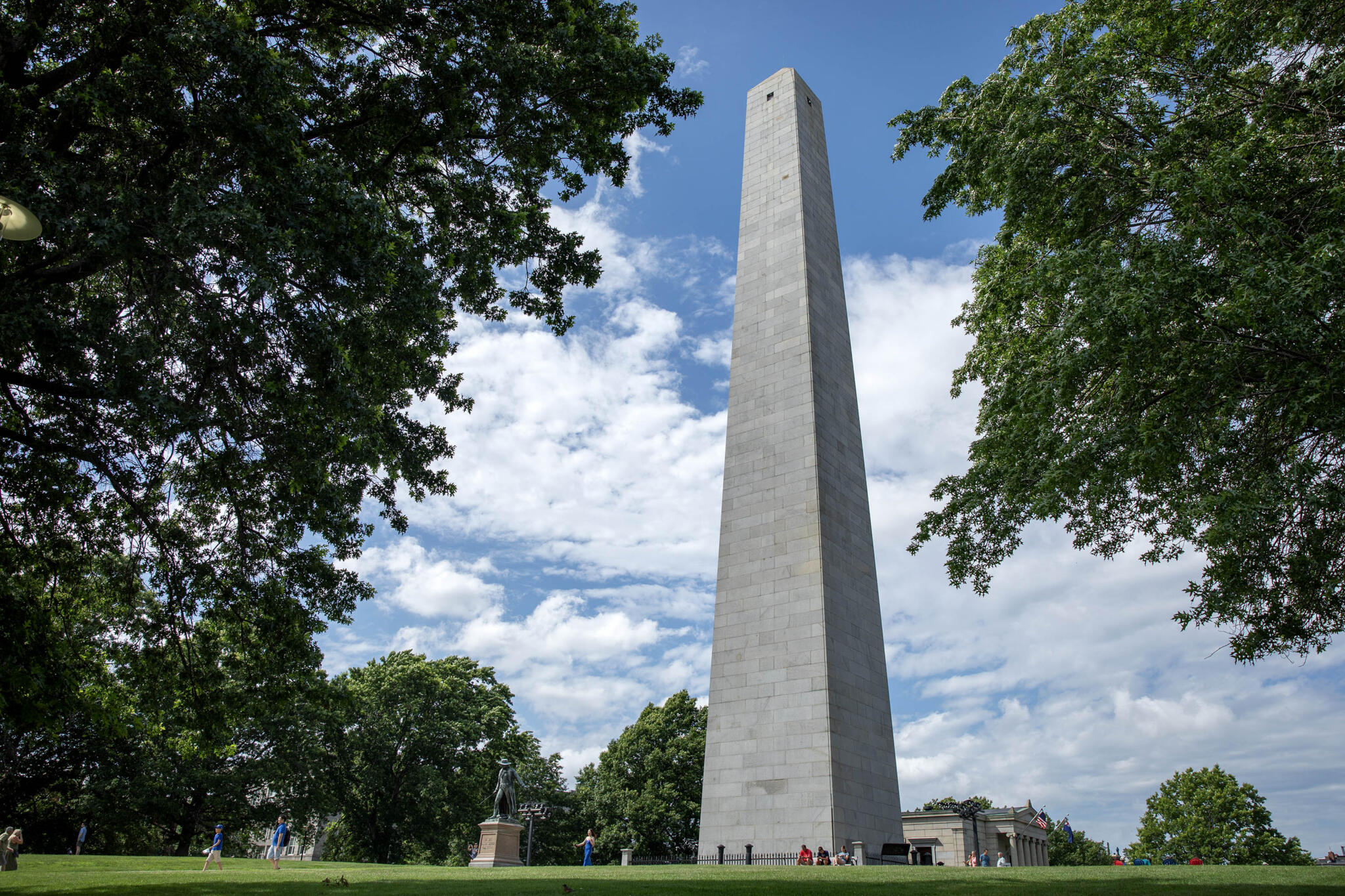
Removal of Historical Panels at Bunker Hill Memorial Sparks Controversy
The National Park Service has announced plans to remove informational panels at Boston’s Bunker Hill Memorial that highlight quotes regarding suffrage, immigration, abolitionism, and the anti-war movement. This decision, reported by the Washington Post, follows a series of visitor complaints about the content displayed.
A spokesperson for the U.S. Department of the Interior, which oversees the National Park Service, has described this action as a routine update to the exhibition. However, the context surrounding the removal points to broader efforts by the Trump administration to reassess various national monuments and sites that it claims present an unfavorable interpretation of American history.
In March 2025, President Trump signed an executive order mandating that multiple federal departments review their exhibits for what he terms “inappropriate ideology.” Critics argue that this directive extends to factually accurate representations of sensitive subjects, such as climate change and slavery, which could face removal from national parks and monuments. A lawsuit challenging these actions is currently ongoing in Boston federal court.
Political Leaders Express Opposition to Censorship
Senator Ed Markey, representing Massachusetts, took to social media to share images of the panels targeted for removal, each featuring poignant historical quotes. “Congress must not fund President Trump’s censorship campaign,” he stated, emphasizing the need to preserve diverse voices in American history.
Markey further accused the Trump administration of attempting to stifle vital narratives, asserting, “True American patriotism flourishes through honest discourse.” He urged that the lessons of Bunker Hill remind us of the nation’s foundational struggle for freedom.
Governor Maura Healey echoed similar sentiments in a statement that highlighted Massachusetts’ pivotal role in the abolitionist movement and the fight for civil rights. She condemned the removal as an act of censorship, asserting that President Trump cannot dictate which parts of American history should be remembered.
Significance of the Bunker Hill Memorial
The Bunker Hill Memorial commemorates the historic battle between Revolutionary and British forces on June 17, 1775, with the iconic obelisk dedicated in 1843. The adjacent museum features panels that celebrate notable figures and their perspectives on the battle’s significance in historical context.
In the wake of the announcement, some visitors have expressed concern over the implications of erasing these panels. Jason Powell, a former history teacher visiting from Louisville, Kentucky, reflected on the importance of understanding the country’s history, particularly themes related to civil rights and immigration. He criticized the decision, labeling it “ridiculous” to remove references to the contributions of foreign-born individuals in the American Revolution.
Visitor Reactions and Broader Implications
Quotes shared by Markey include insights from civil rights activist William Monroe Trotter and abolitionist Lucy Stone, emphasizing the importance of acknowledging diverse contributions to American history. Residents like Reginald Carson from Gloucester expressed disappointment over the removal, highlighting a growing trend of erasing narratives that challenge the status quo. “Questioning our past is essential to understanding our present and future,” he remarked.
Conversely, some visitors, like Stephen Bobot from Nashville, expressed a more indifferent stance, emphasizing a desire to maintain the monument’s focus purely on Revolutionary War history. This reflects a spectrum of views on how historical narratives should be preserved and interpreted.
