


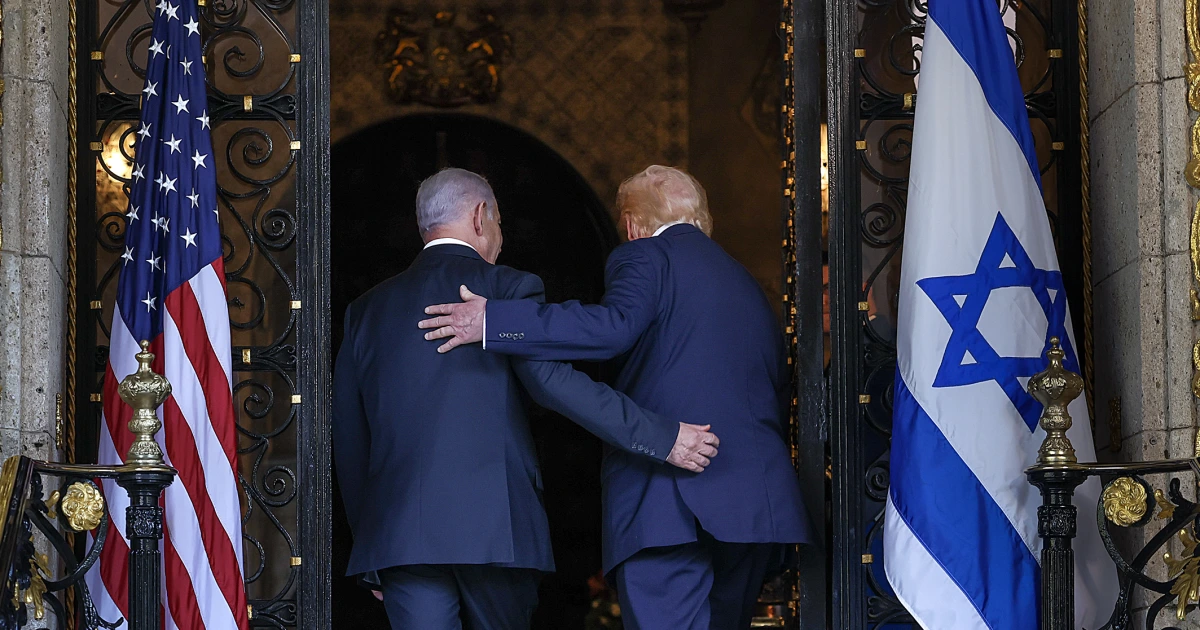
Trump and Netanyahu Set for Critical White House Meeting
President Donald Trump is poised to engage in crucial discussions with Prime Minister Benjamin Netanyahu at the White House on Tuesday, a meeting that arrives amid mounting political pressures for the Israeli leader. This gathering is especially significant given the challenges Netanyahu faces domestically regarding military operations linked to Iran.
Range of Issues on the Agenda
The two leaders plan to address key topics, including the ongoing conflict with Iran, the Lebanon Peace Framework agreement, and initiatives aimed at expanding the Abraham Accords, according to White House officials. In addition to his talk with Netanyahu, Trump will also receive Ukrainian President Volodymyr Zelensky to deliberate on the situation in Ukraine.
Declining Support for Israel’s Iran Strategy
Netanyahu’s support for the military efforts against Iran, a cause he has long championed, has waned both among Israeli citizens and within the United States. His relationship with Trump, whom he has previously lauded as Israel’s greatest ally in the White House, appears to be under strain.
Complex Dynamics Surrounding Military Sales
In response to Netanyahu’s criticism of Trump’s recent decision to sell F-35 jets to Turkey, the President commented on Air Force One, emphasizing that no one should dictate arms sales. When asked about their alignment on Iran, Trump acknowledged some differences but maintained that they were largely in agreement.
Ongoing Military Conflicts in the Region
In the lead-up to their meeting, Netanyahu remarked during an Israeli cabinet session that he would discuss the unresolved state of the Iran conflict with Trump. Recent U.S. military actions have reportedly included almost two weeks of strikes against Iranian positions, while Iran has retaliated against American interests. This marks their first face-to-face dialogue since Axios reported that Trump labeled Netanyahu “crazy” during a controversial phone conversation, a claim Trump confirmed in an interview.
International Military and Political Ramifications
As scrutiny mounts over the administration’s military policies since the launch of Operation Epic Fury by the U.S. and Israel in late February, four American soldiers have lost their lives in recent hostilities—bringing the total to 18. There are concerns over dwindling U.S. weapon stockpiles, prompting the Pentagon to seek an additional $67 billion in funding to bolster military production and expedite supplies.
Netanyahu’s Visit Amid Controversies
In a recent interview, U.S. Ambassador to the United Nations, Mike Walz, asserted that the U.S. possesses the necessary resources for effective military operations, while hinting that Trump is allowing space for diplomatic negotiations with Iran. In anticipation of his U.N. assembly appearance next month, Netanyahu emphasized the close collaboration between U.S. and Israeli intelligence, highlighting the importance of discussing strategies with Trump during his visit. He warned that any direct strike by Iran on Israel would provoke a strong response.
Political Context of Netanyahu’s U.S. Visit
Netanyahu’s trip to the United States follows controversial comments made by New York City Mayor Zoran Mamdani, who stated in a viral video that the city would lack the authority to arrest the Israeli leader during a planned appearance at the U.N. Mamdani called on the federal government to engage with the International Criminal Court concerning Netanyahu’s legal challenges. Trump swiftly countered that Netanyahu would not face arrest during his time in the U.S., reaffirming the strong bilateral ties between the two nations.
Netanyahu and the ICC Situation
Looking ahead, Netanyahu has confirmed his intention to attend the U.N. General Assembly in New York. This visit comes on the heels of the International Criminal Court’s issuance of arrest warrants for him and others for alleged crimes against humanity related to Israel’s military actions in Gaza. These serious allegations, which include using starvation as a weapon of war, are firmly denied by Israeli officials.
