


Africa’s Manufacturing Value Remains Stagnant at 2%
Nigeria’s President Bola Tinubu announced on Tuesday that the country is set to allocate approximately $11.6 billion for debt servicing in 2026, which constitutes nearly half of its anticipated revenue. He attributed this alarming figure to an inequitable global financial system that hinders economic progress in Africa.
Call for Financial Reform in Africa
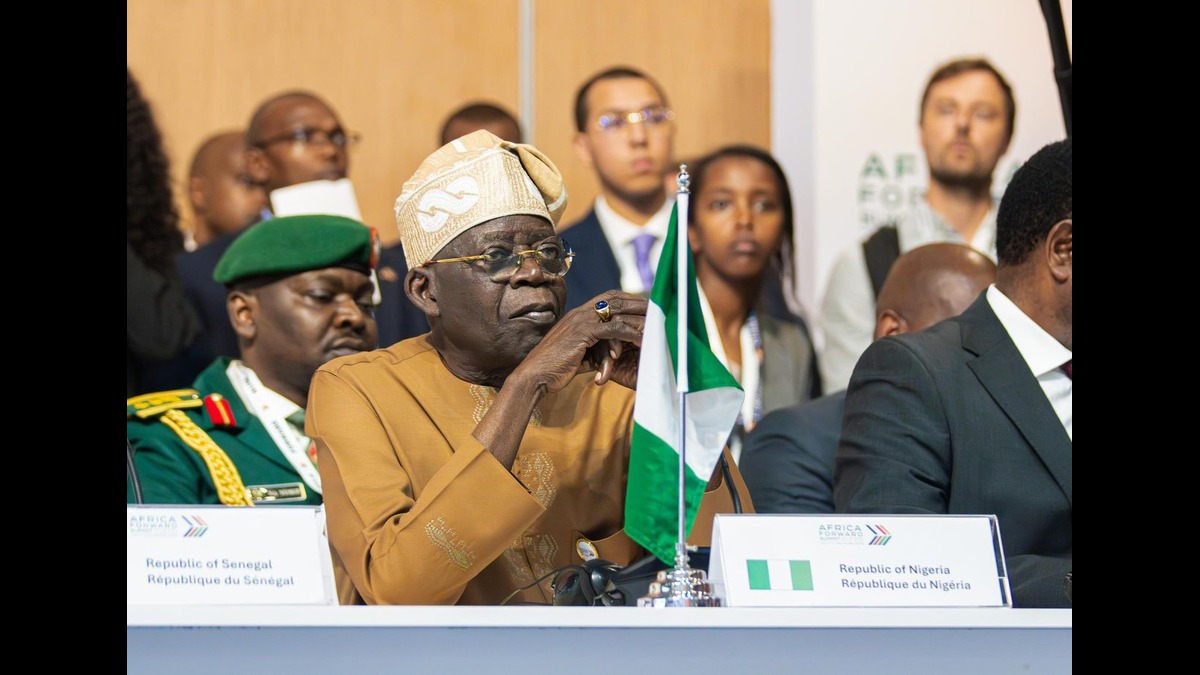
During his address at the Africa-France Summit—co-hosted by French President Emmanuel Macron and Kenyan President William Ruto—Tinubu advocated for a reformation of the prevailing global financial architecture. He argued that this system not only deprives African industries of affordable capital but also facilitates significant illicit financial outflows while imposing policy restrictions that competitors do not face when establishing their own industrial sectors.
Urgency for Structural Change in International Systems
This statement echoes the concerns voiced by Nigeria at the United Nations General Assembly in September, where Tinubu warned of the dire need for reform in international financial and trade structures, which he believed were eroding local industry.
Despite decades of independence, Africa’s contribution to global manufacturing value added remains dismally below 2%. Tinubu criticized the continent’s tendency to export raw materials such as unprocessed minerals, crude oil, and agricultural products, only to import finished goods at elevated prices, a situation he called a systematic pattern rather than a mere coincidence.
Nigeria’s Commitment to Economic Reforms
He emphasized that Nigeria is not seeking assistance but rather showcasing its commitment to implementing difficult reforms aimed at restoring economic stability. These include eliminating fuel subsidies, harmonizing the exchange rate, recapitalizing the banking sector by over $3.4 billion, and graduating from the Financial Action Task Force (FATF) gray list. Such measures have led to a projected reduction in the debt-to-GDP ratio to 32.3% in 2026, a bolster in foreign exchange reserves amounting to $45.5 billion, and a resurgence of investor confidence.
The Cost of Debt Servicing on Development
Despite these advancements, Tinubu lamented that Nigeria, even post-reform, is forced to deindustrialize due to a financial system that discriminates against it. He pointed out that every dollar allocated to high-interest debt takes away from critical investments in vital areas such as the steel sector, textiles, agro-processing, and digital industries. This diversion of funds stifles local talent development and access to affordable electricity necessary for industrial growth.
The Imbalance in Borrowing Costs
Furthermore, he posed a poignant question to the assembly: How can African manufacturers compete with their counterparts in Europe, Asia, and North America when borrowing costs are substantially higher—by five to ten times? The President expressed grave concerns about the financing deficits faced by infrastructure projects, contending that the current international financial structure serves as a tool for African industrial disarmament.
A Call for Fair Financial Practices
Tinubu clarified that Nigeria is not asking for handouts but is advocating for a financial ecosystem that intentionally supports Africa’s industrialization. He envisions a future where the continent can locally process its minerals, refine crude oil, and produce medications to compete fairly in global markets. He reiterated the importance of assessing Nigeria’s creditworthiness based on its economic fundamentals and industry potential, rather than outdated perceptions.
