


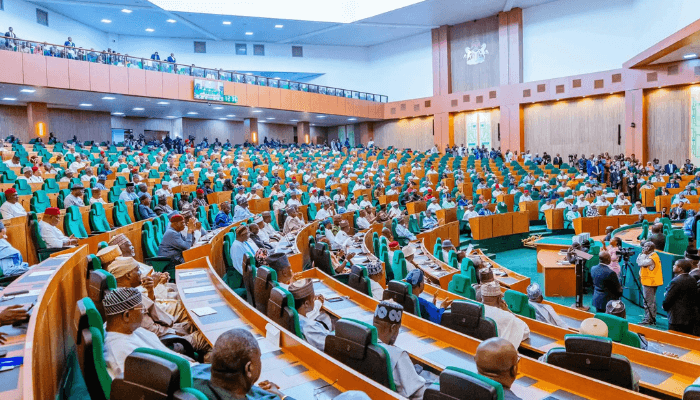
Nigeria’s House of Representatives Revamps Statistical Framework
The House of Representatives in Nigeria is set to overhaul the country’s statistics system with a new bill that aims to replace the existing Statistics Act of 2007. Legislators argue that the current framework is inadequate in meeting the demands posed by an evolving digital economy.
Call for Modernization of Data Systems
During a public hearing on the Statistics Bill 2025 in Abuja, Adegboyega Isiaka, Chairman of the House National Planning and Economic Development Committee, emphasized the necessity of this review. He noted that the outdated 2007 law fails to reflect the contemporary realities of a digital-first world.
Incorporating Advanced Technologies
Isiaka pointed out that modern data ecosystems now utilize technologies such as artificial intelligence, machine learning, and geospatial tools, all of which were not adequately integrated into the previous legal framework. This shift necessitates a comprehensive legislative update to keep pace with the rapid technological advancements.
Legislative Progress and Stakeholder Engagement
The bill has successfully passed its first and second readings in the House and is currently in the public hearing phase, allowing for stakeholder input. Isiaka encouraged participants to provide constructive feedback to enhance the proposed legislation’s effectiveness.
Framework for a Modern Statistical System
House Speaker Tajudeen Abbas affirmed that the legislation aims to create a robust statistical infrastructure capable of addressing the complexities of today’s data landscape. He characterized this effort as a significant reform rather than a minor tweak, aiming to optimize the operations of the National Statistical Office and enhance overall coordination, funding, and data generation.
Importance of Accurate Data for Governance
Reliable statistics are crucial for effective planning, policymaking, and national development, Isiaka warned. He underscored that governance without dependable data devolves into speculation rather than informed decision-making. As Nigeria aspires to an economic transformation and a target of a $1 trillion economy, the necessity for accurate and timely data has never been more pressing.
Enhancing Data Collection and Sharing
The proposed bill also seeks to augment funding for the Office for National Statistics, enhance data integrity, eliminate redundancy in data collection across government entities, and establish more detailed real-time reporting systems. Furthermore, it aims to modernize both data collection and sharing processes through innovative digital solutions.
Broad Support for Implementation
Prime Minister Abbas reiterated Parliament’s dedication to transparency and public involvement in the legislative process, describing the public hearings as valuable opportunities for stakeholder contribution. Additionally, Adeyemi Adeniran, Director of Statistics and CEO of the National Bureau of Statistics, offered his endorsement of the bill, stating that it will modernize Nigeria’s statistical framework and bolster reliable data production for national progress.
Adeniran acknowledged that while the existing 2007 Statistics Act had its merits, it no longer fully supports today’s dynamic data environment. The new legislation comprises eight parts and 42 articles, addressing key areas like governance, data management, funding, confidentiality, and inter-agency coordination, assuring stakeholders of the Office for National Statistics’ commitment to successfully implement the new law once passed.
