


Longshoremen Push for Funding Ahead of Emission Deadlines
As the International Maritime Organization (IMO) sets its sights on stringent emission reduction targets, longshoremen in Nigeria are advocating for increased financial support aimed at revitalizing its aging port infrastructure. They are particularly eyeing the Green Climate Fund (GCF), which offers potential funding to modernize facilities that significantly contribute to greenhouse gas emissions.
During the recent Longshoremen Day event hosted by the Shipping Correspondents Society of Nigeria (SCAN) in Apapa, Lagos State, Bolaji Summola, President of the National Association of Longshoremen (NASO), urged the Federal Government and the Nigerian Ports Authority to craft a comprehensive plan for upgrading port equipment. He emphasized the need for realistic frameworks that align with what Nigerian stevedores can feasibly implement, particularly leveraging the financing available through the GCF, now being utilized by the Development Bank of Nigeria (DBN).
The GCF was established by 194 nations as the world’s largest climate finance initiative, aimed at assisting developing countries in curbing their greenhouse gas emissions and facilitating climate change adaptation. Given the urgency of the situation, the IMO has mandated that shipping emissions be reduced by at least 20% by 2030 and achieve net-zero status by 2050—a timeline that Summola regards as crucial for market viability and trade competitiveness.
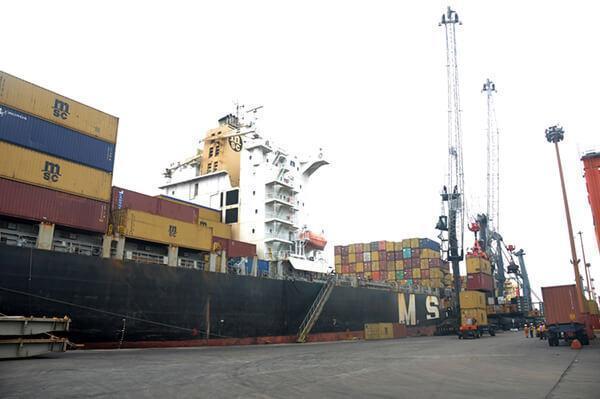
The stevedoring equipment at Nigeria’s ports, including cranes and forklifts, is a key contributor to these emissions. Unfortunately, upgrading this essential machinery often proves challenging for many small and medium-sized operators, who may not allocate sufficient capital for such improvements in their financial statements.
Summola, who also chairs the Nigerian Ports Consultative Council (NPCC), emphasized that imposing green practices without adequate funding would be both inequitable and impractical. He argued that compliance should not be an unattainable burden for operators without financial means.
Adeyemi Adeyanju, the former general secretary of the Maritime Workers Union of Nigeria (MWUN), also highlighted the importance of a “just transition.” He insisted that the push for environmental sustainability must not compromise workers’ income or job security. Investments in training, job protection, and safer working conditions are essential as the industry embraces new technologies.
Aminu Umar, president of the Nigerian Chamber of Shipping, pointed out that future port workers will require specialized skills in environmental management, digital systems, electrification of equipment, sustainability reporting, and advanced logistics. The Federal Government reiterated its commitment to prioritizing the welfare of port workers amid a shift toward greener operations, explicitly stating that neglecting their needs will no longer be tolerated.
Reducing Congestion as a Path to Sustainable Ports
Industry stakeholders assert that alleviating congestion at Nigeria’s ports and logistics corridors could significantly curtail emissions and foster greener operational standards. According to NASO, optimizing operational efficiency presents a viable path that does not rely on foreign technologies or capital.
At the event, Jama Onwubualili, Managing Director of Truck Transit Parks Limited, which operates the Eto Call-Up System, noted that delays in port logistics are often exacerbated by inefficiencies. He stated that reducing truck idling directly translates to lower fuel consumption and emissions, thereby enhancing the working environment for longshoremen.
As calls for modernization and efficiency continue, the focus is clear: optimizing operations at Nigeria’s ports is crucial for achieving environmental goals and enhancing the overall welfare of its workforce. Stakeholders are hopeful that with the right frameworks and investments, the nation can meet both its economic and ecological objectives.
