


Nigeria’s Education Spending Falls Short of Global Standards
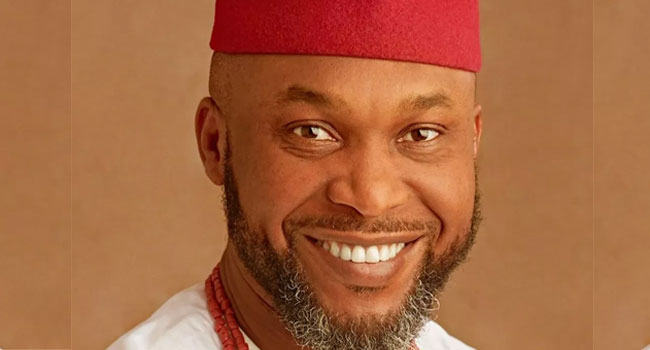
Nigeria’s public expenditure on education is approximately ₦9.49 trillion, which represents a mere 2.14% of the country’s nominal gross domestic product (GDP) of ₦442.8 trillion as of 2026. This figure significantly lags behind international norms, as highlighted by Osita Chidoka, the former aviation minister and current director of the Athena Center for Policy Leadership.
During a speech at the 70th anniversary of the Ekuru Primary School Alumni Association (EPSAA) in Enugu, Chidoka characterized the nation’s education funding crisis as a “national emergency” demanding immediate and strategic intervention.
While unveiling an Athena Center report, he noted that Nigeria’s total public spending on education remains far below the recommended 4-6% of GDP for developing countries, as set by the United Nations Educational, Scientific and Cultural Organization (UNESCO).
The 2.14% expenditure figure encompasses federal education funding, allocations to the Universal Basic Education Commission (UBEC), interventions from the Tertiary Education Trust Fund (TETFund), and education budgets from 36 states plus the Federal Capital Territory.
Chidoka emphasized, “Nigeria is not in the middle of developing countries on this metric; it is below the minimum standard. For far too long, we have treated this as a routine budget discussion. These numbers represent a national emergency, and it is time for the country to stop pretending otherwise.”
When comparing Nigeria’s education funding with that of other developing nations, the report highlights more favorable allocations: South Africa invests 6.7% of its GDP in education, Brazil 5.6%, Kenya 4.8%, India 4.1%, and Ghana 3.4%.
State Governments Taking Initiative in Education Funding
Despite the grim national outlook, Chidoka commended certain state governments for their proactive approach to prioritizing education financing and reforms. Anambra State emerged as the leader in budget allocation for education, dedicating 46.9% of its 2026 budget to the sector. Following closely is Enugu State, which has initiated the construction of 260 smart green schools and allocated 32.2% of its budget to education.
The report also pointed out Kano State’s extensive teacher recruitment program and noted Lagos, Kaduna, Katsina, and Abia for their significant investments in education. Collectively, these six states are expected to allocate approximately £1.8 trillion to public education in 2026.
Interestingly, there has been a marked shift in education financing between Lagos and Enugu. Although Lagos remains a high spender in absolute terms, it plans to allocate only 5.6% of its 2026 budget to education. In contrast, Enugu’s education budget is now about twice that of Lagos when expressed in dollar values, reversing a trend from two decades prior when Lagos outspent Enugu by over six times in educational allocations.
Calls for Enhanced Education Reforms
Chidoka asserted that public education reform in Nigeria is being spearheaded by a select few states rather than through initiatives from the federal capital or other major urban centers. He pointed to historical declines in education, specifically noting the years from 1986 to 1999 as a detrimental period, which he termed the “era of locusts.”
The report underscores alarming statistics, revealing that the monthly salaries of full professors dwindled from approximately $1,000 in 1985 to a mere $137 by 1997. Moreover, per-student spending in Lagos State plummeted from $281 to $22 between 1980 and 1990. At the tertiary level, funding per student at Ahmadu Bello University starkly contrasts with that of the University of the Witwatersrand in South Africa, suggesting a funding gap of 1:28 in favor of South African institutions.
Chidoka contended that Nigeria’s most significant failure lies not only in the economic challenges it has faced but also in the successive governments’ inability to reverse the educational decline since the return to democratic rule in 1999. He emphasized, “The more serious failure lies not in the locust era itself, but in the 27 years of civilian rule since 1999.”
Encouraging Community and Alumni Involvement
Highlighting the historical significance of Ekuru Primary School, Chidoka urged alumni associations throughout Nigeria to engage actively in supporting public education. He called on the Ekuru Elementary School Alumni Association to establish a digital learning dashboard within a year to monitor crucial metrics like literacy, numeracy levels, attendance, exam performance, and infrastructure needs. Additionally, he proposed creating a teacher development fund and remediation programs for students struggling with foundational skills.
Chidoka encapsulated his plea by stating, “Let’s Get It Done is not an act of charity; it is a repayment. It is a clarion call from a generation that has benefited from education to one that now seeks what was once routinely provided.”
Nigeria’s education sector continues to grapple with myriad challenges, including inadequate funding, poor infrastructure, teacher shortages, and dismal learning outcomes. Despite ongoing criticism of past governments for failing to meet UNESCO-recommended funding levels, the demand for elevated investment in education remains pressing.
Founded in 1956 as All Saints School by Anglican Reverend Timothy Bruce Fyfe, Ekuru Primary School is one of the oldest public educational institutions in Enugu State. Chidoka posited that the school’s history embodies a broader narrative of Nigeria, reflecting its aspirations, setbacks, and potential for renewal.
