


By Sarah Michels, Carolina Public Press
June 24, 2026
In North Carolina, a contentious array of bills addressing diversity, equity, and inclusion, immigration, and gun control that Democratic Governor Josh Stein previously vetoed has lingered on the legislative calendar for nearly a year.
To successfully override the governor’s veto, a supermajority of three-fifths of legislators must vote in favor of the bill. Currently, House Republicans are just one seat shy of achieving this threshold, placing them in a position to potentially enact legislation without any Democratic or independent support. Historically, this single-vote gap has effectively blocked numerous vetoable bills.
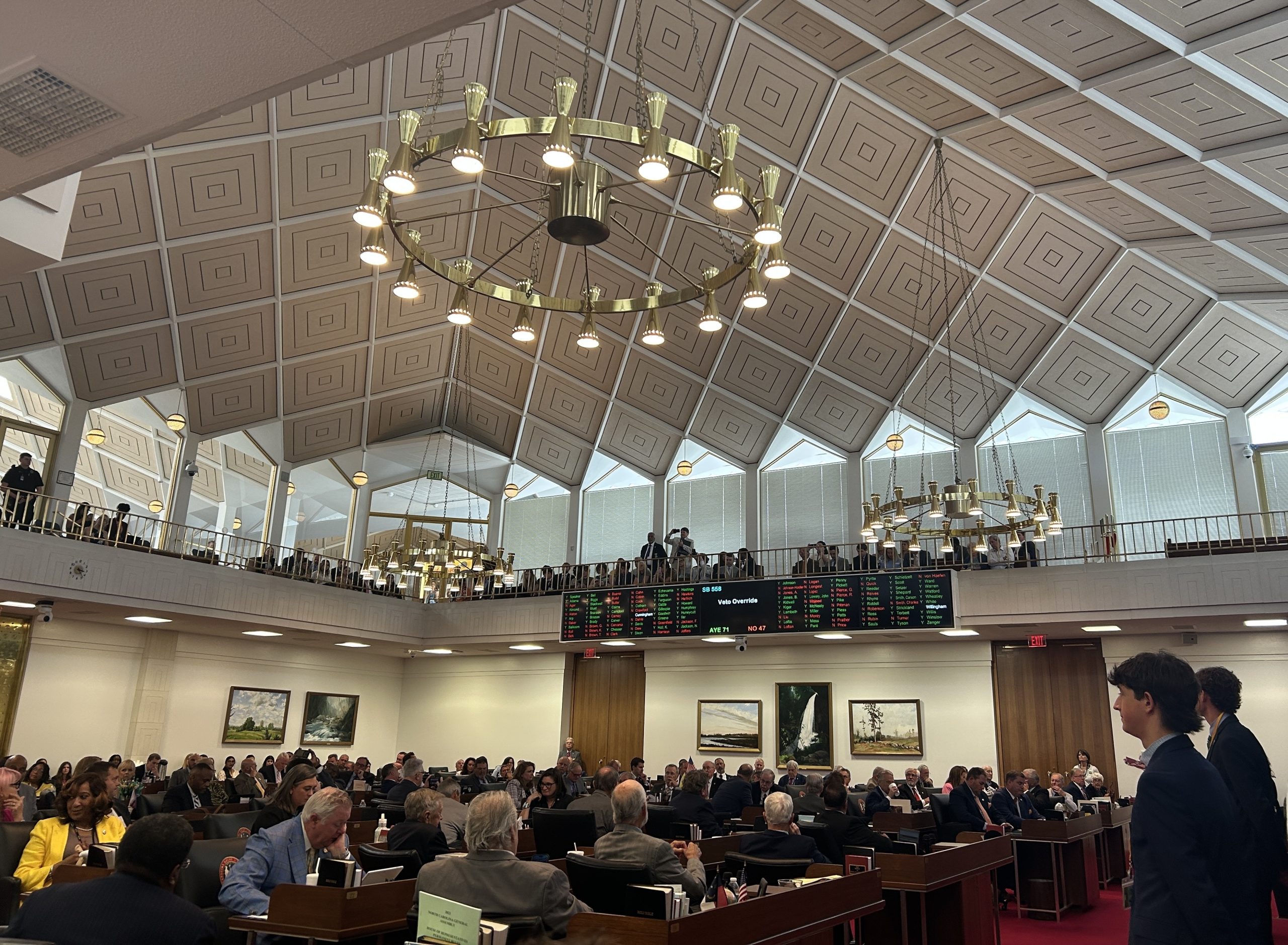
However, the dynamics shifted on Wednesday when state Representatives Shelley Willingham (D-Edgecombe) and Carla Cunningham (D-Mecklenburg) vacated the chamber during a veto-override vote. This move provided Republicans with the necessary votes to override all but one of Stein’s outstanding vetoes. Willingham and Cunningham faced backlash in the March primary largely due to their previous votes supporting a veto override.
House Speaker Destin Hall (R-Caldwell) consistently indicated throughout the session that he aimed to overturn the governor’s remaining vetoes, and Wednesday marked the culmination of those efforts. Legislative leaders curtailed most debate on the issue, allotting just three minutes each for majority and minority leaders to express their views on the vetoed bills. House Minority Leader Robert Reeves (D-Chatham) used his time to amplify other Democrats’ perspectives.
Legislation Targeting DEI Initiatives
The three vetoed bills specifically target diversity, equity, and inclusion (DEI) efforts across state agencies and educational institutions. One pivotal education bill prohibits educators from promoting certain “antagonistic notions,” such as the belief that any race or gender is inherently superior, or that meritocracy is a form of discrimination. Additionally, it bars schools from favoring or disadvantaging students based on race, gender, or other protected categories.
This legislation seeks to dismantle DEI offices, programs, and roles, mandating that higher education institutions eliminate reporting mechanisms for incidents deemed biased, including microaggressions. “We want our schools to teach reading, writing, math, history, science, and civics,” asserted Rep. Brenden Jones (R-Columbus). “Our focus should be on teaching kids how to think, rather than imposing political doctrines.”
Conversely, Rep. Zach Hawkins (D-Durham) emphasized that DEI initiatives are not about indoctrination but about fostering an environment where every child can thrive. “Ensuring that the diverse populace of our state receives emotional and social support is essential,” he stated.
In a comprehensive discourse, Rep. Reeves articulated his opposition to the anti-DEI measures, arguing that they could stifle the state’s intellectual potential. “To claim you wish to enhance this state while simultaneously suppressing the brightest minds ignores the reality that competition and progress require inclusivity,” he said. The legislation also mandates that state agencies abolish DEI-related employee roles and metrics, with noncompliance resulting in significant penalties.
North Carolina Border Protection Act
Following the passage of House Bill 10 in 2024, which compelled sheriffs to collaborate with Immigration and Customs Enforcement (ICE), lawmakers have advanced the North Carolina Border Protection Act. This proposed legislation extends obligatory cooperation to various state law enforcement agencies, including the Department of Public Safety and the State Bureau of Investigation. Officers would receive ICE training and be authorized to perform some federal immigration enforcement duties.
Under this proposal, law enforcement must ascertain the immigration status of criminal suspects when they are taken into custody, necessitating ICE inquiries if status is uncertain. The bill also directs state agencies to ensure that only U.S. citizens and lawful residents qualify for state-funded benefits, reinforcing policies that render noncitizens ineligible for services such as Medicaid and housing assistance.
Moreover, municipalities that harbor noncitizens against the law would lose their government immunity from civil lawsuits if those individuals commit crimes within their jurisdiction. Universities in the University of North Carolina system would also be barred from enacting policies that impede federal immigration law enforcement.
Rep. Maria Servania (D-Wake) criticized the bill for overburdening law enforcement. “Our agencies are already strained,” she remarked. “Implementing such demands could undermine their effectiveness.” All veto overrides were enacted with a tie vote of 71-47, with unanimous Republican support and opposition from all present Democrats, except for Independent Rep. Nassif Majeed. While most bills are now law, House Bill 171 regarding DEI initiatives remains pending, with a Senate vote anticipated soon.
One vetoed piece remains: Senate Bill 50, which would permit individuals over 18 to carry concealed firearms without a permit. Although two Republicans opposed this bill for the first time, leaders were unsuccessful in rallying enough support to override the veto. Speaker Hall expressed optimism about future override prospects.
Reeves also foresees potential implications for upcoming elections. “People will notice that after six months in session, instead of focusing on passing a budget, the priority has been on minimizing discomfort in classrooms,” he commented.
