


Concerns Over Alleged Extra-Budget Spending Highlight Governance Issues
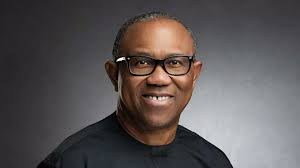
Peter Obi, the presidential candidate from the Nigeria Democratic Congress (NDC) for the upcoming 2027 elections, has renewed his demand for President Bola Tinubu to resign. Obi asserts that the growing evidence of what he describes as “massive corruption” under the current administration has made Tinubu’s continued presidency untenable.
This latest appeal arises in light of allegations regarding the projected expenditure of 8.83 trillion naira for the 2025 fiscal year, a figure that Obi claims does not appear in the approved federal budget. In a statement shared on social media platform X, the former governor of Anambra State reiterated his belief that the Tinubu administration has faltered in its governance, accountability, and commitment to the welfare of Nigerian citizens.
According to Obi, the concerns about these expenditures stem from a report by the International Monetary Fund (IMF), which he argues signifies a serious breach of fiscal management principles. He raised alarms about the lack of government transparency surrounding these funds, calling it a significant violation of public financial protocols.
Obi noted, “The recent IMF consultations raise critical concerns about large-scale corruption under the Tinubu administration.” He further elaborated that the IMF’s findings indicate that approximately 8.83 trillion naira designated for disbursement in 2025 lacks official budgetary oversight, limiting both legislative and executive accountability.
This amount represents a considerable portion of Nigeria’s economy, accounting for roughly 2% of the country’s GDP and exceeding more than 35% of the 2025 capital projects budget, which stands at 23.96 trillion naira. As Obi explained, this figure surpasses the combined budgets allocated for key sectors such as education and health, which total 5.9 trillion naira.
Opposition leaders emphasize that proper utilization of these funds could have transformative effects on crucial sectors like health and education, potentially creating jobs and fostering economic development. Obi stated, “If these funds are correctly allocated, they could revolutionize Nigeria’s essential services and aid in the establishment of small industries.” He criticized the ongoing lack of accountability in managing such vast sums.
Mr. Obi described the alleged mismanagement not as isolated incidents, but rather as part of a persistent trend of corruption within the current administration. He warned that the erosion of due process in public finances poses a serious threat to Nigeria’s national stability and security. “Corruption has become the most pressing challenge facing the country,” Obi asserted, highlighting the detrimental impact this has on poverty and overall governance.
He criticized the government for failing to direct public resources toward addressing poverty and inadequate infrastructure, stating, “With rising poverty levels and an urgent need for infrastructure reform, a responsible government should wisely utilize the 8.83 trillion naira for these pressing issues. Unfortunately, that is not what the Tinubu administration has done.” Obi reiterated his call for the president to step down, reinforcing the notion that recent events bolster his assertion. He urged Nigerians to take legal action to demand better accountability from their government, stating, “A new Nigeria is achievable if we hold this administration accountable.”
