


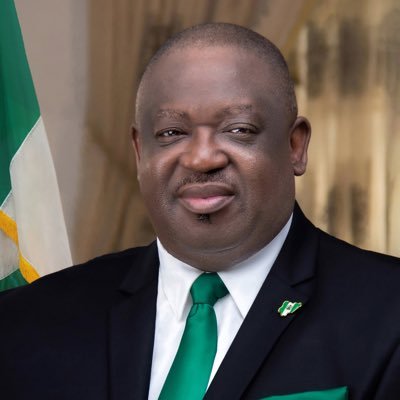
Plateau State Government Responds to Controversy Over Governor Muthofan’s Remarks
The Plateau State administration has come to the defense of Governor Caleb Manasseh Muthofan amid the backlash surrounding his comments made during a recent meeting with Igbo community leaders. In a statement released on Wednesday by Gyan Bere, the Director of Press and Public Affairs, the government asserted that Muthofan’s remarks were misinterpreted and taken out of context.
This clarification follows a wave of mixed reactions stemming from the governor’s comments during a courtesy visit to the Government House in Jos. Critics contended that he issued an apology regarding the involvement of Plateau indigenes in Nigeria’s civil war, a claim that has prompted significant discourse.
In response to the criticisms, the government emphasized that the governor did not intend to belittle the experiences of any ethnic group or to distort the historical realities of the civil conflict. Muthofan clarified that his comments aimed to acknowledge the resilience and positive contributions of the Igbo community to Plateau State’s economic and social development, fostering a spirit of peaceful coexistence among Nigerians.
The government statement articulated that the historical scars from the civil war are integral to the nation’s narrative and must be remembered with empathy and sensitivity. It highlighted that the lessons learned from this tumultuous period should reinforce national unity rather than reopen old wounds.
Additionally, the administration pointed out Plateau State’s rich history of accommodating people from diverse backgrounds, showcasing it as one of Nigeria’s exemplary models of peaceful coexistence. Successive governments, starting from Joseph Dechi Gomwalk’s administration to Solomon Ra’s, have established a foundation that allows the Igbo community to thrive, significantly contributing to commerce, education, healthcare, and industry.
Moreover, the government’s perspective aligns with former Head of State Yakubu Gowon’s post-war philosophy of “no winners, no losers” and the associated reconciliation, rehabilitation, and reconstruction initiatives. This approach is recognized globally as a model for post-conflict recovery and healing.
The administration reaffirmed Governor Muthofan’s commitment to preserving this legacy through policies that promote dialogue and reconciliation. It urged Nigerians to disregard what it termed a distorted interpretation of the governor’s intentions, cautioning that such narratives could exacerbate ethnic divisions and detract from the overarching message of unity and national cohesion. Reiterating the administration’s core values, the government underscored Muthofan’s belief that all Nigerians, regardless of ethnicity, religion, or origin, deserve dignity, equal opportunities, and a sense of belonging.
