


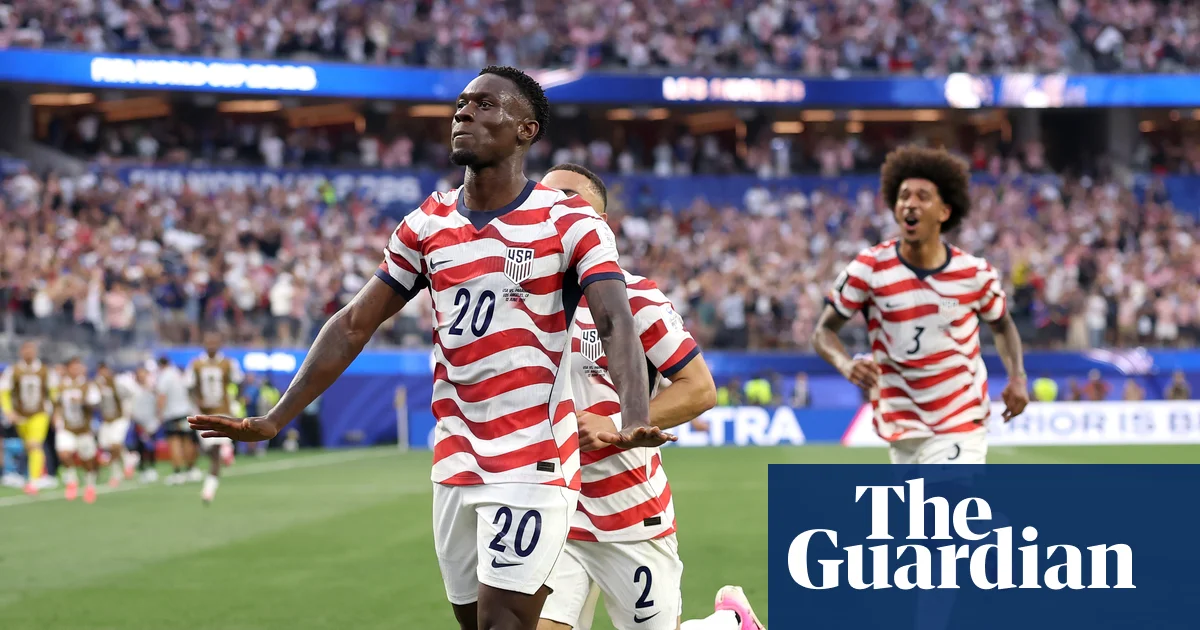
Paraguay’s Early Goal Didn’t Halt U.S. Surge
Despite an early setback on Friday, the United States capitalized on the spaces left open by Paraguay. Once the ball reached midfielders Malik Tillman and Weston McKennie, the disorganized defense of Paraguay struggled to regain composure. The U.S. team’s off-the-ball movements kept the opposing defense in disarray, ultimately allowing them to establish a favorable attacking structure.
McKennie’s Tactical Awareness Shines
After the U.S. secured a decisive 4-1 victory, McKennie noted, “I just tried to get behind.” He recognized early that Paraguay struggled to track his deep runs and decided to exploit that weakness. “If it ain’t broke, don’t fix it,” he added. As he found more space than usual, he embraced the opportunity to be more involved in the game, which he found invigorating.
Midfield Dominance Fuels Offensive Strategy
In the first half, the midfield truly belonged to the U.S. The spatial relationship between Tyler Adams and the more forward-positioned McKennie and Tillman never became an issue, as Paraguay floundered in their attempts to establish defensive positioning. When Paraguay occasionally managed to regain the ball, the U.S. swiftly circulated it, demonstrating their midfield’s proficiency.
Evolution of the Midfield Under Pochettino
The U.S. midfields often resembled a cohesive club team, with the trio working seamlessly together as seen in the 2022 World Cup. At that time, Adams and McKennie were complemented by Yunus Musah, forming a dynamic “MMA” engine that facilitated fluid ball movement and adaptable defense. Although Musah has since faced challenges in his career, emerging talents such as Tillman, Johnny Cardoso, and Tanner Tessman have mitigated any gaps under Mauricio Pochettino’s system.
Defensive Integrity Strengthens as Richards Shines
Even with personnel changes, the United States’ defensive responsibilities remain clear. The extra space that McKennie exploited during the match was a reflection of Pochettino’s tactical evolution, grounded in the advancements of American players since the World Cup. Chris Richards’ progression has been particularly noteworthy; after securing a starting position at Crystal Palace, he showcased solid partnerships in defense but faced bouts of inconsistency against teams like Panama and Uruguay.
Richards Sets New Standards on the Field
Richards has established himself as a key player for Palace, especially in light of injuries to teammates. His performance against Paraguay was marked by 100% pass completion, a World Cup record, and strategic distribution of the ball that set up his teammates for offensive opportunities. His newfound confidence is a result of both his successful club tenure and overcoming a season-ending injury.
Balogun’s Entry Adds an Offensive Edge
The most significant addition for the U.S. this World Cup cycle has undoubtedly been Folarin Balogun. Committing to the national team has filled a critical void left by a lack of reliable strikers in recent years. Having honed his skills at Arsenal’s academy, Balogun possesses exceptional movement and a keen understanding of the game, allowing him to find key positions and consistently challenge defenders.
Future Challenges Loom for U.S. as Competition Intensifies
The road ahead is fraught with challenges, particularly as the United States prepares to face formidable opponents like Turkey, whose star players include Hakan Calhanoglu and Melih Demiral. While the U.S. has developed its talent pool, it also needs to navigate the intense competition that awaits them in the knockout stages. Nonetheless, the emergence of players like Balogun offers hope, ensuring that the team has the firepower to rise to the occasion.
