


Michael M. Santiago/Getty Images Hide Caption
Michael M. Santiago/Getty Images
Federal immigration officials are expanding their use of facial recognition technology to assist local police departments. Recently released documents from the Department of Homeland Security (DHS) reveal plans to equip these departments with tools aimed at identifying immigrants. This initiative is part of a broader strategy to bolster immigration enforcement at the community level.
The document, termed a “Privacy Threshold Analysis,” assesses whether the privacy implications of this technology warrant detailed government evaluation. According to 404 Media, which first reported on the findings, the key tool involved is the ICE Task Force Module, a mobile application that enables local police officers to scan the faces of individuals they encounter in the course of their duties.
This application can compare facial scans against a database exceeding 250 million government records, including visa documentation from the State Department and various records used by the Transportation Security Administration for international flight identifications. Following a facial scan, the application can either recommend against detainment or provide officers with a reference code for further investigation by ICE.
The DHS indicates that images captured through this app will be stored within their internal systems for a period of 15 years. While the agency declined to provide additional insights about the app or its operational details to NPR, officials asserted that ICE is dedicated to ensuring local law enforcement agencies are equipped with the necessary tools to support their immigration enforcement agenda.
The local police officers involved, referred to in the document as “ICE non-federal law enforcement officers,” are typically associated with the federal 287(g) program. This specific model authorizes local police to arrest immigrants on behalf of ICE, with around 1,300 local agencies currently participating in this program across the nation.
Experts are raising concerns. Claire Garvey, associate director of the Technology Law and Policy Program at NYU School of Law’s Policing Project, expressed skepticism regarding the document, stating it “raises more questions than it answers.” She highlighted ambiguities about how and when the app will be employed, questioning whether its use should be restricted to situations warranting specific suspicion.
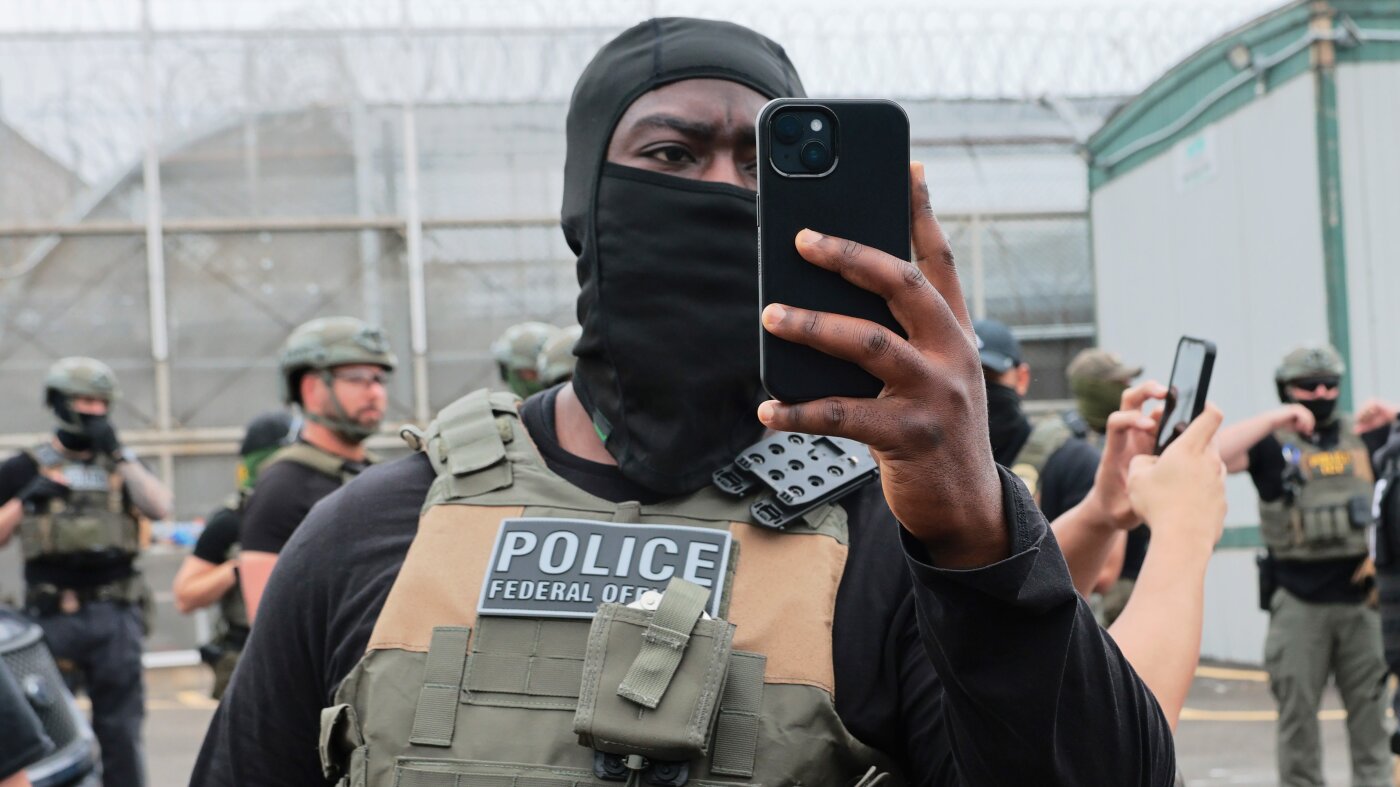
Privacy advocates warn that mirroring existing patterns of federal oversight, local police could easily misuse this technology, creating a chilling effect on civic participation. For instance, reports from Minnesota and Maine suggest that residents have observed ICE agents taking photos of faces and license plates, leading to personal information being accessed without consent. Garvey pointed out that previous cases have revealed significant inaccuracies in facial recognition technology, which has wrongly implicated individuals in instances of detainment.
As these surveillance measures expand, experts such as Patrick Eddington from the Cato Institute emphasize the potential for egregious violations of individual rights. The DHS maintains that its methods adhere to constitutional standards, asserting that ICE’s investigations respect civil liberties while employing various technologies. Yet, Eddington contends citizens could inadvertently become entangled in these practices, as ICE and local law enforcement do not ascertain immigration status before conducting scans.
The implications of the new app extend far beyond just identifying immigrants. Critics suggest it risks becoming a tool for unprecedented surveillance of the general population. As Cooper Quintin from the Electronic Frontier Foundation asserts, the potential for mass monitoring could transform everyday interactions and instill a pervasive culture of fear among residents. With a 15-year retention policy for photos captured, concerns about government overreach and privacy violations continue to mount, evoking serious questions about the balance between law enforcement efficacy and the protection of civil liberties.
