


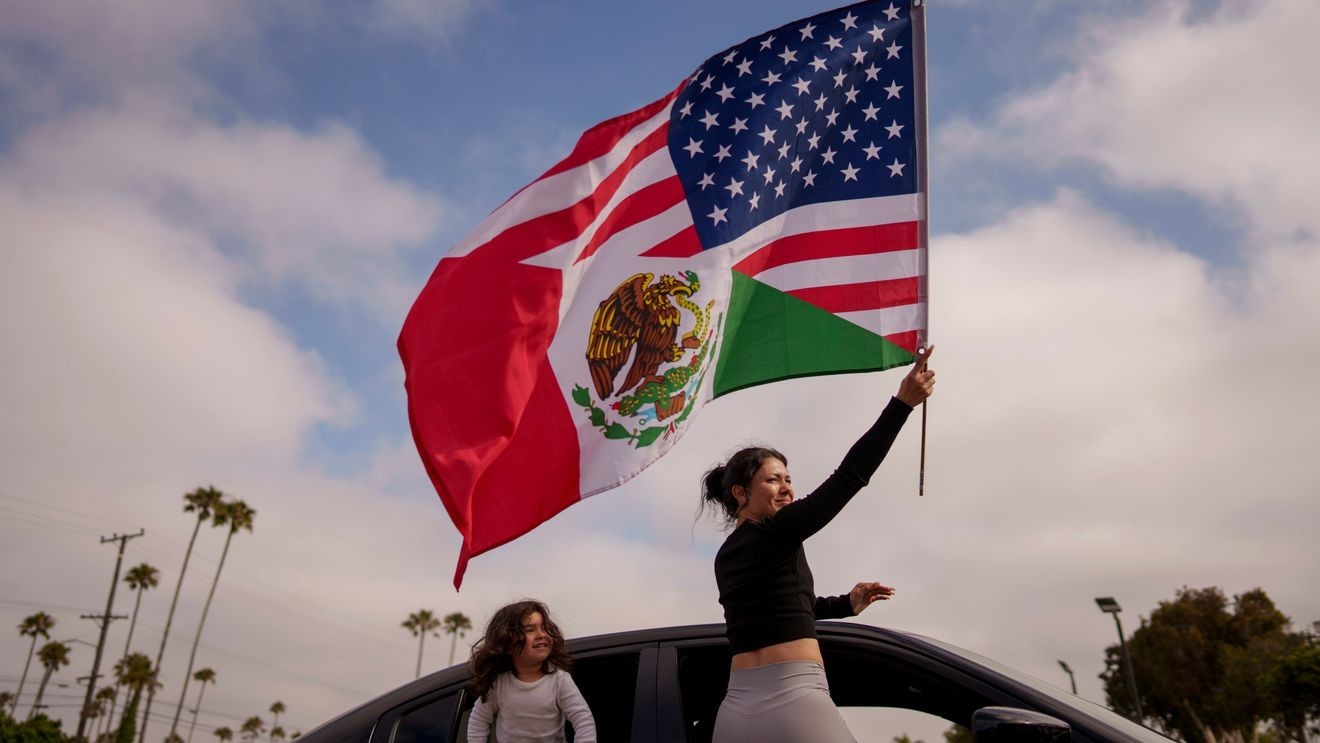
Majority of Americans View Immigration Positively, New Poll Reveals
A significant majority of Americans believe immigration benefits the country, but as experts note, the specifics often provoke partisan disagreements.
According to Ernest Sagas, a professor of ethnic studies at Colorado State University, while general support for immigration is wide-ranging, “the nature of immigration itself fosters division among political parties.” Recent polling from Gallup indicates that 73% of Americans view immigration positively, a slight decline from 79% last year but still showing a resilient increase to 64% in 2024.
Partisan Sentiment on Immigration Shifts
Support among Democrats has seen a consistent rise, with 91% expressing that immigration is beneficial for the nation. In contrast, Republican attitudes have been more variable, with approval swinging from 39% in 2024 to 64% last year, then settling at 50% this year.
Sagas notes that despite former President Donald Trump’s rhetoric around immigrants, the concept of the U.S. as a nation of immigrants remains deeply ingrained in American culture. Political scientist Mark Jones from Rice University highlights a crucial partisan distinction: Republicans are more inclined to differentiate between legal and illegal immigration.
Trump’s Immigration Policies and Current Sentiments
Jones points out that immigration emerged as a strong issue for Republicans during Trump’s presidential campaign; however, the impact of his administration’s immigration enforcement has diminished its relevance in the current election cycle. The Trump administration often celebrated “historically low border crossings,” citing extended periods of no releases along the border and a record number of border agents as contributing factors.
Survey responses on immigration reflect the prevailing political environment and the realities at the border. When border crossings were surging, Republicans expressed significantly less support for immigration. However, as crossing numbers have decreased, Republican views have softened, leading to a more favorable perspective on immigration overall.
Complex Perspectives on Immigration
Sagas points out the varying opinions regarding immigration, particularly around the status of Dreamers, refugees, and asylum seekers. According to a Gallup poll, there is broad support for providing a pathway to citizenship for undocumented immigrants, especially those who arrived as children, contingent on fulfilling specific criteria over time.
Mixed opinions extend to sanctuary cities and the potential need for increased Border Patrol agents, indicating that most Americans (58%) oppose the wholesale deportation of undocumented immigrants. Public sentiment is also split on whether immigration levels should remain the same, rise, or fall; 35% favor maintaining current levels, 31% advocate for increases, and 29% lean toward reductions.
Immigration and Economic Impacts
The majority of Americans recognize the positive contributions of legal immigration to the workforce, particularly in addressing labor shortages caused by an aging population. Legal immigrants are seen as essential to filling lower-wage jobs, and many believe that expansive immigration strengthens tax revenues for public services and the availability of skilled workers in technology and science sectors.
Hispanic Identity and Its Complexities
As discussions of immigration continue, Sagas emphasizes the significance of how immigrants, particularly Hispanics, perceive their identities. The Pew Research Center recently published findings on Hispanic identity, showing that over 60% of Hispanics in the U.S. view their heritage as a meaningful part of their self-conception. Interestingly, opinions on the impact of being Hispanic are divided: while one-third feel their ethnicity hinders progress, 26% believe it offers advantages.
Political Views Shape Hispanic Perspectives
The survey indicates that political affiliations heavily influence Hispanic Americans’ self-perceptions. While about one-third report experiencing discrimination, the sentiment varies between Democrats and Republicans. Among Hispanic Democrats, 41% feel that their ethnicity is a hindrance, compared to just 22% of Hispanic Republicans, many of whom assert that their ethnicity neither benefits nor harms their chances for advancement.
Further underscoring these dynamics, the Pew Research Center found that Hispanics prefer a variety of labels for their identity. The majority (53%) opt for terms reflective of their national origin, while 27% identify with pan-ethnic labels like “Hispanic” or “Latino,” and 18% define themselves primarily as American. Such preferences highlight the complexity and diversity within Hispanic identities across the U.S.
