


Pope Leo Honors Immigrant Heritage During 250th Anniversary of America
In his inaugural major address to the United States, Pope Leo highlighted America’s long-standing tradition of welcoming immigrants and urged citizens to uphold the principles embedded in the Declaration of Independence. The pontiff pointedly referenced the country’s approach to immigration as a crucial element that has made “America” synonymous with “freedom” on the global stage.
Broadcast live from the Vatican to the National Constitution Center in Philadelphia, where he received the Medal of Freedom, Pope Leo expressed his aspirations for the ideals of unity, justice, and peace to steer the nation as it commemorates its 250th anniversary. “This historic anniversary offers us an opportunity to reconsider our founding principles, in the hope that America remains true to the dream that earned it the title of Land of the Free and Home of the Brave,” he stated.
Visit to Lampedusa Highlights Ongoing Migration Challenges
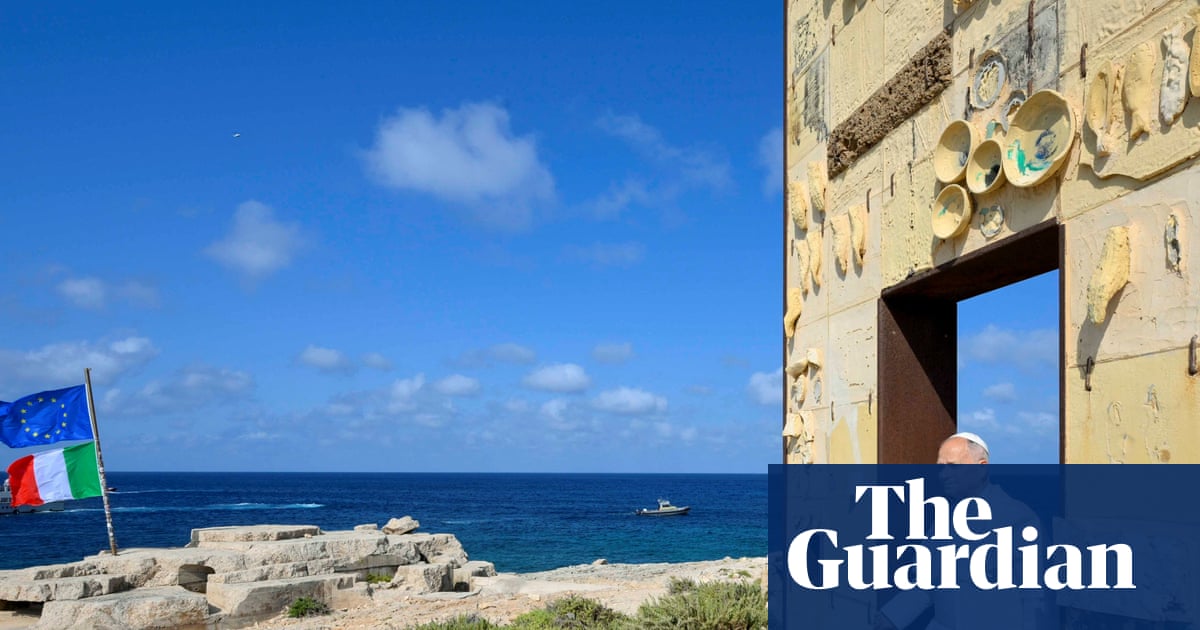
On a brief visit to Lampedusa, an Italian island recognized as a key entry point for migrants from North Africa, Pope Leo marked the 250th anniversary of the United States. Arriving by helicopter early on Saturday, he encountered newly arrived migrants as well as Italian coast guard workers and aid organizations who gathered at the port to welcome him.
During this visit, the Pope underscored his commitment to supporting and encouraging those striving for a better life. He also called upon European leaders to adopt a comprehensive approach to migration issues. This includes integrating immediate relief efforts with long-term strategies that facilitate the reception, protection, support, and integration of migrants, thereby improving conditions that compel individuals to leave their home countries.
Political Tensions and Immigration Dialogue
Pope Leo’s stance on immigration has previously put him at odds with former President Donald Trump. In November, he urged the United States to critically reflect on its treatment of those in detention. Tensions further escalated between the Vatican and the Trump administration following the Pope’s condemnation of the U.S.-Israel conflict.
Shortly before the Pope’s visit to Lampedusa, U.S. Vice President J.D. Vance expressed concerns over the Vatican’s immigration policy, labeling it “alarming.” As discussions related to the papacy and U.S. politics continue, some in the Trump administration had anticipated a visit from the Pope on Independence Day, although Leo’s 2026 schedule does not currently include the United States.
Symbolic Significance of Lampedusa Visit
Vatican journalist Marco Politi described Leo’s visit to Lampedusa as highly symbolic, marking a political statement against the mistreatment of immigrants and policies enacted by U.S. Immigration and Customs Enforcement (ICE). By reaffirming the dignity of every human being, the visit serves as a critique of political entities that propagate hatred and division.
Moreover, Vatican correspondent Andrea Friede remarked that Leo’s choice to visit Lampedusa was a nod to his predecessor, Pope Francis, and simultaneously a direct appeal to U.S. immigration policy, emphasizing the significance placed on this topic by American leadership.
Migration Statistics and Humanitarian Efforts
Lampedusa, with a population of around 6,000, has historically been the first arrival point for many crossing the Mediterranean in perilous conditions. Recent reports indicate that over 182,000 individuals have sought refuge in the island’s reception center in the past three years, according to data from the Italian Red Cross. The International Organization for Migration has documented thousands of deaths of those attempting to escape Tunisia and Libya since 2014, underlining the ongoing humanitarian crisis.
As the Pope prepares to celebrate Mass and engage with survivors and humanitarian workers in Lampedusa, the urgency of addressing migration challenges remains more pressing than ever. Kande Abdurahman, a cultural mediator for the International Rescue Committee on the island, poignantly reminded us of the shared experiences that bind humanity, stating that “welcome” transcends being merely a word; it embodies our collective commitment to assist the 118 million displaced individuals worldwide.
