


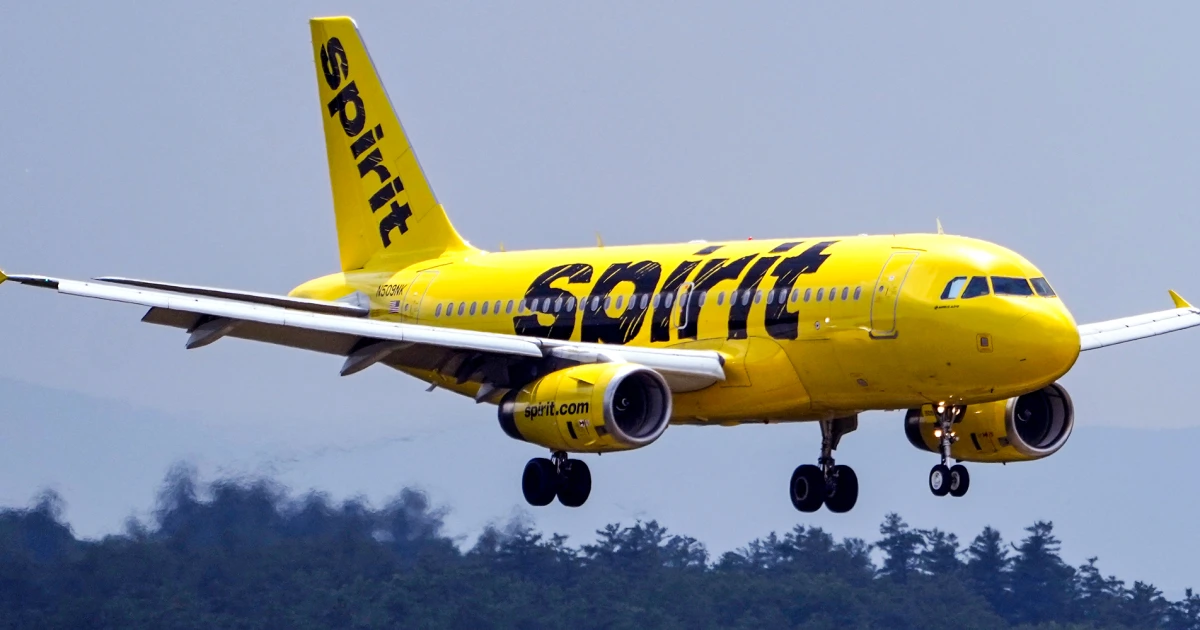
White House Proposes Federal Bailout Plan for Spirit Airlines Amid Financial Struggles
President Donald Trump announced that the White House has presented a final proposal for a federal bailout aimed at rescuing Spirit Airlines, a low-cost carrier currently facing severe financial challenges and rumored layoffs.
In recent reports by major news outlets such as The Wall Street Journal, The New York Times, and Bloomberg News, it has been detailed that Spirit Airlines may be preparing for liquidation following skyrocketing jet fuel prices that have hindered the company’s efforts to exit bankruptcy. A spokesperson for Spirit has refrained from commenting on the situation but assured that the airline remains operational.
Over the past few weeks, Spirit has actively sought financial support from the White House. Initially, President Trump appeared to be receptive to this request, proposing a $500 million investment package intended to bolster the company’s finances.
However, this proposal quickly faced significant pushback from various stakeholders, including Wall Street and members of Congress, as well as criticism from Trump’s own administration. Transport Secretary Sean Duffy remarked that supporting Spirit may simply be “throwing good money after bad,” emphasizing that previous investments have not led to profitability.
In an interview with Reuters, Duffy voiced concerns regarding the practicality of further investment in Spirit Airlines, questioning whether it might be more sensible to accept the inevitable outcomes of the airline’s financial woes.
While addressing reporters, President Trump expressed reservations about the potential rescue, indicating that his administration is evaluating the situation. He noted, “We’re looking at it. But if we can’t come to a good agreement… no agency has been able to do that,” reaffirming the complexities of the proposed bailout.
Spirit Airlines, one of the United States’ five ultra-low-cost carriers, has struggled with profitability for years. In the early months of 2026, the airline reported a loss of $60 million, prior to the recent spike in jet fuel costs. Attempts to merge with JetBlue in previous years were thwarted by a ruling that deemed such collaboration a violation of antitrust laws.
Analysts warn that the possible collapse of Spirit Airlines could negatively impact consumers and its approximately 17,000 employees. Katie Nastro, a travel expert at Going.com, emphasized that even those who have never flown with Spirit should support its survival, as the airline serves to competitively pressure larger airlines, ultimately helping to keep ticket prices low.
However, a government bailout could set a concerning precedent, according to a note from JPMorgan analysts, who indicated that struggling airlines like Frontier and JetBlue may seek similar assistance if Spirit receives a federal rescue. Earlier in the week, associations representing low-cost airlines petitioned the Trump administration for $2.5 billion to alleviate fuel cost pressures and mitigate rising airfare rates. The Value Airlines Association, which represents a coalition of budget airlines, stated that “temporary government support to maintain critical industry competition is not unprecedented.”
