


CoreCivic Sells Major Immigration Detention Facilities to U.S. Government
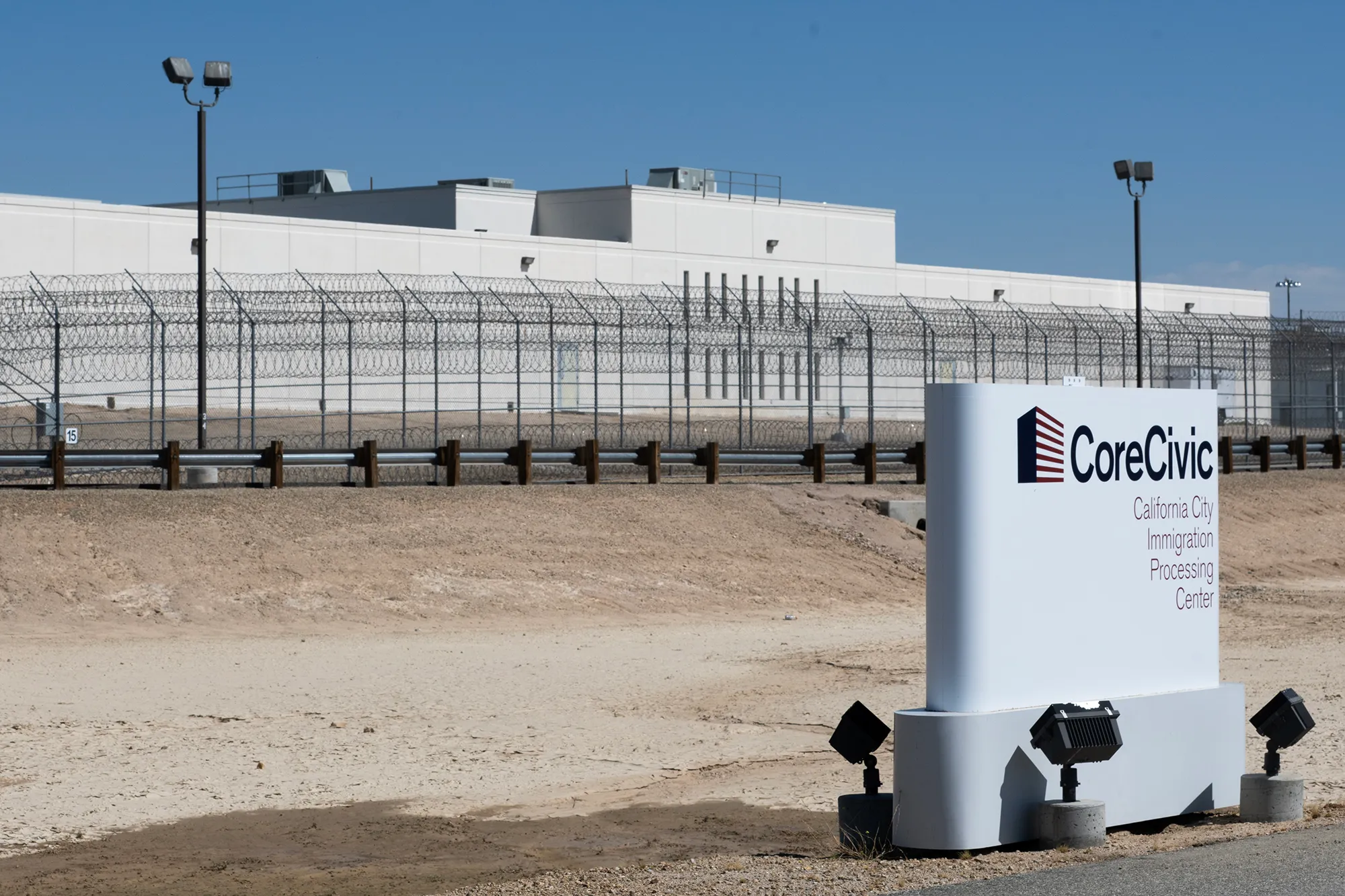
CoreCivic, a prominent player in the private prison industry, has finalized the sale of two of California’s largest immigration detention centers to the U.S. Department of Homeland Security for $1.5 billion. This transaction, announced on Monday, marks a significant shift in the management of these facilities.
The company anticipates a net gain of approximately $1.1 billion from this sale. The deal, completed on July 2, involves the transfer of the Otay Mesa Detention Center in San Diego County, valued at $739.2 million, and the newly opened California City Detention Center in Kern County, acquired for $732.6 million. Details were disclosed in recent filings with the U.S. Securities and Exchange Commission.
CoreCivic stated that it will maintain daily operations at both facilities through existing contracts with U.S. Immigration and Customs Enforcement (ICE). However, the company acknowledged that these agreements may be renegotiated now that the federal government owns the properties outright. The contract for the California City facility extends through August 2027, while the Otay Mesa contract runs until December 2029, with an option for a five-year extension.
This acquisition comes amid a time of increased funding for the Department of Homeland Security, which is set to receive approximately $170 billion for immigration enforcement and detention in the 2025 federal budget. Notably, $45 billion of this budget is allocated to enhance detention capacity through fiscal year 2029.
The federal government’s purchase of these two facilities aligns with a broader strategy to build immigration detention capacity nationwide, moving away from reliance on private prison contractors. A February report from the Brennan Center for Justice noted this shift, reflecting concerns from local leaders about the strain large detention centers exert on municipal resources.
The initiative, referred to as the “ICE Detention Reengineering Initiative,” was discussed in ICE documents released by Social Circle, Georgia, emphasizing a move toward a more efficient detention network by optimizing the number of contract facilities while enhancing total bed capacity and management efficiency.
Health Inspections Under Scrutiny at Detention Centers
California law permits state and local officials to inspect immigrant detention centers, and Democratic leaders have been monitoring conditions closely since the onset of former President Donald Trump’s second term. The number of ICE detention centers in California has increased from six to eight following the Biden administration’s policies.
Senator Alex Padilla has visited both facilities sold to the federal government, advocating for improved conditions for detainees, especially regarding access to healthcare. He expressed concerns over the treatment of individuals who pose no threat to public safety but remain in substandard conditions without adequate health services, legal support, and basic necessities.
The Otay Mesa facility is currently embroiled in legal disputes related to local health inspections. San Diego County officials initiated a lawsuit against the federal government and CoreCivic in March, alleging obstruction of health inspectors under a new state law. A federal judge has since granted access for these inspections.
Both CoreCivic and the GEO Group are contesting California’s County Inspection Act of 2024 in court, arguing that states lack the authority to impose regulations that affect the federal government’s operations in immigration detention. A spokesperson from GEO Group claimed the law infringes upon federal jurisdiction.
San Diego County Supervisor Terra Lawson-Remer remarked that the sale signifies a shift towards an entrenched and costly mass detention program while highlighting concerns about the operational aspects of government-run facilities versus private management.
Legal Challenges and Future Sales Anticipated
The California City Detention Center, which opened last year on land previously designated as a state prison, is currently facing a lawsuit regarding the permitting process for its establishment. Advocacy groups plan to lobby for the closure of this site, arguing that it was constructed without the necessary permits, while Attorney General Rob Bonta is also seeking to invalidate its operational status.
CoreCivic has emphasized that their operational responsibilities remain unchanged following the sale, with both facilities still subject to legal oversight. Notably, they will benefit financially not only from the initial sale but also from continued operations under government contracts.
The company disclosed that the sale price was determined through a thorough federal process involving an independent appraisal to ascertain fair market value. This assessment has been reviewed to ensure compliance with federal standards.
CoreCivic has indicated ongoing discussions with ICE regarding the potential sale of additional federal detention facilities, though these negotiations are still in their infancy and may not lead to concrete agreements. Proceeds from the recently completed sale, expected to exceed $1.1 billion before taxes and transaction costs, are slated for debt repayment and capital management, including possible stock buybacks.
CoreCivic expressed satisfaction with the sale of these facilities, underlining its commitment to serving government partners and adapting to evolving operational needs in the immigration detention landscape.
Correction: This article has been updated to rectify the details regarding CoreCivic’s debt repayment amounts.
This article was originally published on CalMatters and is republished under the Creative Commons Attribution-NonCommercial-NoDerivatives License.
