


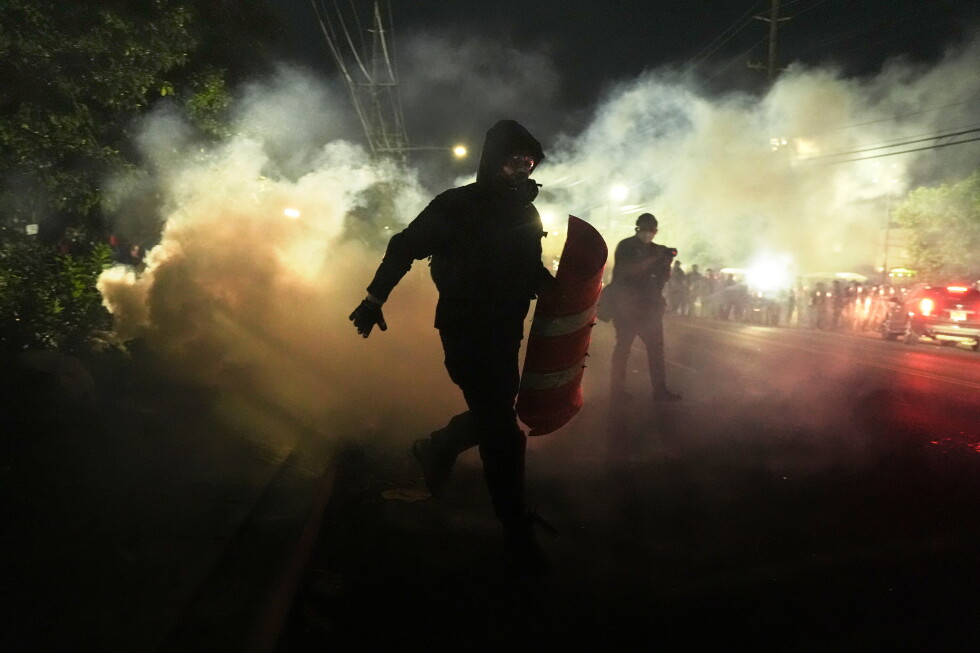
Recent clashes between protesters and law enforcement outside a New Jersey immigration detention facility have escalated tensions regarding President Trump’s immigration policies, igniting demonstrations since late May. Over 80 individuals were arrested in a series of protests outside Delaney Hall in Newark, as demonstrators expressed solidarity with detainees and condemned the allegedly inadequate living conditions within the facility.
Concerns Over Conditions at Delaney Hall
Delaney Hall is operated by Geo Group, a private contractor managing numerous detention centers nationwide. Detainees initiated a hunger strike last month, voicing their grievances through handwritten letters. They reported instances of denied medical treatment and demanded improvements in living conditions and access to better healthcare. This narrative of medical neglect has been echoed by detainees across other facilities as well.
Accounts from Delaney Hall claim that detainees are served moldy and expired food, some of which has been found infested with maggots. Inadequate facilities, such as overcrowded cells without air conditioning, have drawn attention from local Democratic lawmakers, who visited the center early in the protests and deemed the detainees’ accounts credible.
Administration’s Defense of Detention Operations
The Trump administration has staunchly defended the operations at Delaney Hall, disputing reports of hunger strikes, abuse, and poor conditions. Homeland Security Secretary Markwayne Mullin remarked that the center provides adequate nutritional meals, stating, “This is not a Holiday Inn.” Additionally, President Trump’s border enforcement chief, Tom Homan, lauded the quality of the food after a visit, claiming, “The spaghetti was delicious.”
Geo Group has dismissed the criticisms leveled against it as a politically motivated effort by groups aiming to dismantle the Department of Homeland Security and targeting its contractors.
Protest Actions and Legal Implications
During the protests, demonstrators wearing gas masks and helmets attempted to obstruct vehicles accessing the facility, employing makeshift barriers such as traffic cones and garbage cans. Acting U.S. Attorney Todd Blanche shared images online depicting injuries sustained by protesters, allegedly at the hands of U.S. Immigration and Customs Enforcement (ICE) agents. Footage circulating on social media showcased police in riot gear using tear gas and batons as they engaged with demonstrators, some even appearing on horseback as they approached the crowd.
In a significant development, Secretary Mullin reported the arrests of four ICE agents for their roles in alleged assaults and obstruction during the protests. Newark police also announced charges against a Seattle resident for vandalism after he broke a car window. Newark’s Public Safety Director, Emanuel Miranda, made a statement urging respect for the city and the rule of law, emphasizing that violence and property destruction are intolerable.
Additionally, an officer has been charged with theft related to an incident involving an injured Associated Press photojournalist, who reported that her $10,000 camera equipment went missing after she was struck during the protest. The state’s attorney general confirmed that she sought medical attention following the injury and utilized geo-tracking to recover her equipment.
Local Government’s Response to Protests
In the face of escalating violence, Democratic Governor Mikie Sherrill initially hesitated to intervene but later characterized the situation as “no longer safe” and “unacceptable.” She directed state police to help restore order at the facility. Following this, ICE agents stationed at the detention center agreed to withdraw, allowing state troopers to establish designated protest zones and vehicle checkpoints.
Newark Mayor Ras Baraka enforced a 9 p.m. curfew and directed police to enforce it rigorously. However, within a week, city officials noted a decline in arrests and expressed hesitance to continue utilizing taxpayer funds to protect private facilities, further withdrawing police presence. In a significant legal maneuver, the state’s attorney general has filed a lawsuit against Geo Group, alleging that the facility obstructed state health inspectors attempting to investigate the claims of poor conditions.
