


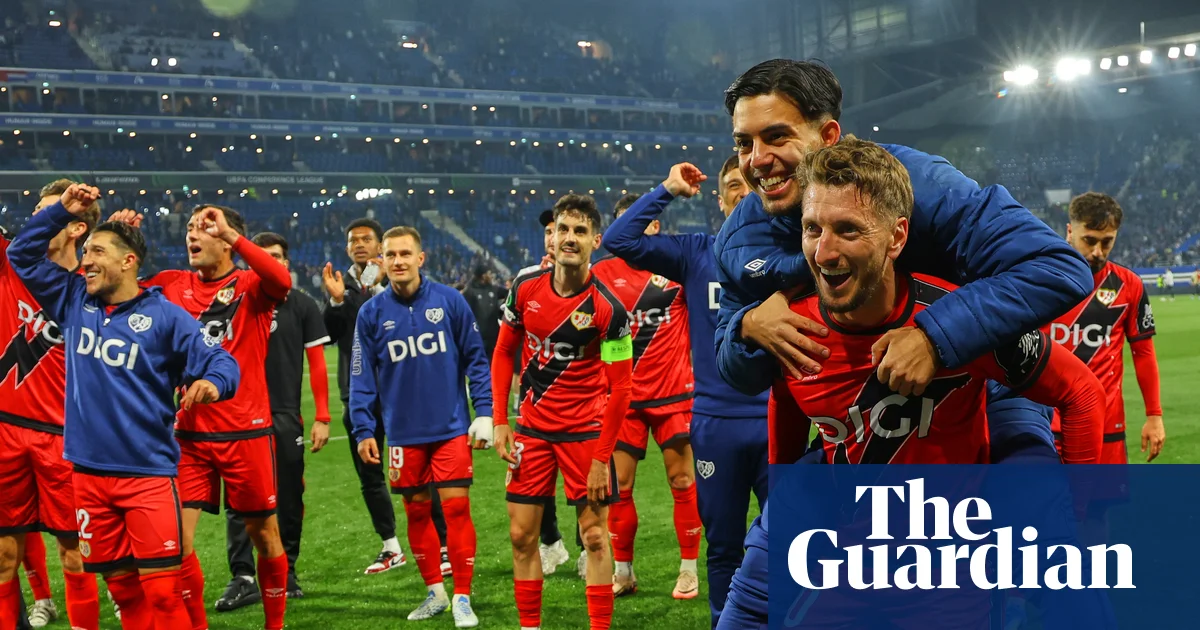
Rayo Vallecano: An Unlikely Epic of Community and Passion
Captain Óscar Trejo encapsulates the spirit of Rayo Vallecano by describing it as a club defined by love, humility, and hard work. In a heartfelt gesture, he presented an armband as a show of solidarity with the club’s dedicated workers. Teammate Sergio Camello emphasizes the uniqueness of the club, calling it “the last team from another era.” Alvaro García agrees, pointing out that Rayo’s journey is one of the most compelling narratives in football. The club’s top scorer at 36 goals this season, García has endured the cyclical nature of relegation and promotion but admits nothing can compare to this moment. “We’ve evolved from ‘little Rayo’ to ‘el puto Rayo,’” says midfielder Óscar Valentín, highlighting how Rayo Vallecano has transcended its small-club status.
Rayo Vallecano may be modest in size, but its impact is monumental. As they prepare for their third Conference League match, the contrast between their humble surroundings and the grandeur of European football becomes apparent. The video shared by Lech Poznań’s kitman, showcasing the dilapidated visitors’ changing room in Madrid, is a stark reminder of the disparities within the tournament. Head coach Iñigo Pérez acknowledges that this European journey is not only about the games but also about providing fans with a unique and authentic experience—a sentiment that resonates within the community.
Wednesday night marks a historic occasion for Rayo Vallecano, as they gear up for their inaugural European match in the club’s 102-year history. Trejo describes qualifying for a European tournament as a remarkable achievement, adding, “We feel like children eager to play with a new toy.” This sense of wonder is further amplified by the personal stakes for Trejo, who is set to play his last game after joining the club during its second-division days in 2017.
The road to the semifinals has been remarkable for a squad predominantly composed of players from lower-tier clubs. Out of the 16 players who participated in the last match against Strasbourg, only a handful have experienced top-flight football. The challenges have been numerous; Rayo has a minimal budget and the smallest stadium in La Liga. Their only prior European appearance came through a fair play lottery that they could not even partake in. “We represent something different,” striker Jorge de Frutos states, emphasizing the rarity of clubs like Rayo Vallecano in this competitive landscape.
The essence of Rayo lies within its neighborhood, Vallecas, a vibrant community that carries a historic identity shaped by immigrants. This self-proclaimed “People’s Republic of Vallecas” is known for its rich culture, tightly packed housing, and striking murals that breathe life into the streets. Trejo notes that the club proudly embodies its working-class roots, making it a symbolic heart of the community. “Everyone is welcome to come,” he insists, emphasizing the unique atmosphere that has players and fans alike feeling at home.
At match days, tension and camaraderie intermingle as players are celebrated by the passionate Bucaneros Ultras. Rayo’s supporters resonate deeply with their team’s struggles, often using creative forms of protest to address grievances, including their distaste for club president Raúl Martín Presa. Amid these challenges, Camello emphasizes that the most critical aspect of the club is the unity and understanding of what they’re fighting for, stating, “Expression is more important than results.”
Despite a backdrop of financial constraints and dilapidated facilities, Rayo Vallecano has forged a resilient identity that thrives on community and solidarity. The club’s players, facing adversity, have been vocal about their environment, citing issues like inadequate training grounds and essential amenities. Yet, as goalkeeper Cárdenas prepares for games, he embodies the spirit of perseverance that defines Rayo. “This is our place, and it’s worth fighting for,” Camello concludes, acknowledging the unique bond between players and fans.
