


Lagos Governor Reviews Flood Damage in Ibeju-Lekki Region
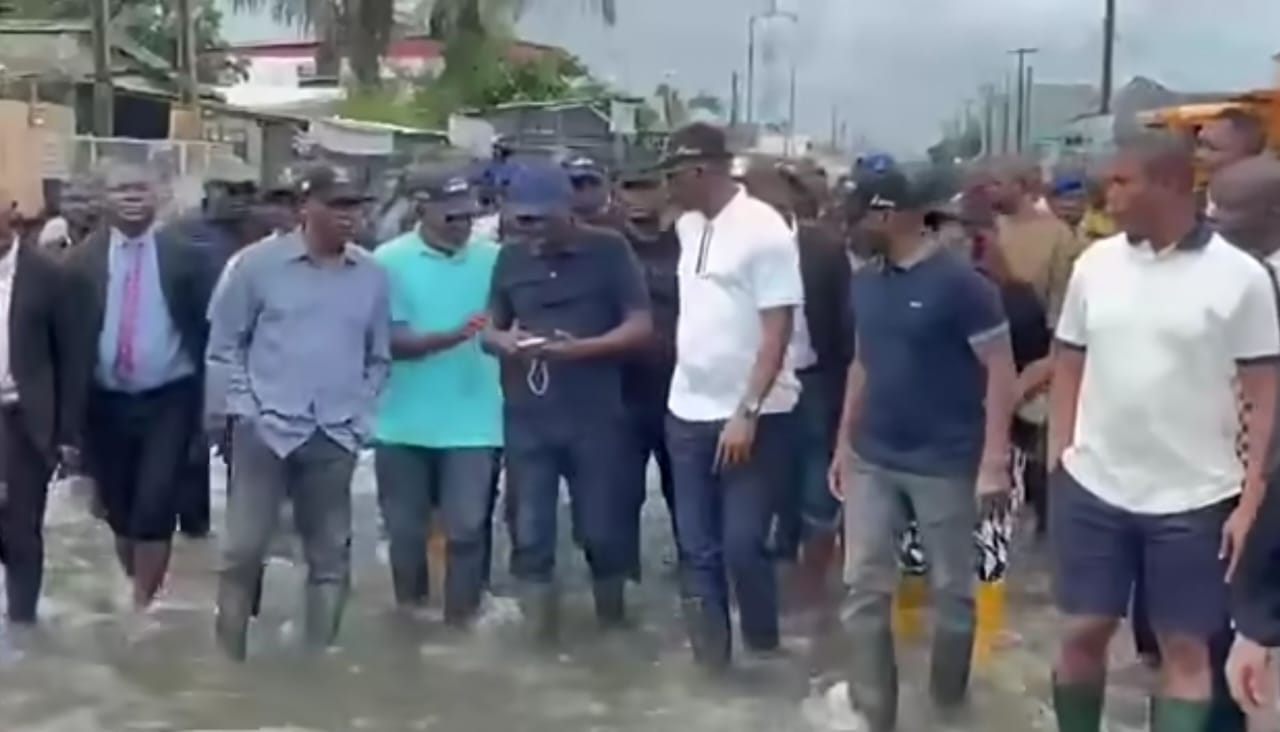
Lagos State Governor, Babajide Sanwo-Olu, has raised concerns about the significant destruction caused by recent flooding in the Ibeju-Lekki area. During an impromptu visit on Wednesday, he examined several impacted regions along the Lekki corridor, noting that the flooding stems from both climate-related heavy rains and human activities obstructing natural waterways.
Governor Sanwo-Olu Conducts On-Site Assessments
The governor inspected various locations, including Sangotedo, Chevron Drive in Eti-Osa Local Government Area, Ogombo in Ajiran, and Gbetu Olorunkami Road in Awoyaya. His objective was to gain firsthand insight into the challenges faced by residents and to identify immediate as well as long-term solutions. Accompanying him were Deputy Governor Dr. Obafemi Hamzat, Secretary to the State Government Mrs. Abimbola Sall-Hundein, and other members of the State Executive Committee, all of whom assessed major drainage channels and tributaries affected by recent heavy rainfall.
Importance of Natural Waterways
While standing in floodwaters in Awoyaya, Sanwo-Olu highlighted the critical role of maintaining natural drainage channels in the affected communities. He emphasized the necessity of preserving these waterways, which naturally channel rainwater into the lagoon and mitigate flooding. “Lagos is surrounded by water and numerous tributaries,” he stated, explaining the state’s intentional focus on facilitating the flow of water through its natural channels.
Impact of Climate Change and Human Development
The governor pointed out that the excessive rainfall experienced over the past three weeks is not only a natural phenomenon but has been worsened by anthropogenic factors. He described how indiscriminate development and illegal restrictions have obstructed many waterways over the years, diminishing their capacity and increasing vulnerability during heavy rainfall. “In various locations we visited today, human activity has hindered natural water drainage,” he remarked.
Planned Mitigation Efforts
Sanwo-Olu announced that the state government will ramp up dredging, excavation, and drainage expansion initiatives aimed at improving water flow and reducing flooding risks. “We must regularly excavate and clean the channels to enable free water flow. When maintained, these channels will ultimately direct water into the lagoon,” he stated.
Collective Responsibility in Environmental Management
Addressing the broader implications of flooding, the governor used a household analogy to describe the issue, stating that clogged drains—much like a kitchen sink—hinder proper water flow. He underscored the importance of collective responsibility in environmental management, urging residents to remove debris from drains and comply with environmental guidelines. “Everyone has a role to play. We can only achieve better outcomes through collaboration,” he added, reinforcing the duty of individuals, the media, and the government alike.
Assisting Affected Communities
Additionally, Governor Sanwo-Olu extended his sympathies to residents affected by the flooding, assuring them that the state government would assess the situation and provide necessary aid. He noted that relief centers are already operational to assist those in need. As the rainy season continues, he urged residents living in flood-prone areas to heed weather warnings and, if necessary, seek safer ground.
Local Leaders Support Government Initiatives
Chief Noheem Adams, Majority Leader of the Lagos State House of Assembly, praised the governor’s hands-on approach to tackling the flooding crisis. According to Adams, residents are growing increasingly aware of the need for responsible practices, such as avoiding waste disposal into drains. He reiterated that the flooding issues are not exclusive to a single area but affect various parts of Lagos. The ongoing engagement with local communities is crucial to building awareness and compliance with environmental regulations.
