


State Police Bill Gains Advocacy Amid Rising Security Concerns
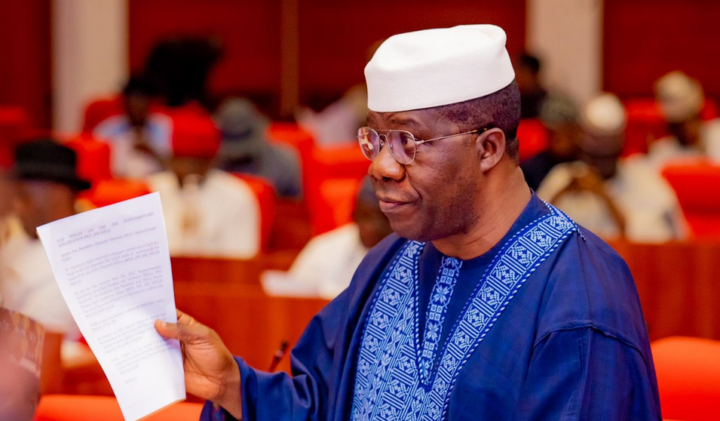
Senate Majority Leader Opeyemi Bamidele has reiterated his support for the proposed state police bill, emphasizing that it includes robust constitutional safeguards to mitigate concerns regarding potential gubernatorial overreach. He asserts that this legislation is crucial for establishing an effective security framework capable of addressing escalating threats such as terrorism, kidnapping, and banditry in Nigeria.
In response to criticism of the proposed constitutional amendments aimed at creating a state police force, Bamidele stated that the country’s current centralized police system has become overwhelmed and is inadequately equipped to handle the nation’s increasing security challenges. He noted that the relentless rise in population and security threats underscores the urgent need for a decentralized police approach.
Bamidele posits that the new police structure is driven by national security needs rather than political motives, highlighting that the legislature has engaged in extensive dialogue with various stakeholders. He emphasized that local authorities often lack the capacity to respond swiftly to security issues, a situation he believes will only deteriorate if the status quo is maintained.
The socio-economic consequences of insecurity, according to Bamidele, are staggering, with estimates indicating a loss of approximately $100 billion due to violent extremism in Nigeria’s Northeast. He warned that continued unrest could further diminish economic activities, devastate businesses, and hamper national production.
The senator lamented the broader impact of insecurity, which has displaced thousands, disrupted educational opportunities, and weakened local economies. Many affected individuals have sought refuge in internally displaced persons camps, highlighting a dire situation that undermines national development.
Bamidele pointed out that despite increased funding for the Nigeria Police Force, efforts such as recruiting more personnel and acquiring advanced security equipment have not yielded the required improvements within the centralized system. He argued that a constitutional amendment ensuring clear delineation of responsibilities between federal and state police is necessary to resolve jurisdictional conflicts.
Under the proposed changes, federal police would manage matters related to counterterrorism, border security, organized crime, and other areas impacting national security, while state police would focus on enforcing local laws and maintaining public order. Addressing fears of potential misuse of state police power, Bamidele reassured that the bill would incorporate multiple layers of oversight to prevent abuse by state governors.
He explained that an independent State Police Commission would be established to regulate police operations without gubernatorial influence, ensuring that funds would be allocated directly to the commission to bolster its financial autonomy. In terms of appointments, while governors would recommend candidates for state police chiefs, these appointments would require approval from both the National Police Council and a two-thirds majority in the state legislature. This process applies equally to removals, which must adhere to proper channels and legislative approval.
Bamidele reassured that governors would only have limited authority to issue directives related to public safety and general policy, explicitly barring them from instructing police to target individuals or groups outside legal frameworks. Furthermore, while Congress will dictate minimum national police standards, states will have the flexibility to implement more rigorous standards, as long as they do not fall below national specifications.
The Senate Majority Leader concluded by clarifying that federal intervention in a state’s policing would not occur automatically; rather, it would require constitutional prerequisites, including a formal request from the state government and the president’s written consent. Such intervention would only be considered in instances of severe public disorder, a breakdown in police capacity, flagrant violations of rights, or threats to national security.
This State Police Bill is the culmination of extensive constitutional review and consultations involving key stakeholders, including the executive branch, the Nigeria Governors Forum, and the leadership of the Nigeria Police. Public hearings conducted across six geopolitical zones in July 2025 revealed a strong consensus in favor of establishing a state police force.
