


A surge in inflation is affecting several African nations, including Egypt, Nigeria, and Kenya, as price pressures escalate across the continent.
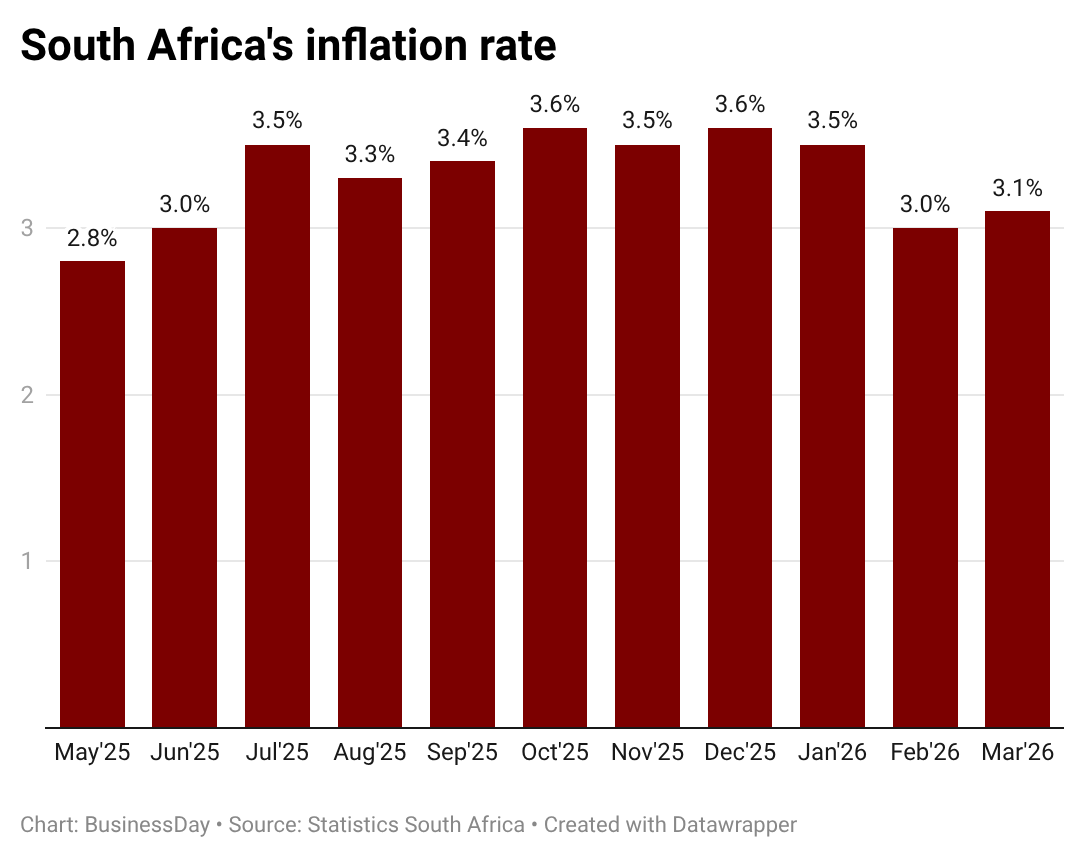
In March, South Africa’s inflation rate experienced a slight uptick, marking the first increase in three months. This rise may signal new price pressures in the region’s most industrialized economy, coinciding with the looming impacts of the Iran-related oil crisis on domestic fuel prices.
This inflationary trend emerges amid growing global uncertainties, particularly heightened tensions between the United States, Israel, and Iran. These geopolitical shifts have already led to increased oil prices, raising concerns about imported inflation in emerging markets.
According to the Consumer Price Index (CPI) data released by Statistics South Africa on Wednesday, the annual consumer inflation rate climbed to 3.1%, up from 3.0% in February. This increase aligns South Africa with countries such as Egypt, Nigeria, Zimbabwe, and Kenya, where inflation rates are also trending upward.
On a monthly basis, prices rose by 0.6% in March. Among the 13 categories in the CPI basket, six reported accelerated annual growth rates. Notable contributors included sectors such as restaurants and accommodation services, education, transportation, housing and utilities, information and communications, as well as recreation and culture.
Education and Transportation Drive Inflation
Notably, education and transportation have emerged as significant contributors to inflation in March, influenced by seasonal adjustments and shifting cost dynamics.
Education costs, which are revised annually in March, increased by 5.4% in 2026, surpassing the 4.5% increase of the previous year. Within this category, primary and secondary education expenses rose by 6.2%, while higher education costs went up by 4.2%. Private secondary schools saw the sharpest rise, with tuition fees increasing by 7.5%.
Transportation inflation, despite remaining in deflationary territory, showed signs of gradual improvement. The annualized rate shifted from -2.1% to -1.6%, indicating that while transportation costs remain lower than a year ago, they are on the rise. Although fuel prices fell by 8.7% over the last year, contributing to contained transport inflation, vehicle prices increased by 0.4%. In March, passenger transport fares jumped significantly by 1.6%, driven by a 20% rise in long-distance bus fares and a 14.3% increase in airfares.
Importantly, the CPI data for last month does not capture the steep hike in fuel prices that took effect on April 1st. These adjustments are anticipated to be reflected in the next CPI release, scheduled for May 20th.
Food Inflation Shows Signs of Moderation
Conversely, food inflation remained subdued, offering some relief to household budgets.
The annual growth rate for food and non-alcoholic beverages was recorded at 3.6%, a slight decrease from January’s 3.7% and the lowest level in a year. Deflation was seen in four of the 11 food categories, notably fruits and nuts, vegetables, cereals, and dairy products.
For the tenth consecutive month, dairy and egg prices continued to decline, decreasing by 0.5% as prices for raw milk, powdered milk, and eggs dropped compared to the previous year. Meanwhile, grain prices fell by an average of 1.0%, leading to reduced costs for staple foods such as rice, cornmeal, bread, and noodles.
Additionally, meat prices exhibited signs of easing on a monthly basis, particularly for various beef products. However, annual meat inflation remains high at 11.6%, despite a decline from February’s 12.2%. Processed meat products like pork and bacon bucked this trend, recording increases in prices.
Mixed Trends in Housing and Wages
The rent landscape reflected mixed trends across different components of the CPI basket.
Rental inflation accelerated, with actual rents rising by 4.0% in the first quarter of 2026, up from 3.7% in the previous quarter. Townhouses exhibited the highest rent growth at 5.1%, followed by apartments at 4.2% and single-family homes at 3.7%.
In terms of wages, domestic worker pay increased by 3.7% in the first quarter, a slight decrease from the previous half’s 3.8% rise. However, accommodation services witnessed a noteworthy surge of 5.4% month-on-month, reaching an annual increase of 12.2%, primarily driven by university boarding fees and hotel pricing.
Diverging Inflation Trends Across Africa
Inflation trajectories across Africa are becoming increasingly divergent due to varying domestic policies, currency stability, and susceptibility to global economic shocks.
While countries like Ghana, Ethiopia, Angola, and Mauritius continue to experience disinflation, the pace of this improvement is beginning to wane. Inflation rates in several nations remain in single digits, including Ghana at 3.2%, Ethiopia at 9.4%, Mauritius at 2.7%, and Zambia at 7.1%, as reported by Trading Economics.
Tanzania’s inflation has remained relatively stable at 3.2%, the lowest in nine months, while Angola’s rate has decreased to 12.42%, marking the 21st consecutive month of decline and its lowest level since July 2023.
Conversely, several major African economies are witnessing renewed inflationary pressures. Egypt’s inflation rate climbed to 13.6%, and both Kenya and Zimbabwe recorded rates of 4.4%, driven largely by rising fuel costs. Nigeria’s inflation also saw an increase from 15.06% to 15.38%.
The World Bank’s recent report highlights the ongoing inflation risks across the continent, emphasizing currency pressures exacerbated by global uncertainties, rising energy and food prices, and geopolitical tensions. As South Africa’s inflation rises under the weight of global oil price hikes, experts suggest that the disinflationary trends observed in some regions may be nearing their end. This evolving landscape could compel central banks across the continent to sustain tight monetary policies for longer, posing potential challenges to economic growth and delaying anticipated rate cuts in 2026.
