


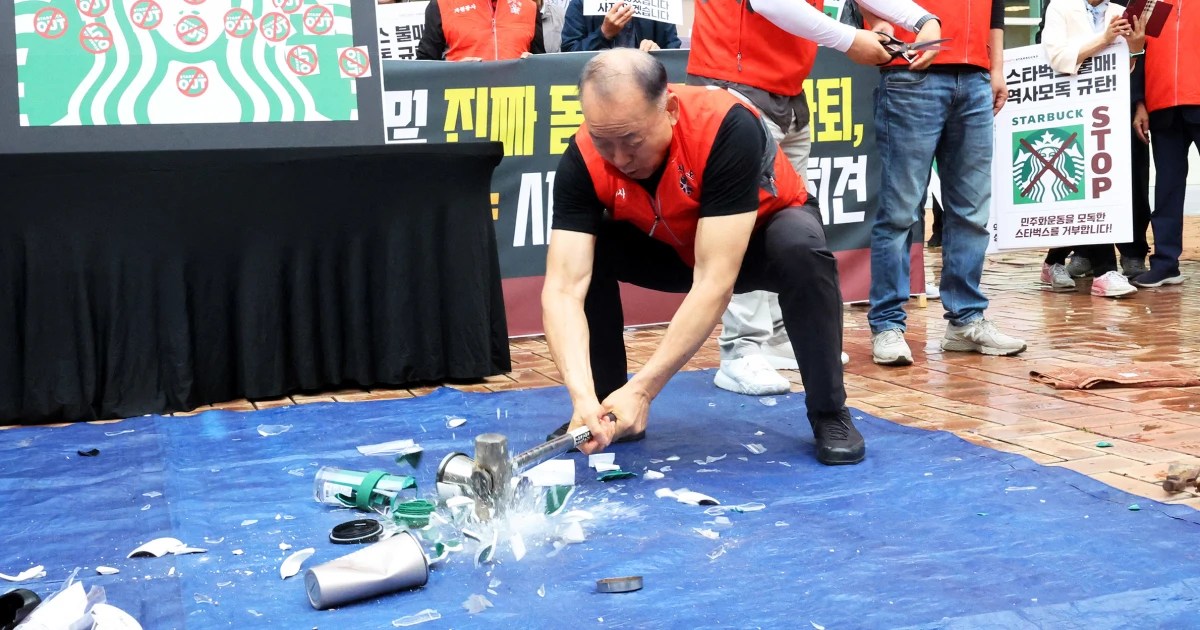
Lee Jae-myung Criticizes Unethical Marketing Practices
President Lee Jae-myung expressed his outrage over recent marketing actions, stating on X that he is “outraged by the inhumane and shameful acts of profiteers who deny Korean society’s values, basic human rights, and democracy.”
Political Landscape Complicates Marketing Missteps
The marketing blunder comes at a critical moment, as South Korea prepares for national local elections next month.
Expert Analysis on Timing of the Campaign
Kim Yu-kyung, a professor at the Korea University of Foreign Studies in Seoul, commented on the poorly timed campaign. “The timing itself was very bad,” he noted, highlighting the public’s disappointment in Starbucks, a brand deeply rooted in South Korean culture.
Shinsegae Group Responds to Controversy
In response to the backlash, Shinsegae Group announced that there was no evidence that its marketing team intentionally mocked the pro-democracy movement. The company stated that employees involved have denied any harmful intentions. However, three employees have refused to surrender their cellphones during the ongoing investigation.
Company Actions and Accountability
Shinsegae Group has terminated all five individuals connected to the marketing initiative and is cooperating with a police investigation initiated after complaints from families of those affected by the Gwangju incident. The company emphasized that any employee, including executives, found to have acted with intent will face immediate termination and potential legal consequences.
Call for Transparency from Political Leaders
The ruling Democratic Party acknowledged the necessity of an apology from Chung but deemed it “not sufficient.” Spokesperson Jeon Jin-sook stressed that lingering public concerns exist regarding possible coordination or intent behind the campaign. The party demands full transparency from Shinsegae Group as they cooperate with investigations.
Debate Over Public Reaction and Brand Sensitivity
Meanwhile, the conservative People Power Party criticized the public’s backlash as “consumer censorship” and “selective outrage,” referencing a South Korean actor dismissed from a project for a social media post at a Starbucks location. Despite political implications, Professor Kim noted that the public’s reaction is backed by substantial sentiment.
Global Brands Must Consider Local Sentiments
Although Starbucks management may not have directly orchestrated the campaign, the incident serves as a significant lesson about cultural sensitivity for global brands entering diverse markets. “American companies should be particularly vigilant about the nuances they may overlook when operating overseas,” Kim remarked. University student Kim Yong-jin, while acknowledging the controversy, believed that the reactions have been excessive, stating, “I feel like public opinion is attacking the company almost like a mob.” Ultimately, he and many others remain loyal to the brand, driven by the quality of its offerings.
Stella Kim contributed reporting from Seoul and Jennifer Jett from Hong Kong.
