


Supreme Court Decision Paves Way for Changes in Immigration Protections
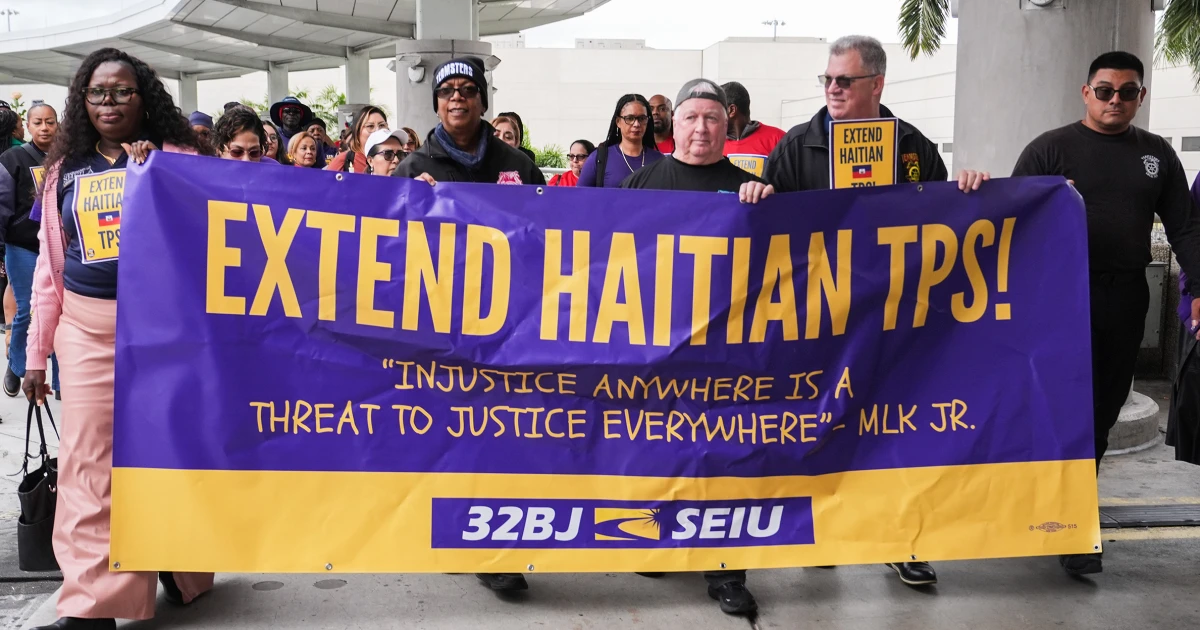
WASHINGTON – The Supreme Court has opened the door for the Trump administration to revoke legal protections for thousands of Haitian and Syrian immigrants residing in the United States. This ruling raises the possibility of deportation for these individuals.
In a 6-3 decision along ideological lines, the Court sided with the administration’s plan to eliminate temporary protected status (TPS) for approximately 350,000 Haitians and 6,000 Syrians. Conservative Justice Samuel Alito, representing the majority, expressed concerns that the justices were overstepping their jurisdiction by accepting the administration’s claims at face value. The Court also dismissed arguments suggesting that the removal of protections for Haitians was discriminatory.
This decision follows previous Supreme Court rulings that allowed the Trump administration to strip similar legal protections from 600,000 Venezuelans living in the U.S. The administration contended that these precedents should similarly apply to Haitian and Syrian immigrants, emphasizing consistency in the legal approach.
Attorney General D. John Sauer, advocating for the government, noted that the revocation of TPS by former Homeland Security Secretary Kristi Noem could not be challenged in court. The TPS program, established in 1990, provides humanitarian relief to individuals from countries facing war, natural disasters, and severe crises. It grants recipients legal status in the U.S. and the ability to seek work authorization for up to 18 months, with possible extensions.
In her justification, Noem asserted that the conditions in Haiti and Syria no longer warranted protected status, claiming improvements in the situations of both countries. However, the State Department currently advises against travel to either location, designating both as “Do Not Travel” regions due to ongoing violence and instability.
As it pertains to Haiti, the State Department reports a persistently high rate of crime, including incidents of robbery, kidnapping, and sexual assault. Regarding Syria, the assessment indicates that “no area in Syria is considered safe from violence.”
The withdrawal of TPS status places the affected individuals at risk of deportation through standard legal channels. Those impacted may still explore other means of remaining in the U.S., such as applying for asylum. Some TPS holders challenged Noem’s decision, arguing it lacked a substantial basis and that the conditions in Haiti remained dangerous.
A judge in Washington previously found in February that Noem failed to follow proper procedures in terminating TPS for Haiti, citing evidence that her decision was influenced by “anti-Black and anti-Haitian hostility.” The judge referenced inflammatory statements made by Noem and former President Trump regarding Haitian immigrants.
Despite the Supreme Court ruling, the plaintiffs maintain that new evidence points to the government relying on inaccurate information during its deliberations. In a separate ruling, a federal judge in New York supported the TPS status of seven Syrians who had been seeking legal protections under the program.
Lawyers for the Haitian plaintiffs urged the court not to intervene, emphasizing the life-threatening conditions they would face if returned to Haiti. They also cited President Trump’s controversial remarks as indicative of racial bias impacting the decisions made regarding TPS. Meanwhile, lawyers for the Syrian plaintiffs highlighted the ongoing conflict in the region and questioned the urgency of the government’s legal actions, given that many of these individuals have lived in the U.S. for over a decade.
Additionally, the Trump administration has revoked TPS status for individuals from other countries, including Afghanistan and Cameroon. According to the National Immigration Forum, an immigration advocacy group, around 1.3 million people in 17 countries currently benefit from TPS.
The Supreme Court’s decision aligns with President Trump’s broader immigration policy, reinforcing efforts to restrict protections for vulnerable populations, including the recent termination of a program that allowed over 500,000 immigrants from Cuba, Haiti, Nicaragua, and Venezuela to remain in the U.S. during the adjudication of their claims.
