


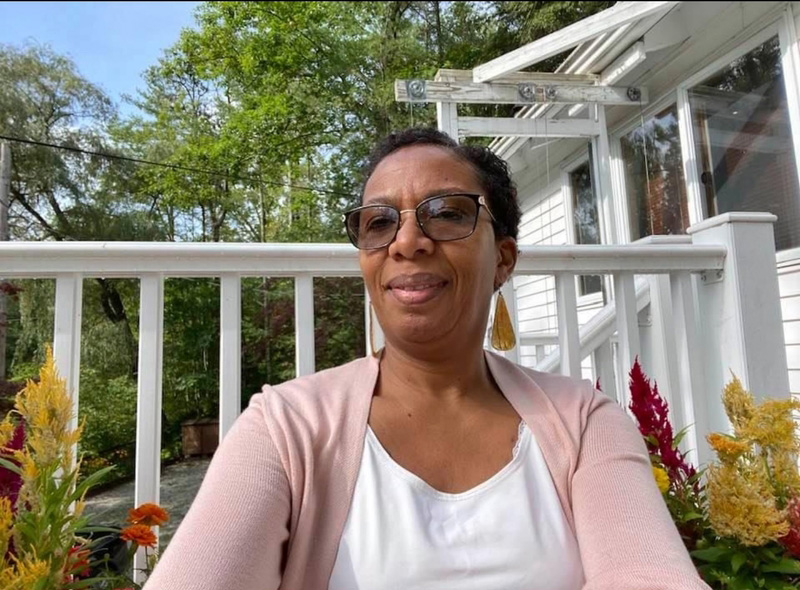
Maryse Baltazar
Maryse Baltazar is a Haitian certified nursing assistant living in the United States on temporary protected status.
WASHINGTON — Maryse Baltazar understands that possessing a valid driver’s license does not safeguard her from the looming threat of deportation to Haiti. As a nursing assistant in South Florida, she grapples with the anxiety of leaving her home, fearing that a minor traffic incident, like a broken taillight, could jeopardize the life she has cultivated over the past 16 years in the U.S. The thought of a simple traffic violation stops her in her tracks: What if she gets pulled over? This is a daily fear that weighs heavily on her mind.
Baltazar is among approximately 350,000 Haitians residing in the United States under Temporary Protected Status (TPS). This program allows individuals from nations beleaguered by armed conflict, natural calamities, or other extraordinary crises to live and work temporarily in the U.S.
Understanding Temporary Protected Status
Baltazar arrived in the United States under TPS in 2010, following a cataclysmic earthquake in Haiti that claimed more than 200,000 lives and obliterated over 100,000 homes, including her own. Established by Congress and President George H.W. Bush in 1990, TPS was designed to shield immigrants from deportation to dangerous conditions. This designation grants temporary legal status and work permits that can be renewed for up to 18 months, although it doesn’t pave a pathway to citizenship.
The Department of Homeland Security has consistently extended TPS for Haiti due to ongoing instability, characterized by rampant gang violence, natural disasters, and the assassination of President Jovenel Moïse in 2021. The deadline for Haiti’s TPS was set for February 3, but U.S. District Judge Ana Reyes intervened on February 2, halting the termination of TPS and deeming it illegal, with concerns about potential “racial hostility” in the motivations behind the decision.
The Trump administration argued that the necessity for TPS had diminished and that conditions in Haiti had improved sufficiently. The case has now reached the Supreme Court, which is expected to issue a ruling by the conclusion of its term in late June or early July. The court’s decision will address whether the administration acted lawfully in its efforts to revoke TPS and whether it adequately consulted the State Department regarding conditions in Haiti.
Heightened Anxiety Within the Community
Immigration attorneys and advocates express that the uncertainty surrounding TPS is escalating anxiety levels within the Haitian community. “Everyone is scared across the board. But especially our Haitian clients,” remarked Tremaine Hemans, founder and managing attorney at an immigration law firm in Fort Lauderdale, Florida. Baltazar no longer feels secure in her environment.
Previously, she would travel to Massachusetts for months to care for patients. Now, she categorically refuses job offers as a nursing assistant that require air travel, even if they promise $50 an hour, due to her fear of encountering immigration or customs agents at the airport. “They handicap you and make it uncomfortable to live here,” she stated.
The escalating violence and humanitarian turmoil in Haiti continue to worsen, highlighted by Brian Concannon, a human rights attorney and executive director of the Haitian Institute for Justice and Democracy. According to United Nations estimates, nearly 90% of Port-au-Prince is now dominated by armed groups, while hunger and societal displacement have surged dramatically in recent years. “There is literally no indicator that the situation in Haiti is improving or safe,” Concannon asserted.
The Personal Toll of Violence
This grim reality resonates strongly with Rose Tamar Joseph, a Haitian TPS holder and community activist based in Springfield, Ohio. Joseph arrived in the U.S. under TPS in 2021 after President Joe Biden redesignated the program for Haiti. She maintains close contact with her family back home, including her 12-year-old son, oftentimes hearing gunshots over the phone.
Joseph recalls a distressing instance when her family sent her photos of bullet casings found in their yard. One sleepless night, her worry for their safety drove her to call repeatedly until dawn. The violence has reached a point where her son can no longer attend school, amplifying her anxiety over the unreliable telecommunication services that disrupt her ability to stay connected with them. While Joseph has asylum status allowing her to reapply if TPS is terminated, many Haitian TPS holders lack this safety net. “It’s heartbreaking to know that so many people are losing their jobs and facing layoffs because of TPS,” she lamented.
Repercussions for U.S. Families and Employers
Concannon also indicates that the Supreme Court’s ruling will have immediate implications for TPS holders and their families. Among the 350,000 Haitian TPS holders, approximately 200,000 are already integrated into the U.S. workforce, according to advocacy group FWD.us. The ongoing strife in Haiti has strained family finances, with many TPS holders sending remittances back home to support relatives. “Thousands of families are kept afloat by transfers from TPS holders,” Concannon noted.
Employers across the U.S. will feel the repercussions, as many Haitian immigrants hold essential positions in various sectors. FWD.us estimates that around 15,000 work in agriculture, 13,000 as nursing assistants, and another 8,000 as caregivers. Todd Andrews, senior vice president of Asbury Communities, a retirement services organization, emphasized the crucial role that immigrant workers play in caring for the elderly and observed that the potential loss of TPS employees could exacerbate existing staffing shortages.
“The workers you have today won’t be there tomorrow,” Andrews warned. “We need to find a way to provide that care.” Meanwhile, lawmakers remain divided on the fate of TPS. In a recent Capitol Hill interview, Senator Rick Scott (R-Florida) refrained from voicing a stance on extending TPS for Haitians but acknowledged the need for an overhaul of the broader immigration system.
The Emotional Weight of Uncertainty
While discussions among lawmakers diverge, Baltazar is confronted with tough conversations regarding her daughter, a U.S. citizen and college student, about the implausible yet terrifying possibility of her being deported. “It’s going to have a big impact on her,” Baltazar shared. “She’ll feel more secure and at ease if I’m around because she knows she can rely on me. But without me, she’ll have to fend for herself.”
At present, Baltazar’s focus is on making the most of her current circumstances. She dedicates her time to caring for elderly patients, managing a small online hair care business, and cherishing moments with her family. Like many Haitians in the TPS program, she continues to dream of a stable homeland to which she could eventually return. “As Haitians, we all aspire to go home because we love our country. We don’t have a system like we do here,” she expressed.
