


Nigeria’s Supreme Court Overturns FPSO Tamara Tokoni Seizure Decision
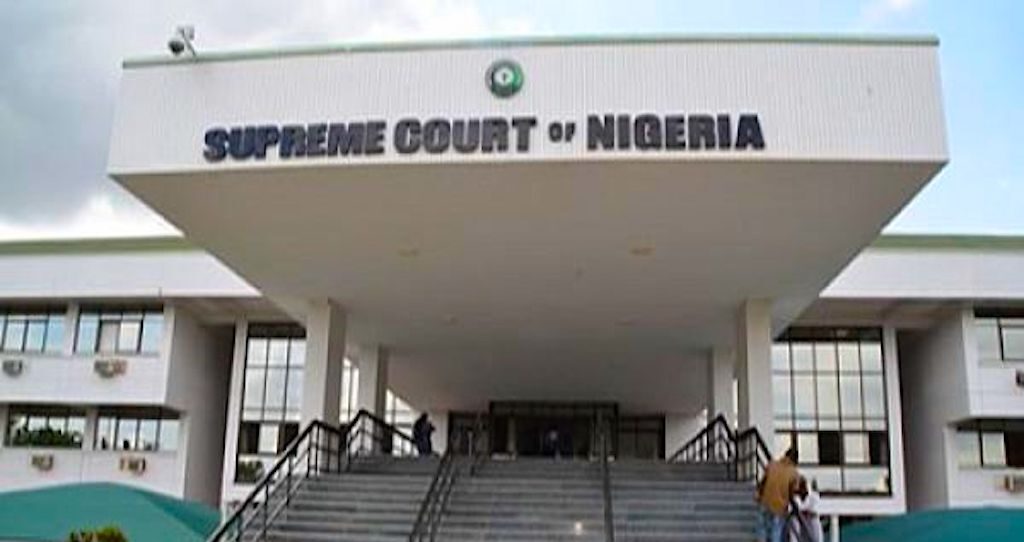
The Supreme Court of Nigeria has nullified a Court of Appeal ruling that mandated the seizure of the FPSO Tamara Tokoni, an oil-laden vessel pledged by General Hydrocarbons as collateral for a loan from First Bank. On Friday, the five-judge panel determined that the matter at hand was a contractual dispute rather than a maritime issue, as reported by Thisday.
The court’s ruling also highlighted that both the Federal High Court and the Court of Appeal lacked the jurisdiction to adjudicate this maritime dispute. Previously, in September 2025, the Court of Appeal had ordered the sale of the crude oil on board the vessel, instructing that the proceeds be deposited into an interest-bearing escrow account managed by the Chief Registrar of the Court of Appeal.
Background on the Case
The case traces back to a 2011 loan agreement between Atlantic Energy Drilling Concepts, chaired by Jide Omokore, and First Bank. This $490 million financing was intended to cover operational and capital expenses for drilling four oil wells, collectively known as the Forcados assets, under a strategic partnership with the Nigerian Petroleum Development Company (NPDC).
To secure this loan, Atlantic Energy pledged its assets, and First Bank retained a fee on the company’s collection account. However, the company soon found itself in default, exacerbating its debt situation. Former First Bank CEO Adesola Adeduntan acknowledged in 2019 that the bank had written off its exposure to Atlantic Energy, which had become its largest non-performing loan.
Complications from Non-Performing Loans
First Bank’s financial health took a turn when the non-performing loan ratio decreased from 25.3% to 14.5% by mid-2019, attributed mainly to the write-off of loans worth N126 billion. In the wake of this financial turmoil, Oba Otudeko, then chairman of FBN Holdings, sought assistance from General Hydrocarbons owner Nduka Obaigbena to secure First Bank’s position.
Obaigbena alleged in a letter to the Central Bank of Nigeria that the Nigerian National Petroleum Corporation (NNPC) failed to finalize security documents for OML 26, OML 42, and OML 30, which were linked to the non-performing loans from Atlantic Energy. He characterized this as part of a broader fraudulent scheme allegedly orchestrated by former Minister of Petroleum Resources, Diezani Alison-Madueke.
Legal Developments and Receivership
In September 2024, the Federal High Court in Lagos issued an injunction against the Asset Management Corporation of Nigeria (AMCON), preventing it from appointing a receiver for General Hydrocarbons and its assets. The ruling also barred AMCON, along with First Bank and the Attorney General, from taking actions that could jeopardize the company or its assets.
Following this, on October 28, 2025, an arbitral tribunal ordered General Hydrocarbons to pay First Bank approximately $112,100 and N111.25 million for legal and arbitration expenses. The tribunal dismissed claims that First Bank had unlawfully interfered with financing arrangements, asserting those allegations lacked merit.
Recent Court Rulings
December 2025 saw the Lagos Division of the Federal High Court annul an earlier ruling that had granted AMCON the rights to exercise receivership over General Hydrocarbons. Justice Akintayo Aluko criticized the actions of AMCON’s appointed receiver-manager, Mr. Seyi Akinwunmi, as an affront to an existing court order that prohibited any such appointments.
Additionally, Akinwunmi attempted to engage a new legal counsel to represent General Hydrocarbons, although this approach met with significant legal hurdles given the ongoing court orders. The developments surrounding General Hydrocarbons continue to unfold, raising questions about the broader implications for Nigeria’s banking and energy sectors.
