


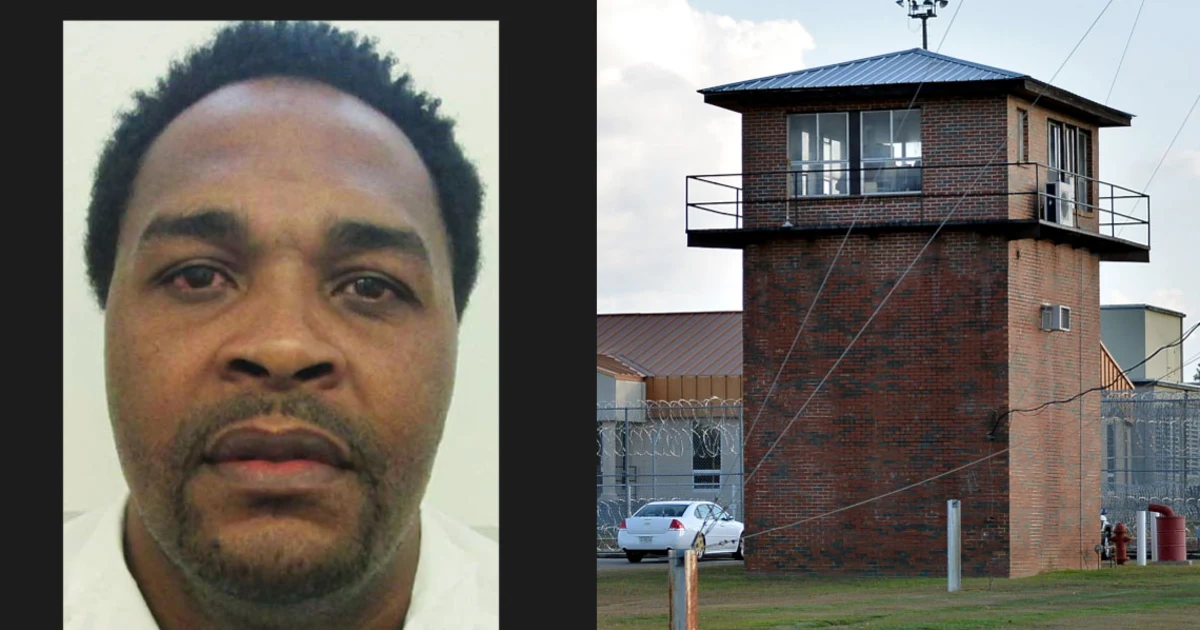
Supreme Court Denies Alabama’s Nitrogen Execution Request
The Supreme Court has declined Alabama’s request to proceed with the execution of death row inmate Jeffrey Lee using nitrogen gas. This decision follows two lower court rulings that deemed the method unconstitutional under the Eighth Amendment’s prohibition against cruel and unusual punishment.
The high court’s ruling came after Alabama sought an emergency order just hours prior to the scheduled execution of the 49-year-old inmate on Thursday at 6 PM local time. Justices Clarence Thomas, Samuel Alito, and Neil Gorsuch registered their dissent, indicating they would have supported the state’s request to overturn the lower court’s decision.
Convicted in 1998 for the double murder during a pawn shop robbery, Lee has effectively evaded execution by nitrogen. However, it remains unclear how swiftly the state will explore alternative methods, as Lee’s legal challenge placed the focus on whether nitrogen gas could be used constitutionally in his execution.
Initially, a federal district court in Alabama ruled that nitrogen execution was constitutional, but this was swiftly appealed. The Eleventh Circuit Court of Appeals subsequently reversed that ruling, asserting that executing Lee in this manner would likely contravene the Eighth Amendment, and it urged the district court to consider the feasibility of a firing squad as an alternative execution method.
Both the district and appellate courts ruled in favor of Lee, prompting Alabama to appeal to the Supreme Court. While various execution methods, such as lethal injection and electrocution, have been upheld by high courts across the country, nitrogen hypoxia is a relatively new and contentious method since Alabama became the first state to adopt it in early 2024.
The nitrogen hypoxia method involves prisoners inhaling nitrogen gas through a mask while strapped to a stretcher, effectively depriving them of oxygen. In its filing to the Supreme Court, the state described this method as “rapidly lethal,” claiming it is “humane, painless, effective, and reliable.” However, critics argue that it constitutes a form of torture. The American Thoracic Society has expressed opposition, stating that it causes significant suffering.
Witnesses from past executions using nitrogen reported distressing scenes, with inmates struggling on stretchers and gasping for breath. In a notable case, it took 30 minutes for Anthony Boyd to be pronounced dead during his nitrogen execution in October. Justice Sonia Sotomayor, joined by Justices Elena Kagan and Ketanji Brown Jackson, penned a nine-page dissent emphasizing that reports indicate nitrogen hypoxia is far less humane than advertised, urging for a more merciful method of execution.
During his nearly 30 years on death row, Lee has expressed remorse for his actions and sought redemption. Meanwhile, Alabama’s Attorney General Steve Marshall has pledged to pursue Lee’s execution, stating that failing to execute a court-imposed sentence fails to deliver justice to the victims. Lee’s legal team continues to advocate for a commutation of his sentence, citing concerns over the controversial judicial override practice that sentenced him to death despite a majority-juror preference for life in prison without parole. Governor Kay Ivey’s office has reiterated that she is prepared to proceed with any scheduled executions.
