


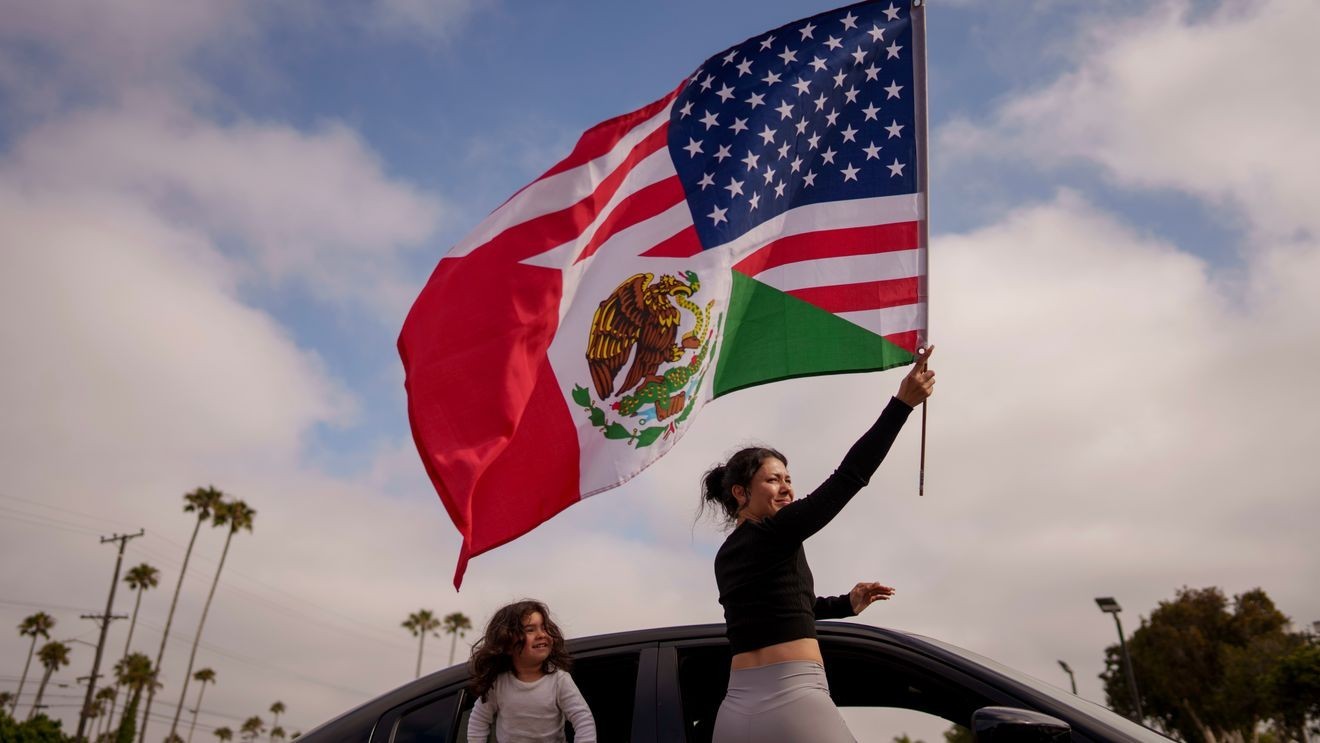
American Views on Immigration Show Strong Support Despite Political Divides
Recent polling reveals that a significant majority of Americans maintain a positive stance on immigration, although the nuances of public opinion reflect deeper political divides. As noted by Ernest Sagas, a professor of ethnic studies at Colorado State University, “The devil is in the details,” emphasizing that while support exists, it often hinges on specific elements of the immigration debate.
Poll Results Indicate Broad Support for Immigration
According to a new Gallup poll, 73% of Americans believe immigration is beneficial for the country. This marks a decrease from last year’s peak of 79%, yet it still represents a noteworthy increase from 64% in 2024. The sentiment surrounding immigration mirrors broader partisan trends, with the majority of Democrats—91%—expressing favorable views compared to fluctuating support among Republicans.
Republican Perspectives Shift with Political Climate
While support for immigration among Democrats has steadily risen, Republican perspectives have varied significantly, with approval ratings dipping from 64% to 50% over the past year. Mark Jones, a political scientist at Rice University, observes that Republicans have begun to draw clearer distinctions between legal and illegal immigration. He notes that although immigration was a galvanizing issue for Republicans during Donald Trump’s presidential campaigns, it has become less salient in the current political landscape.
The Influence of Current Events on Immigration Sentiment
Jones points out that public opinion on immigration is heavily influenced by prevailing conditions at the border and within local communities. During times of high border crossings, Republican sentiment towards immigration was notably negative. In contrast, as border crossings have decreased, the party’s perspective has become more favorable.
Complex Perspectives on Immigration Among Partisan Lines
Sagas highlights the complexities of immigration opinions, asserting that Republicans generally support legal and orderly immigration, whereas Democrats may embrace a broader range of immigrant experiences. Questions surrounding Dreamers, refugees, and asylum seekers illustrate the divergent views held within each political group. Furthermore, Gallup’s research indicates that most Americans advocate for a pathway to citizenship for undocumented immigrants, particularly those brought to the U.S. as children, as long as they meet specific criteria over time.
Public Opinions on Sanctuary Cities and Immigration Levels
Poll results show mixed perceptions regarding policies on sanctuary cities and the potential expansion of Border Patrol. Notably, a majority—58%—oppose the total deportation of undocumented immigrants currently residing in the U.S. Opinions on immigration levels reveal similar divides, with 35% preferring to maintain current rates, 31% advocating for increased immigration, and 29% wanting a reduction.
The Impact of Immigration on Public Services and Workforce Needs
Economic considerations often impact American views on immigration, particularly in terms of labor supply. Legal immigration plays a crucial role in mitigating labor shortages, especially as the aging population increases the need for workers across various sectors. Additionally, many Americans recognize the positive contributions of immigrants in generating tax revenue and filling crucial roles in science and technology fields.
Hispanic Identity and Political Sentiment
This week, the Pew Research Center released a report shedding light on Hispanic identity within the U.S. A significant portion of Hispanic Americans view their heritage as a connection and advantage, though some perceive it as a hindrance to advancement. More than 60% of respondents consider being Hispanic an important aspect of their identity, while divisive views emerge regarding its impact on personal progress. The survey revealed that Hispanic Democrats are more likely than their Republican counterparts to feel their ethnicity poses challenges in the U.S. context.
