


Celebration Amid Staffing Concerns in Swiss Healthcare
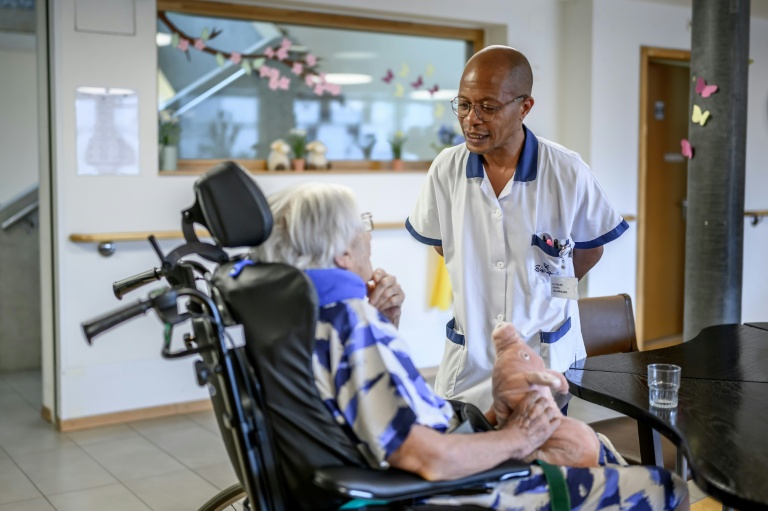
Marcel Mibelas recently marked his 80th birthday at a nursing home in Switzerland, where a dedicated team of predominantly foreign nurses and caregivers ensured the day was memorable. This special occasion highlights the significant role that international workers play in the Swiss healthcare system, particularly as the industry grapples with ongoing staffing shortages.
Located in Szeaux-sur-Lausanne, this medical facility is heavily reliant on foreign personnel, a necessity underscored by chronic workforce challenges. The current situation raises alarms in light of a pivotal public vote scheduled for June 14, which proposes substantial restrictions on immigration—a move some believe could severely impact the healthcare sector.
The implications of inadequate staffing are dire. Karine Savios, a nurse based in Cousseaux-sur-Lausanne, expressed her concerns, stating, “If we don’t have enough caregivers, the health system is going to collapse.” This sentiment was echoed by 81-year-old Marie-Thérèse Balazs, who emphasized the importance of respecting those who provide care for vulnerable residents in nursing homes.
Proposed by the far-right Swiss People’s Party (SVP), the initiative is aimed at capping Switzerland’s population, currently at 9.1 million, to below 10 million by 2050. Despite strong opposition from government officials, parliament, and the business community, polls indicate that the vote may be closely contested.
The crisis within the healthcare sector stems from difficulties in recruiting Swiss nationals, often due to the demanding nature of the jobs and relatively low salaries. Christian Weiler, president of the Primeroches Foundation, which oversees multiple care facilities including the Chezeaux-sur-Lausanne nursing home, highlighted the issue, noting that approximately 80% of their 240 employees are foreign nationals. Weiler expressed concern over plans to expand their facilities due to difficulties in staffing, warning that a lack of available spaces could result in more patients resorting to hospital care.
As the population ages, the strains on the healthcare system will become increasingly apparent. Already, government officials have cautioned that the proposed immigration measures pose a threat to societal functioning, risking the ability of hospitals and nursing homes to adequately care for the sick and elderly. In response, the government has advocated for enhanced training of Swiss healthcare workers while asserting that the proposal would still permit 40,000 foreign immigrants each year—far from sufficient according to industry stakeholders.
A coalition of health sector leaders, including representatives from the Swiss National Association of Hospitals and Clinics as well as the Swiss Nurses Association, has formed to oppose the SVP’s initiative. They argue that the approach could endanger patient safety, particularly in emergency situations where understaffing or reliance on inadequately qualified personnel increases the risk of adverse outcomes.
Data from the Swiss Medical Association (FMH) paints a concerning picture of the healthcare labor market. Currently, 43% of physicians in Switzerland are trained overseas, a figure that is on the rise. FMH vice-president Philippe Egiman pointed out that Swiss medical universities produce only 1,200 to 1,300 new doctors annually, while the real need is for 3,500 to 4,000 young graduates each year. This mismatch is contributing to a workforce crisis exacerbated by over-reliance on foreign talent. As noted by Sandra Merkuri, director of nursing at Geneva University Hospitals, the region needs to recruit 200 to 300 nurses annually, yet the local medical faculty only enrolls about 150 to 160 students.
With projections indicating that by 2025 nearly half of the personnel at Geneva University Hospitals will be foreign, including around 60% of nursing staff and 45% of doctors, the need for a sustainable and capable workforce has never been more pressing. As the debate around immigration and healthcare continues, the implications are vast for the future of Swiss health services.
