


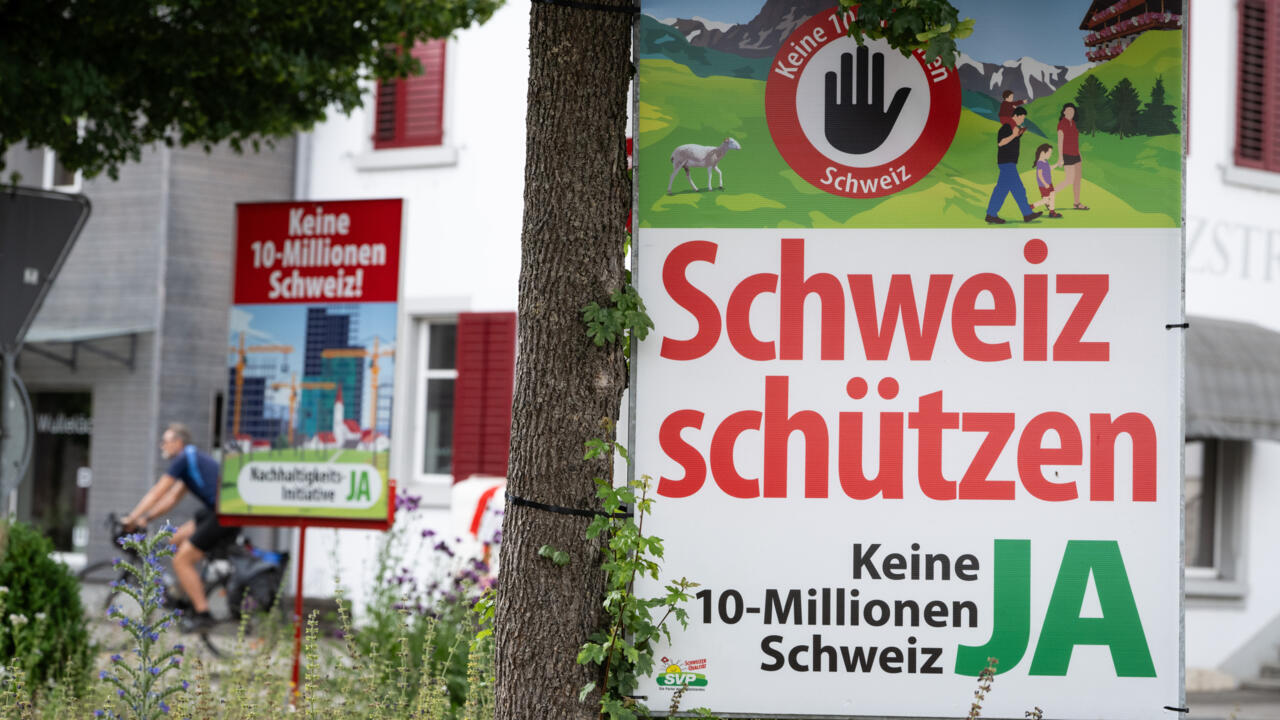
In a closely contested election, nearly 55% of Swiss voters rejected the initiative titled “No to 10 Million Swiss!”, as reported by the gfs.bern research institute. The proposal, introduced by the far-right Swiss People’s Party (SVP), aimed to limit the country’s population, currently at 9.1 million, to a maximum of 10 million by 2050.
Swiss Justice Minister Beat Jans expressed his satisfaction with the outcome, remarking during a press conference that the Swiss populace had signaled a preference for stability, openness, and trustworthiness.
If approved, the initiative would have placed significant restrictions on immigration in a nation where over a quarter of residents are foreign nationals. The SVP attributed various societal challenges, including housing shortages, rising rents, and increased congestion, to what they termed “mass immigration,” advocating for stringent immigration policies.
The initiative encountered robust opposition from the Swiss government, members of Congress, and diverse sectors of the economy. Critics cautioned that endorsing the proposal could inflict substantial harm on Switzerland’s economy and jeopardize its relationship with the European Union, the country’s key trading partner.
Minister Jans had previously warned that adopting such measures could evoke a crisis similar to Switzerland’s withdrawal from the EU. The backlash against the SVP’s initiative reflected a united front from various interest groups emphasizing the potential economic ramifications.
Employer and Union Reactions
Swiss employers and trade unions celebrated the referendum results. Monika Ruhr, director of the employers’ association Economy Switzerland, conveyed relief, stating, “This is an important result for our country and for our relationship with the EU,” during an interview with public broadcaster RTS. The Swiss Trade Union Confederation echoed this sentiment, asserting that the rejection of the SVP initiative indicated a collective refusal to embrace isolationism and xenophobia.
Conversely, the SVP lamented a lost opportunity to tackle what they viewed as a pressing crisis of mass immigration. Party member Marcel Dettling remarked that it was a “sad Sunday” for Switzerland, particularly noting that local voters had shown substantial support for the initiative. Voter turnout was recorded at nearly 59%, considerably exceeding Switzerland’s recent average of 49%.
Despite their setback, SVP representatives maintained that the response reflected genuine public concern over immigration levels. Acknowledging the party’s significant parliamentary presence, they described the defeat as minor, emphasizing that over 45% of voters still backed their proposals. Senior Deputy Prime Minister Tomas Eski remarked that the results communicated a strong message, indicating widespread apprehension regarding immigration policies.
While Economy Switzerland welcomed the referendum’s outcome, they recognized that migration remains a vital issue for the electorate. “The people gave politicians a yellow card,” they noted, highlighting the ongoing concerns surrounding immigration policy.
Changes to Military Service Regulations
In another significant decision, Swiss voters approved a new law aimed at restricting access to civil service for those who refuse military service. The backdrop of ongoing geopolitical tensions, particularly the war in Ukraine, has led many European nations to bolster their military capabilities.
The final results indicated that 52.5% of voters supported the referendum. Advocates from the political left, representing militarily neutral nations, criticized the legislation, arguing that it poses a risk of eliminating alternatives to military service in the long run.
In Switzerland, military service is mandatory for men, who participate in a distinctive militia system that requires a minimum of four months of active duty, followed by periodic retraining over a decade. Since 1996, individuals who conscientiously object to military service have had the option to serve in alternative capacities. However, rising numbers of people choosing private service options since 2009 have raised concerns that this trend may become increasingly problematic for the government.
