


Record-Breaking Highlights of the 2026 FIFA World Cup
The 2026 FIFA World Cup emerged as a landmark event in soccer history, showcasing an innovative 48-team format across the United States, Canada, and Mexico. This tournament not only set attendance and goal records but also achieved impressive digital reach and financial gains.
Thrilling Finale and Fan Engagement
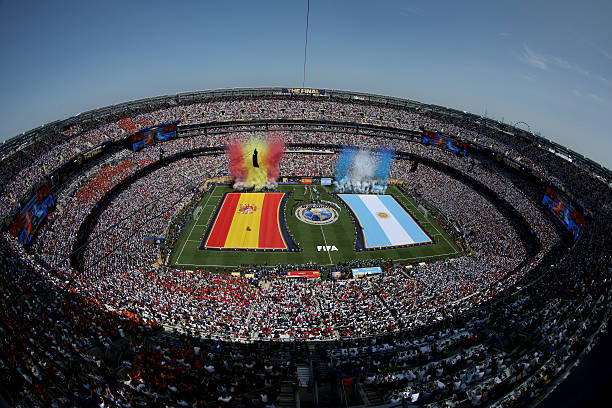
The grand finale took place at MetLife Stadium, where Spain secured their second championship with a nail-biting 1-0 victory over Argentina in extra time, concluding an exhilarating month of soccer. The atmosphere throughout the 104 matches was electric, as over 6.25 million fans attended, achieving a remarkable occupancy rate of 99.7%, with an average of approximately 65,200 spectators per game. This attendance comfortably surpassed the record set during the 1994 World Cup in the U.S.
Iconic venues drew massive crowds, with the Mexico City Stadium featuring the highest single-game attendance approaching 80,824. The vibrant atmosphere was further amplified by millions more attending the FIFA Fan Festival, turning the event into a continental celebration of the beautiful game. These figures reiterated soccer’s enduring global appeal, overcoming challenges like rising ticket prices.
Exciting Matches and Outstanding Player Performance
The expanded tournament format led to more high-stakes encounters, resulting in a remarkable 280 goals, averaging nearly 2.92 per game. Kylian Mbappé emerged as the tournament’s Golden Boot winner with 10 goals, while Lionel Messi continued to add to his World Cup scoring legacy. Spain’s Rodri earned the Golden Ball award, reflecting exceptional performances from teammates like Ferran Torres, alongside stars such as Erling Haaland and Jude Bellingham.
With over 1,248 athletes representing 48 countries, the competition highlighted soccer’s depth of talent, as teams maintained a rapid pace with nearly five substitutions per match. Spain’s defense was particularly impressive, conceding just one goal on the path to their victory. These achievements captivated audiences and underscored individual record-breaking feats throughout the tournament.
Substantial Economic Impact and Revenue Generation
The financial outcome of the 2026 FIFA World Cup solidified its status as a commercial triumph. The financial cycle from 2023 to 2026 was structured to maximize revenues through broadcast rights, sponsorships, ticket sales, and hospitality services. Projections indicate tournament-related revenues could exceed $6 billion to $11 billion, while the broader economic impact could generate tens of billions through tourism, job creation, and infrastructure development.
A record prize pool ranging from $655 million to $871 million was allocated among the participating teams, with Spain receiving approximately $51 million as champions and Argentina earning $34 million as the runners-up. England and France also benefited significantly from top tier payouts. Each team was guaranteed a minimum of $9 million to $10 million, coupled with preparation support in case of early exits, while ticket sales, hospitality, and merchandise added substantial revenue streams.
The scale of the event involved extensive planning and technology, including 161,000 kilometers of fiber optics for seamless global distribution, resulting in an audience that reached billions online.
A Legacy of Unity and Economic Growth
The 2026 FIFA World Cup set a new benchmark for future tournaments, marked by record attendance, impressive player statistics, and unprecedented commercial success. It celebrated not only Spain’s victory but also the unifying power of soccer to entertain and stimulate economies. The data painted a vivid picture of a competition that transcended sport, making it a global phenomenon.
As reflections on this historic event take shape, the legacy of North America’s first multinational World Cup is poised to resonate long after the final whistle. Whether as a stats enthusiast, soccer fan, or business analyst, the impact of this tournament will undoubtedly enrich discussions for years to come.
