


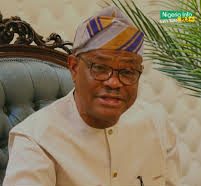
Dissecting Nyesom Wike’s Leadership Style and Political Approach
Raheem Akingbolu offers an analysis of Federal Capital Territory Minister Nyesom Wike’s distinctive approach to politics and governance.
Power’s Indelible Mark in Governance
Real power leaves a lasting impact. It transforms environments, prioritizes actions, and garners attention from both advocates and critics alike. As the Federal Capital Territory’s Minister, Nyesom Wike has emerged as a figure in Nigeria’s public leadership landscape, where authority is asserted through concrete outcomes rather than mere promises. His presence signifies progress in a system often hampered by hesitation and indecision.
Governance Measured Beyond Words
In Nigeria, effective governance transcends rhetoric. It is reflected in the quality of infrastructure, urban organization, and the efficiency of translating decisions into actionable results. Wike embodies this understanding, favoring tangible actions over empty gestures. His political identity remains at the forefront of public discourse, teetering between admiration and criticism, largely due to his results-oriented approach.
A Journey Marked by Intentionality
Wike’s political career has never been characterized by a quest for consensus; rather, it has been marked by proactive claims and decisions. His early experiences within the Rivers State political scene, working alongside notable figures like Peter Odili and Rotimi Amaechi, equipped him with a pragmatic understanding of power dynamics. For him, power is a tool for achieving change rather than a ceremonial obligation.
Resilience Amidst Criticism
An African proverb suggests that even if a small dog barks, a lion won’t turn around. Wike’s political evolution mirrors this resilience; he remains focused despite criticism, advancing an agenda driven by conviction rather than concession. His rise to the governorship of Rivers State in 2015 was the culmination of years navigating a complex network of relationships and political allegiances.
Transformative Leadership in Rivers State
During his governorship, Wike demonstrated an urgent governance style, not merely through procedural promises but through visible, impactful change. Port Harcourt, once suffering from infrastructural neglect, became a hub of rapid development. Major projects such as new viaducts and widened highways transformed the city, showcasing a governance approach characterized by a strong emphasis on delivery and results.
Controversy and Confrontation
While infrastructure development is a hallmark of Wike’s tenure, his outspoken and confrontational personality also defines his political identity. In a culture often reliant on subtlety and diplomacy, he opts for a candid approach that has earned him both loyalty and pushback. His refusal to blend into the background has been a consistent theme throughout his career, further underscored by his recent appointment as Minister of the Federal Capital Territory under President Bola Tinubu.
Strategizing Beyond Political Boundaries
Wike’s appointment is not merely symbolic; it signifies a strategic shift aimed at influencing national policy while transcending traditional political affiliations. In Abuja, he has taken decisive action to streamline development processes and enforce regulations, reflecting a commitment to effective governance amidst Nigeria’s complex urban challenges. His administration emphasizes that progress must link efforts to measurable outcomes.
Challenges of Governance and Expectations
However, questions linger regarding sustainability and the balance between urgency and consultation in a capital that embodies the nation’s diversity. Wike’s tenure within the Tinubu administration serves as a potential bridge across political divides, advocating for coalitions that extend beyond party lines. Embracing change while demanding results, he often challenges the status quo, positioning himself as a transformative figure in Nigeria’s governance landscape.
A Legacy Defined by Results
From his tenure in Rivers State to his current role in Abuja, Wike’s story defies simple classification. He navigates the dual roles of builder and strategist, often attracting attention with his controversial methods. In a country where leadership is frequently measured by intent rather than outcome, Wike fervently advocates for influence to be visible. Whether he will be remembered as a reformist or a polarizing force may ultimately hinge on the durability of his achievements.
For now, it is clear that Nyesom Wike’s role in shaping Nigeria’s governance narrative cannot be overlooked.
