


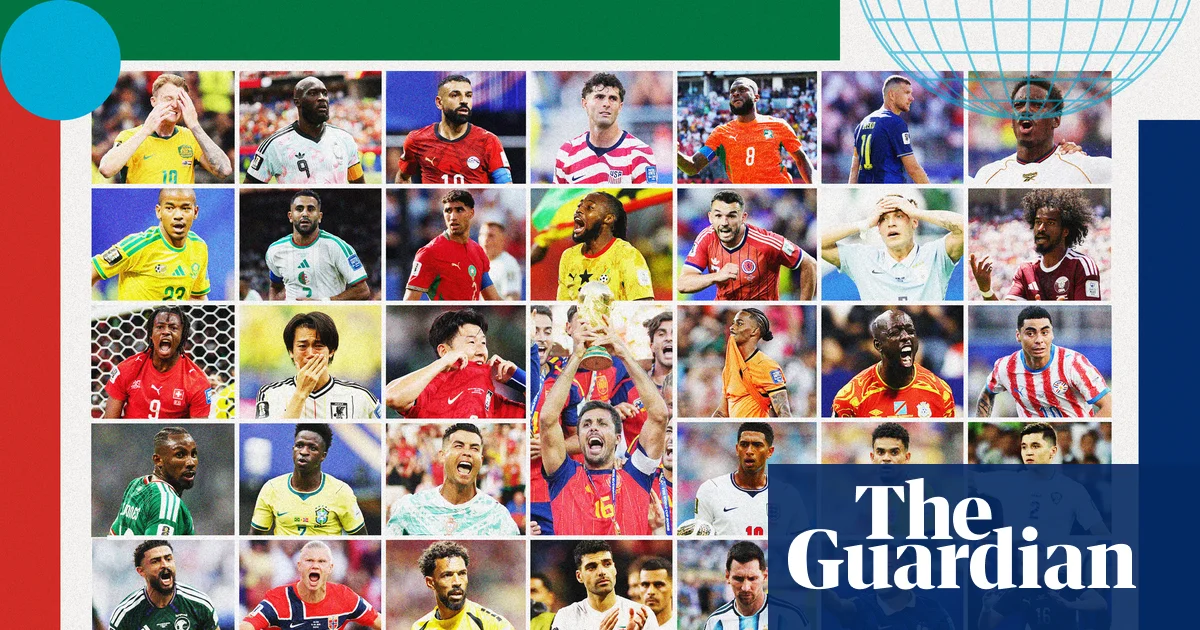
In less than a year after Gianni Infantino succeeded Sepp Blatter as FIFA president, the organization announced a significant change: the Men’s World Cup would increase its number of participating teams from 32 to 48. This decision sparked a variety of reactions. Diego Maradona expressed his enthusiasm, stating that it reignited countries’ passion for football and offered more nations the dream of qualifying for the prestigious tournament. In contrast, Joachim Löw, then-manager of the world champion Germany, raised concerns about the potential dilution of the sport’s quality, suggesting that the long-term impacts could be negative.
With Spain emerging victorious in the inaugural 48-team tournament held in North America, after a grueling 104 matches over five and a half weeks, it’s clear both Maradona and Löw’s perspectives hold weight.
Emerging Faces from Cape Verde
After announcing the updated format in 2017, Infantino emphasized football’s global reach, stating, “Football is not just in Europe or South America.” The 2026 World Cup thus stands as a celebration of the sport’s diversity. Notably, Africa and Asia gained the most from this expansion, with four debuting teams making their mark. Libano Conencia’s equalizing goal in the group stage match between Curaçao and Germany was a standout moment, and although Cape Verde didn’t secure a win, they captured attention as a noteworthy entrant.
The tournament’s expanded format granted six teams the historic chance to engage in knockout soccer for the first time, resulting in Egypt and Canada achieving their inaugural World Cup victories. As Infantino channels record tournament revenues back to FIFA’s member associations, there is optimism that smaller nations, particularly those leveraging previously untapped diasporas, may cement their presence in future tournaments.
Growing Disparities in Team Strength
As the tournament expanded, the competitive gap between teams became more pronounced. The last 32-team World Cup in Qatar showcased a significant mismatch when Brazil faced Haiti, with a staggering 77-point difference in world rankings. In the current tournament, five matches featured a disparity of 65 or more spots. While there were competitive encounters, such as England’s 0-0 draw with Ghana and Spain’s goalless match against Cape Verde, the likelihood of upsets remains minimal. The only team enduring substantial losses was Uruguay, as other heavily favored teams advanced without major shocks.
Costa Rica had the poorest goal difference in 2022 (-8), yet this time around, five nations matched or exceeded that. Iraq (-11) finished at the bottom of Group I, finding themselves up against powerhouse teams like France and Senegal. Nevertheless, these outcomes aligned with expectations, allowing stars like Kylian Mbappé and Lionel Messi to capitalize on their opportunity while vying for the Golden Boot.
Issues with the Third-Place Format
Following a dramatic 2022 group stage, where only two teams faced elimination, FIFA opted for four-team groups in the revamped 48-team format, as opposed to the initially proposed three-team setup. This design allowed for eight third-place teams to advance to the knockout stage, yet it doesn’t entirely mitigate the risk of collusion between teams or the advantage given to those playing later, who can gauge results necessary for progression.
An unexpected shift in knockout matchups can occur at a moment’s notice. For instance, when Riyad Mahrez led Algeria to a nail-biting 3-2 win over Austria in the closing moments of Group J, they claimed a spot in the knockout stage against Spain. A last-minute equalizer would have drastically altered their trajectory, matching them against Switzerland instead. Meanwhile, fans of teams like Scotland were left in limbo, awaiting the final knot of results to discover their fate.
Shifting from goal difference to head-to-head tiebreakers has already resulted in the elimination of five teams (about 10%) prior to the final group match. The current system for determining third-place progression creates an illusion of competitiveness that may not truly exist.
Potential for a 64-Team Format
Infantino has hinted at the possibility of expanding the World Cup to 64 teams, reaffirming the organization’s commitment to creating a tournament that represents a global spectrum rather than just Europe and South America. If FIFA decides to eliminate the third-place system and revert to a format that allows the top two teams to advance, adding another 16 countries might seem reasonable despite only increasing match numbers by 24. However, this approach also risks widening existing disparities.
Nations like New Caledonia (ranked 151st) and Indonesia (118th) are competing in the qualifiers for 2026 and could potentially secure placements in the tournament. The implications of facing top-tier teams like Spain or Argentina pose a considerable challenge. Moreover, with the best 16 teams drawn from the same pot, the excitement of competitive group dynamics could diminish, as demonstrated by the high-scoring match between England and Croatia in a 64-team scenario.
Additionally, logistical hurdles arise with the prospect of scheduling four matches a day over a three-week group stage. Many matches, particularly in venues across Spain, Portugal, and Morocco, could face scheduling conflicts due to the summer heat. Among the 23 proposed venues, only the renovated Bernabéu and Camp Nou feature roofs to offer relief from the elements. The discourse surrounding further expansion is sure to intensify in the forthcoming months.
