


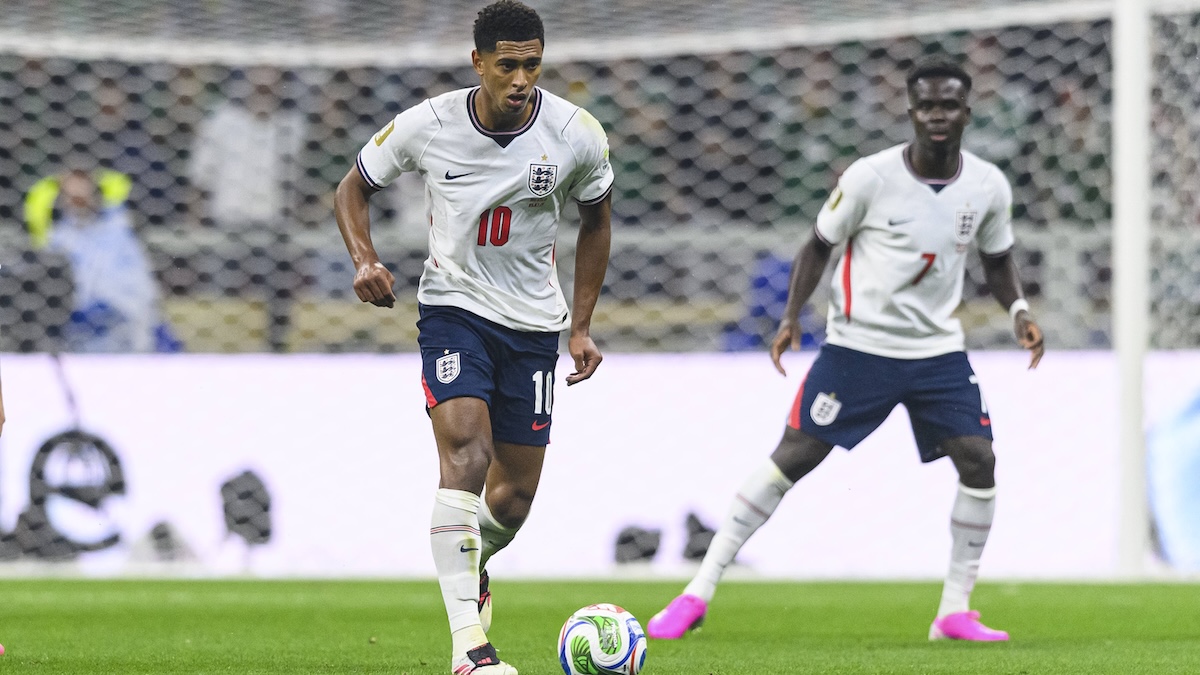
Jude Bellingham Captivates World Cup Fans
Jude Bellingham, the English soccer talent of Jamaican descent, has become a focal point of the World Cup, having netted six goals and significantly propelled England to the semi-finals. Each of England’s victories has ignited passionate chants of “Hey Jude” from their devoted supporters. Ironically, even Rupert Lowe, a far-right MP known for his anti-immigrant stance, found himself publicly congratulating Bellingham, only to be met with backlash from his constituency demanding the player’s deportation.
Contradictions of National Identity
This paradox encapsulates the narrative of this World Cup. As the United States and several European countries bolster border controls and amplify anti-immigrant sentiments, the very teams representing these nations prominently feature athletes targeted by such policies.
The Role of Immigrants in Soccer
An analysis of team rosters reveals that many of the most formidable squads would be unrecognizable without the contributions of immigrants and their descendants. Out of all the teams competing in this World Cup, only eight lack foreign-born players. This underscores the duality of support: immigrant athletes are celebrated as national heroes when they win, yet face hostile racism when they lose.
The Legacy of Athletic Merit and Prejudice
In moments of triumph, these athletes are transformed into symbols of national pride and unity. Conversely, should defeat arise, they are subject to a torrent of racist vitriol. Mesut Özil, who left the German national team in 2018 citing “racism and disrespect” towards his Turkish heritage, poignantly remarked on this dynamic: victory elevates their status, while defeat relegates them back to being mere immigrants.
The Impact of Migration on the Game
This World Cup marks a historic milestone, with almost a quarter of participating players born outside the countries they represent. This stands as the highest proportion ever recorded, significantly up from 16.8% at the 2022 World Cup in Qatar. Despite continued claims that immigrants “take jobs away” in football, immigration has been a foundational element since the tournament’s inception, with over 10% of participants in 11 of the 23 tournaments since 1930 hailing from foreign countries.
Racial Abuse Following Defeats
Recent events have starkly illustrated this volatile sentiment. Following the Netherlands’ penalty shootout loss to Morocco, a wave of racist abuse flooded social media, targeting players such as Justin Kluivert, Quinten Timber, and Crisencio Somerville. Dutch Prime Minister Rob Jetten remarked on the hypocrisy in public perception, noting how quickly these players transition from being embraced as “our kids” to being judged solely by their race in moments of disappointment.
Ingrained Racism and Political Rhetoric
Such racial abuse is not confined to the World Cup; high-profile players like Marcus Rashford, Jadon Sancho, and Bukayo Saka encountered similar hostility after England’s defeat in the Euro 2020 final. While political leaders, including former Prime Minister Boris Johnson, condemned the abuse, their own politically charged rhetoric at times fuels this toxic environment. As anti-immigrant sentiments gain traction across the U.S. and Europe, the challenges facing immigrant athletes grow more pronounced.
Reflections on Colonial Legacies and National Identity
The current landscape is further complicated by political movements in the UK, such as Reform Britain and Restore Britain, which aim to reshape the educational narrative around immigration and national identity. Critics argue that these efforts ignore the lasting impacts of British colonialism. The historical significance of the World Cup serves as a powerful reminder, revealing the complex identities of players like France’s 2018 World Cup champions, twelve of whom had African roots. As debates surrounding immigration continue, countries must reckon with the reality that without immigrants, their soccer teams would be dramatically different.
